Share This Article
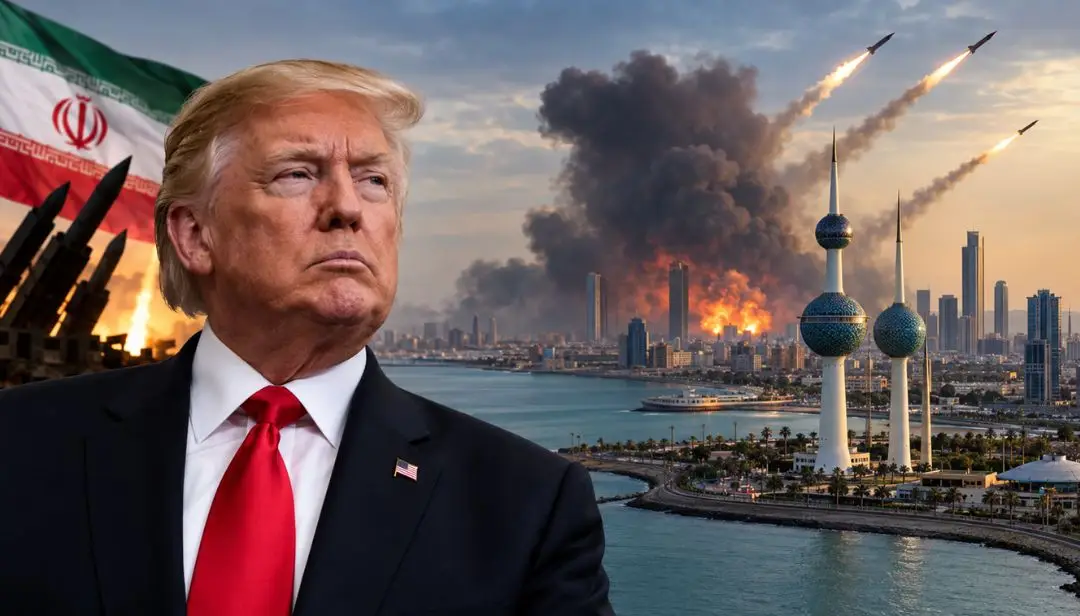
Iran strikes Kuwait escalated sharply on September 3, 2026, as Kuwait’s military confronted a wave of hostile missile and drone attacks a day after US President Donald Trump said renewed hostilities between Washington and Tehran would not drag on “too long.” The strikes mark a fresh flashpoint in a Middle East conflict that has repeatedly widened beyond Iran and Israel to draw in Gulf states hosting American forces.
Here is a full breakdown of what happened, why it matters, and what could come next.
What Happened: Iran Strikes Kuwait
Kuwait’s army confirmed on Thursday, September 3, that it was actively confronting missile and drone attacks launched from Iranian territory. Kuwaiti authorities advised residents to follow official safety instructions and clarified that explosions heard across the country were the result of air defense systems intercepting incoming targets, not direct impacts on population centers.
The attack came a day after US strikes against Iran that President Trump himself described as “a very heavy attack,” and follows a broader pattern seen throughout the conflict: after being hit by US or Israeli strikes, Iran has repeatedly retaliated against American military assets and US-allied Gulf states including the United Arab Emirates, Saudi Arabia, Qatar, Bahrain, Iraq, Oman, and Jordan rather than Israel alone.
What Trump Said About the Strait of Hormuz and the Wider War
Speaking to reporters on Wednesday, September 2, Trump downplayed fears of a prolonged conflict, saying he did not believe the fighting would continue “very much longer” and questioning “how much more they Iran can take.” He added that the United States remained prepared to carry out further military operations “any time we want.”
Trump’s comments came against the backdrop of the broader Strait of Hormuz crisis, a critical flashpoint since Iran began threatening and attacking commercial shipping through the strait the passage through which roughly 20% of the world’s oil transits. A truce reached via a memorandum of understanding in June 2026 had briefly cooled tensions, but Trump declared the truce effectively over after renewed ship attacks in early July, triggering the current escalation.
Why Kuwait? Understanding the Wider Pattern
Kuwait hosts US military personnel and infrastructure, which analysts say is why it alongside other Gulf states has repeatedly come under Iranian fire during this conflict. According to tracked strike data on the 2026 Iran war, Iran has launched retaliatory strikes against Kuwait on multiple occasions since late February 2026, targeting American and Kuwaiti positions within the country.
Kuwait’s Emir, Mishal Al-Ahmad Al-Jaber Al-Sabah, has previously described the attacks as unprovoked, stating that Kuwait did not permit the use of its land, airspace, or waters for any military action against Iran.
Regional security analysts describe this as a strategy of “horizontal escalation” widening the battlefield across multiple Gulf states to raise the political and economic cost of the war for the United States and Israel, rather than concentrating retaliation on a single front.
Impact on Oil Markets and Global Trade
The renewed strikes on Kuwait add fresh uncertainty to oil markets already rattled by the ongoing Strait of Hormuz standoff. With roughly a fifth of global oil supply passing through the strait, any disruption to shipping lanes or Gulf infrastructure tends to move prices quickly. The US has previously moved to temporarily ease sanctions on stranded Iranian and Russian crude to help stabilize supply during periods of heightened conflict.
What Could Happen Next
Several developments are likely to shape the coming days:
- Further Iranian retaliation against US-allied Gulf states if American strikes on Iranian territory continue.
- Continued US military posturing, with Trump signaling readiness for additional operations “any time.”
- Oil price volatility tied to Strait of Hormuz shipping risk.
- Diplomatic pressure from Gulf states seeking to avoid becoming a permanent battleground in a US-Iran conflict fought largely outside their borders.
We will continue to update this article as the situation in Kuwait and the wider Middle East develops.
Read More News Here
- Get the full picture on where this war is headed – more Trump-era geopolitical coverage at DonaldTrump.Coach.
- Tuesday’s missiles didn’t come out of nowhere, Iran has been digging out hidden missile stockpiles after rejecting Trump’s peace offer
- Not everyone in Trump’s own camp agrees on strategy, JD Vance claims Hegseth has been misleading Trump on the Iran war
- This isn’t the only recent flashpoint at sea, a US Navy destroyer just fired on and seized an Iranian cargo ship
- The strikes haven’t ended Iran’s nuclear ambitions either, US intel says recent strikes did only limited damage to Iran’s nuclear program
- That brief pause before Tuesday’s attack wasn’t random, Trump had deliberately paused Hormuz operations to force Iran into a deal
- The missiles are only half the story, Iran and Israel’s spy war is heating up amid claims of stolen F-15 secrets
- Trump’s fights aren’t confined to Tehran, he’s now clashing with his own SCOTUS picks back home
- Global supply chains are already bracing for impact, Goyal’s courting 50 US leaders in New York over exactly that.
- Stay ahead of the story track it live or get the full background on how the US-Iran war escalated to this point.
Brent crude through the 2026 Iran war
| Date | Milestone | Brent (USD/bbl) |
| 27 Feb 2026 | Day before the war began | ~70 |
| 9 Mar 2026 | Early-war spike | ~109 |
| 30 Apr 2026 | Post-war peak | ~126 |
| 2 Jul 2026 | Peace hopes, return to pre-war level | ~71 |
| 27 Jul 2026 | Talks signal, sharp drop | ~87 |
| 2 Sep 2026 | Renewed US-Iran strikes | ~96 |
| 3 Sep 2026 | Iran strikes Kuwait | ~95–99 |
Frequently Asked Questions About Iran Strikes Kuwait
What happened when Iran struck Kuwait?
On 3 September 2026, Iran launched missile and drone attacks on US military bases in Kuwait. Kuwait’s army said its air defenses intercepted the incoming fire and told residents that explosions they heard were interceptions. The strike on Kuwait was part of a broader Iranian retaliation that also targeted US bases in Jordan, the UAE, Bahrain and Iraqi Kurdistan.
What did Trump say about the Iran war continuing?
Trump said he did not believe the renewed hostilities would last “too long,” adding that the US was prepared for further military operations against Iran “any time we want.”
How is the Iran strike on Kuwait affecting oil prices?
Oil rose as the fighting resumed. Brent crude climbed back near the mid-to-high $90s a barrel this week, up from about $70 in early July, as traders priced in the renewed risk to Gulf oil supplies. Because crude is the largest single cost in a gallon of gasoline, those moves feed through to pump prices.
Which other countries has Iran targeted besides Kuwait?
Iran has struck or threatened US military assets and installations across the United Arab Emirates, Saudi Arabia, Qatar, Bahrain, Iraq, Oman, and Jordan during the conflict.
Were there any casualties in the Kuwait strikes?
Kuwaiti authorities said explosions heard across the country were from air defense systems intercepting Iranian missiles and drones; official casualty figures from the September 3 attack had not been finalized at the time of writing.
How has this affected oil prices?
The Strait of Hormuz crisis and continued Gulf strikes have added volatility to global oil markets, given the strait’s role in roughly 20% of global oil transit.
References & Sources
- CNBC – “Iran strikes Kuwait, Trump says renewed hostilities won’t last ‘too long‘”
- Britannica – “2026 Iran War: Deal, Explained, United States, Israel, Strait of Hormuz, Map, & Conflict“
- MSNBC (msnow) – “Iran strikes Kuwait in retaliation for U.S. bombardments, and other Mideast news“
- Wikipedia – “2026 Iranian strikes on Kuwait“
- Al Jazeera – Iran war live coverage, 3 September 2026
- South China Morning Post – “Iran targets US bases in Kuwait despite warnings from Trump,” 3 September 2026

Oil & Energy Markets
A look at crude price swings, OPEC supply moves, and how energy markets react to geopolitical shocks.

Geopolitics & Conflict
Breaking down how wars, ceasefires, and diplomatic deals ripple through global trade and security.
US Foreign Policy
Coverage of Trump administration negotiations, sanctions, and strategic decisions shaping world events.
Economy & Inflation
Tracking how commodity prices, gas costs, and supply chains affect everyday consumers.