Share This Article
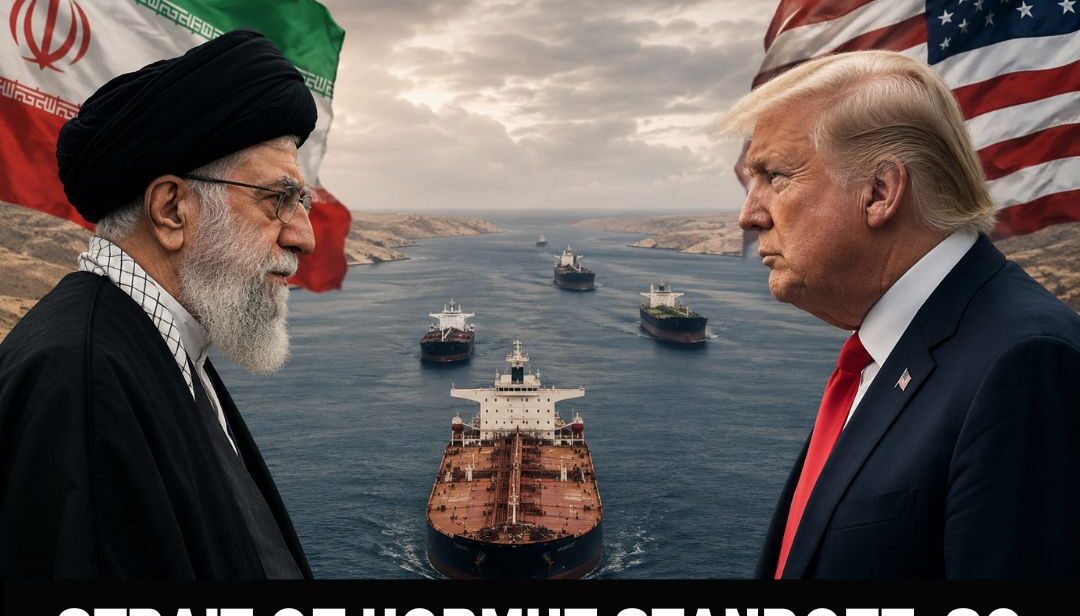
Forty supertankers. Eighty million barrels of crude. One narrow, 24-mile-wide waterway standing between them and the global market.
That is the scale of what’s now hanging on the success of a preliminary US-Iran agreement, as the world watches whether the Strait of Hormuz the chokepoint through which roughly a fifth of the planet’s oil once flowed finally reopens after months of war-driven paralysis.
According to data from Vortexa compiled by Bloomberg, the non-sanctioned crude none of it Iranian is sitting aboard 40 very large crude carriers anchored in the Persian Gulf, ready to move “at a moment’s notice” if shipowners and traders give the go-ahead. Supertankers laden with almost 80 million barrels of oil are sitting in the Persian Gulf and ready to cross the Strait of Hormuz at a moment’s notice, if traders and shipowners give the go-ahead.
A Sharp Jump in Just Days
The 80-million-barrel figure represents a notable escalation from earlier in the week. On Thursday, Bloomberg had estimated the amount of crude waiting to get clearance to pass through Hormuz at around 62 million barrels destined for Asian markets. The jump suggests that confidence in the durability of the US-Iran agreement is building rapidly among oil traders and shipping operators, even if full normalization of strait of Hormuz traffic has not yet been confirmed.
Of the 40 tankers now queued, 21 are heading for Asia, with five bound for China and five others destined for Malaysia and Singapore, both key regional transshipment hubs. The destinations underscore just how dependent Asian economies remain on Gulf crude and how acutely they’ve felt the squeeze since the Strait of Hormuz was effectively shut down following the February 28 outbreak of war between the US, Israel, and Iran.
Why Trump’s Hormuz Strategy Matters Now
President Trump’s approach to the Strait of Hormuz has shifted repeatedly over the course of the conflict — from threats of “much higher level” strikes, to the short-lived military mission known as Project Freedom, to now backing a diplomatic framework designed to formally reopen the waterway. The current breakthrough builds on that diplomatic track, with the preliminary US-Iran agreement reportedly addressing both the immediate reopening of shipping lanes and longer-term security arrangements for the strait.
Markets have responded accordingly. Brent crude, which spiked past $100 a barrel during the worst weeks of the closure, has fallen back toward pre-war levels. At the time of the Bloomberg report, Brent was trading at $79.96.
That decline has triggered a wave of revised forecasts from major banks. Citi, the most bearish of the major forecasters, now expects Brent crude to average $75 per barrel over the next quarter, while Morgan Stanley sees prices holding closer to $90 in the third quarter even with Hormuz reopening. Goldman Sachs has also trimmed its outlook in recent days.
The Scale of What Was Lost
To understand why 80 million barrels is such a significant figure, it helps to look at what normal Strait of Hormuz traffic looked like before the war. Before the United States and Israel launched their attacks on Iran in late February, about 3,000 vessels typically passed through the strait each month, with oil tankers accounting for an estimated 15 million barrels per day of crude and other oil exports roughly one-fifth of the world’s oil trade.
That volume collapsed almost overnight. AIS tracking data showed vessel transits falling from a daily average of 135 in February to just seven by March 3, as ship attacks drove crude prices up 20% and the US offered insurance and naval protection that initially did little to restore confidence.
The disruption forced producers across the Gulf to scramble. Analysts at JPMorgan warned at the time that oil producers might be forced into “shut-ins” if the chokepoint remained blocked for as long as 21 days. Iraq, which exports crude through Hormuz via its Basrah port, came perilously close to a complete halt of exports.
Disputed Claims and Murky Numbers
Not every figure tied to the Hormuz reopening has held up to scrutiny. Trump has separately claimed that a secretive US military effort managed to move significantly more oil through the strait than publicly reported. At the White House, Trump said the US had been “taking out millions of barrels of oil” that “nobody knows about,” later claiming on Truth Social that a secret mission moved 100 million barrels through the strait while keeping Tehran in the dark.
Independent trackers paint a far more modest picture. Windward recorded nearly 80 commercial ships leaving the Gulf over five weeks; Lloyd’s List put the number at 142 vessels since March; and Kpler, the highest estimate, recorded 264 ship transits all figures that fall well short of the volume needed to account for 100 million barrels. Notably, many of the ships that did transit did so with Iranian authorization, paying tolls to the Islamic Revolutionary Guard Corps, rather than through any covert US scheme.
The discrepancy highlights a recurring theme of the Hormuz crisis: verified, independent shipping data has often told a very different story than official claims from Washington.
What Comes Next
For now, the 80 million barrels sitting in the Gulf represent both opportunity and risk. If the US-Iran agreement holds and the tankers move freely, the resulting surge in supply could prompt refiners to increase processing rates or replenish commercial stockpiles that have been steadily drawn down over the past three months — adding further downward pressure on oil prices already approaching pre-war levels.
But the underlying uncertainty has not disappeared. Years of mistrust, repeated ceasefire violations, and unresolved questions over Iran’s nuclear program mean shipowners remain cautious about declaring the crisis over. For the global economy, the next few days as 40 fully loaded supertankers decide whether to make their move through the Strait of Hormuz may determine whether this fragile US-Iran agreement marks a genuine turning point or just another pause in a war that has repeatedly defied predictions.
For continuously updated vessel-tracking data on the crisis, see the Strait of Hormuz Live Tracker.

Oil & Energy Markets
A look at crude price swings, OPEC supply moves, and how energy markets react to geopolitical shocks.

Geopolitics & Conflict
Breaking down how wars, ceasefires, and diplomatic deals ripple through global trade and security.
US Foreign Policy
Coverage of Trump administration negotiations, sanctions, and strategic decisions shaping world events.
Economy & Inflation
Tracking how commodity prices, gas costs, and supply chains affect everyday consumers.