US Intelligence Bombshell: Strikes Barely Scratched Iran’s Nuclear Program Damage Far More Limited Than Claimed
Theo Jorden
Share This Article
May 5, 2026 | National Security & Defense For months, the Trump administration declared victory over Iran’s nuclear ambitions. The White House called the strikes “obliterating.” The Pentagon said the program had been set back by up to two years. The CIA pointed to “credible intelligence” of severe and lasting damage. Now, a US intelligence
For months, the Trump administration declared victory over Iran’s nuclear ambitions. The White House called the strikes “obliterating.” The Pentagon said the program had been set back by up to two years. The CIA pointed to “credible intelligence” of severe and lasting damage. Now, a US intelligence bombshell is quietly dismantling that narrative and the implications reach far beyond a public relations problem.
According to multiple sources cited by Reuters, Al-Monitor, and US News, current intelligence assessments indicate that the time Iran would need to produce a nuclear weapon has not meaningfully changed since last summer. Two months into an active war that Trump launched explicitly to neutralize Iran’s nuclear threat, the program remains largely intact and Tehran’s most dangerous asset, its stockpile of highly enriched uranium, has not moved.
What the Intelligence Actually Shows
The gap between the administration’s public claims and classified assessments has been widening since June 2025, when the US launched Operation Midnight Hammer, striking Iran’s Natanz, Fordow, and Isfahan enrichment complexes with B-2 stealth bombers carrying Massive Ordnance Penetrator bunker-busters.
A preliminary Defense Intelligence Agency report produced within 24 hours of those strikes concluded the program had been set back by only a matter of months. The administration challenged the report, calling it low-confidence and uncorroborated but the most recent assessments, drawn from a broader intelligence community review, are telling much the same story.
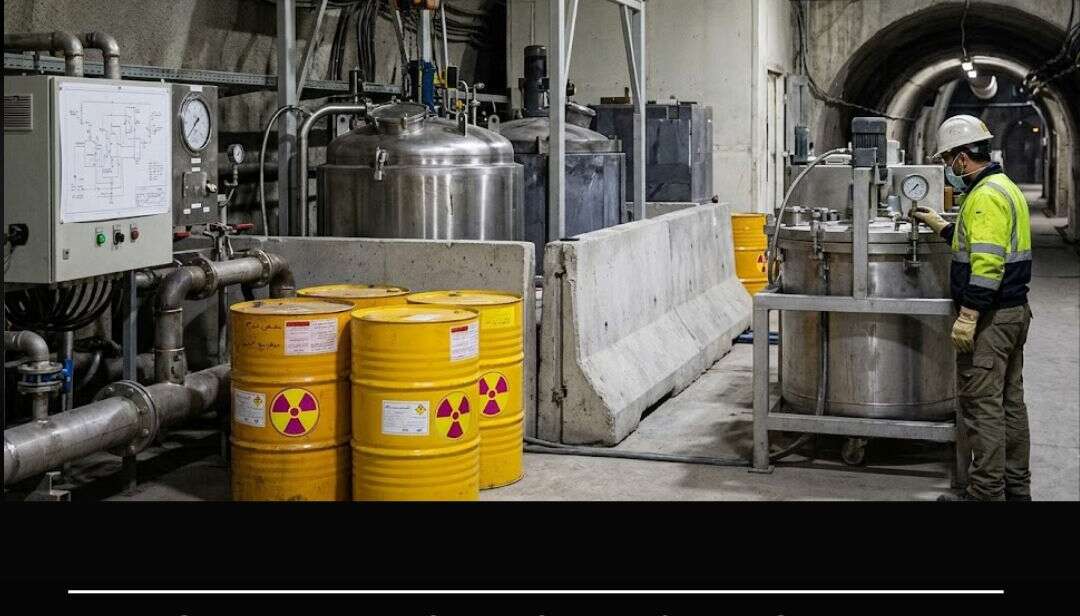
The core problem is physics and geology. Iran’s most critical nuclear material its highly enriched uranium stockpile — is believed to be stored deep inside tunnel complexes at sites like Isfahan, where US munitions cannot reliably penetrate. A former senior US intelligence analyst who led assessments of Iran’s nuclear program put it plainly: “Iran still possesses all of its nuclear material, as far as we know, and that material is probably located in deeply buried underground sites where US munitions can’t penetrate.”
The International Atomic Energy Agency estimates that Iran’s total HEU stockpile, if further enriched, would be sufficient for approximately 10 nuclear weapons. That number has not changed.
The “Obliterated” Myth
When the June 2025 strikes concluded, the White House published a release with a blunt headline: Iran’s Nuclear Facilities Have Been Obliterated and Suggestions Otherwise Are Fake News. CIA Director John Ratcliffe stated that key Iranian nuclear facilities “were destroyed and would have to be rebuilt over the course of years.”
The IAEA offered a more cautious picture. Inspectors confirmed damage to entrance buildings at Natanz and said radiation consequences were not expected language that suggested surface-level destruction rather than the annihilation of buried enrichment infrastructure. Multiple independent assessments from the Institute for Science and International Security concluded that while Fordow and Natanz suffered serious damage, the degree of harm to underground enrichment halls remained impossible to determine with certainty.
Then came Operation Epic Fury in February 2026 the broader US-Israel air campaign against Iran that widened the conflict significantly. According to sources familiar with current assessments, recent US strikes under that operation have not prioritized nuclear-related targets. White House spokeswoman Olivia Wales acknowledged as much when she framed Epic Fury as targeting Iran’s “defense industrial base” rather than its nuclear weapons pursuit directly. That framing, it turns out, may explain everything.
What Comes Next and Why It Matters
The intelligence bombshell leaves the administration facing an uncomfortable question: if two rounds of strikes including the most technically sophisticated bunker-busting campaign in US military history have not materially extended Iran’s nuclear breakout timeline, what will?
US officials are reportedly contemplating dangerous new options, including covert ground operations to physically retrieve or destroy the HEU stockpile buried beneath Isfahan. Such a mission would carry extraordinary risk, both militarily and diplomatically, and would represent a profound escalation in a conflict that is already straining US alliances and global energy markets.
Meanwhile, Iran’s nuclear program grinds on. Facilities can be damaged, buildings can collapse, centrifuges can be replaced but as long as the fissile material survives, the breakout clock keeps ticking. PBS News confirmed the conclusion is now consensus across multiple agencies: Iran’s nuclear program has been set back by months, not years.
For a war that was sold in part on the promise of eliminating Iran’s nuclear threat, the intelligence community has now delivered its verdict. The strikes were costly. The headlines were confident. The results, according to the US government’s own analysts, were not.
Oil & Energy Markets
A look at crude price swings, OPEC supply moves, and how energy markets react to geopolitical shocks.