The six-hour standoff ended the same way Trump had promised it would. The USS Spruance fired several rounds from its 5-inch MK 45 naval gun directly into the engine room of the Iranian-flagged cargo ship Touska in the Gulf of Oman on Sunday — disabling the vessel, stranding its crew, and triggering the most volatile
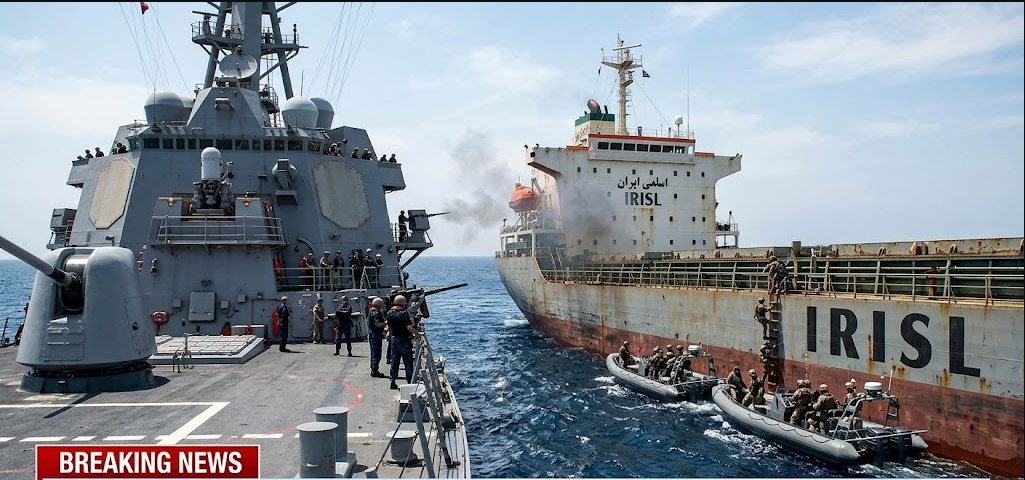
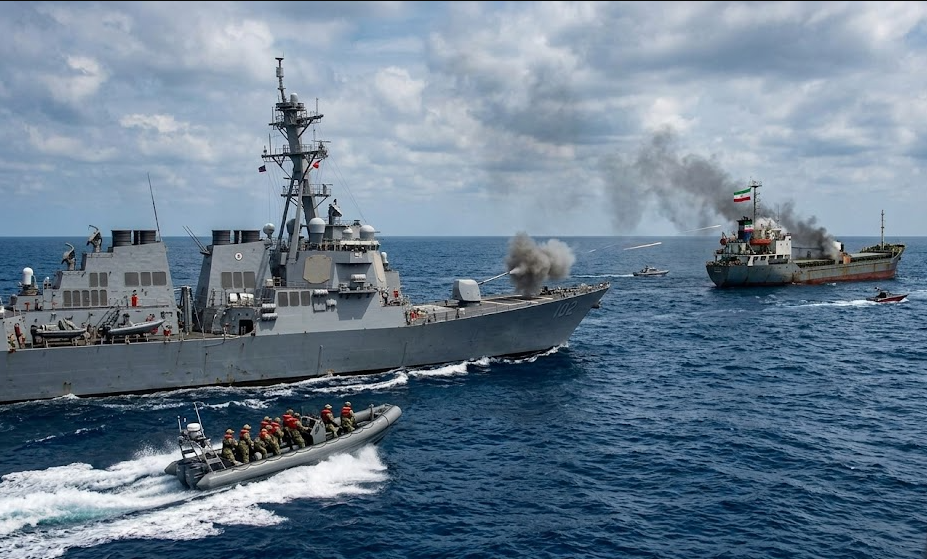
The six-hour standoff ended the same way Trump had promised it would. The USS Spruance fired several rounds from its 5-inch MK 45 naval gun directly into the engine room of the Iranian-flagged cargo ship Touska in the Gulf of Oman on Sunday — disabling the vessel, stranding its crew, and triggering the most volatile single episode of the Iran conflict since the blockade began.
U.S. Marines from the 31st Marine Expeditionary Unit then rappelled onto the deck of the nearly 900-foot cargo ship and seized it.
“Our Navy ship stopped them right in their tracks by blowing a hole in the engine room,” Trump posted on Truth Social Sunday afternoon. “The United States does not play games.”
Within hours, Iran’s top military command had called it “armed piracy,” accused the United States of violating the ceasefire, and announced it would no longer send negotiators to the planned peace talks in Islamabad. The ceasefire expires in two days.
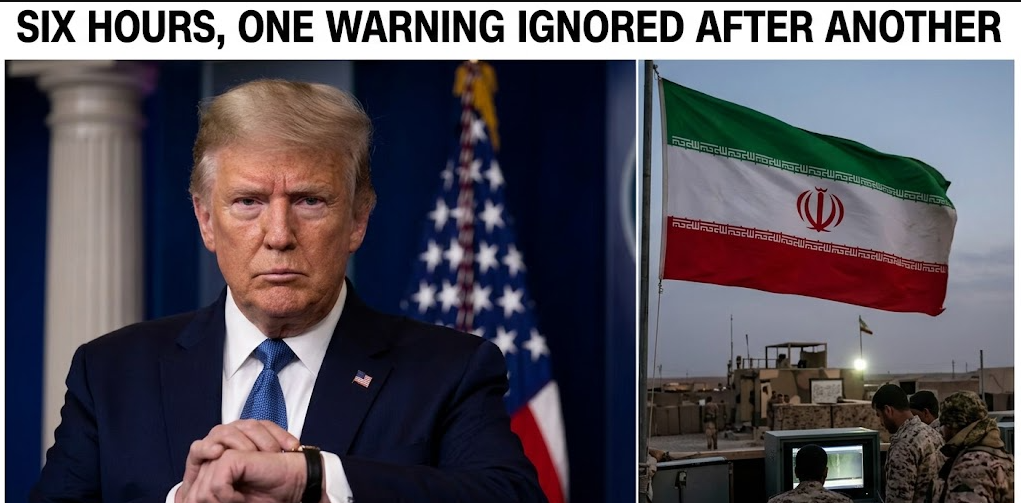
Six Hours, One Warning Ignored After Another
The sequence that ended with a hole blown through a cargo ship’s engine room began early Sunday morning when the USS Spruance — a guided-missile destroyer operating as part of the U.S. naval blockade — identified the Touska as an Iranian-flagged vessel attempting to reach an Iranian port in defiance of blockade orders.
According to the U.S. Central Command, the Spruance issued repeated warnings to the Touska’s crew over a six-hour period, demanding compliance. The crew refused each one.
After ordering the engine room evacuated, Spruance opened fire — disabling the ship’s propulsion systems and leaving the vessel dead in the water in the Gulf of Oman. Marines then boarded in a scene documented by military cameras and broadcast globally within the hour.
CNN described the Touska as potentially becoming “spoils of war” — a legal framing that would allow the United States to keep the vessel under the laws of maritime blockade enforcement. Al Jazeera reported contradictory claims from both sides regarding the ship’s cargo and port of origin, with the full manifest contents not yet publicly confirmed.
Iran Calls It Piracy — and Pulls Out of Talks
Tehran’s response was immediate and unambiguous.
Iran’s Khatam al-Anbiya Central Headquarters — the country’s top joint military command — issued a statement condemning what it called a “violation of the ceasefire” and “maritime highway robbery”, vowing a “swift and proportionate” military response. Iranian Foreign Ministry Spokesperson Esmaeil Baghaei was blunter about the diplomatic consequences: “As of now, we have no plans for the next round of negotiation.”
The reason cited was a three-part indictment: the continuation of the naval blockade, the Touska seizure as a direct ceasefire violation, and what Tehran described as “threatening U.S. rhetoric.” The Islamabad talks — a second round mediated by Pakistan that had been seen as the last viable path to a deal before the April 22 deadline — appear effectively dead.
The development compounds an already deteriorating situation. Iran had re-closed the Strait of Hormuz on April 18 — just one day after opening it under ceasefire terms — in response to the U.S. refusing to lift the naval blockade. The brief window of diplomatic optimism that followed the April 16 Lebanon ceasefire and the strait’s temporary reopening has now entirely closed.
Markets Respond Immediately
Financial markets did not need an official statement to understand what the Touska seizure meant.
U.S. stock futures fell sharply in Sunday night trading. Crude oil prices surged as traders priced in the probability of renewed full-scale hostilities. The same market pattern that followed the collapse of the Islamabad talks on April 12 — when Brent crude spiked and equities dropped — repeated itself with fresh urgency.
CNBC reported that analysts were already describing the situation as a “resumption of hostilities” scenario, with the seized ship, vessel attacks in the Gulf, and Iran’s withdrawal from talks collectively pushing the ceasefire “toward the brink.”
The context makes those words weigh heavier than they might otherwise. Brent crude rocketed from $72 a barrel to $120 in the days following Operation Epic Fury in late February. Gas prices at the U.S. pump rose 37% to $4.10 a gallon. The IEA described the broader disruption as “the largest supply disruption in the history of the global oil market.” Markets have spent seven weeks learning what an escalation costs. Sunday’s seizure reminded them the bill can always go higher.
Two Days Until the Ceasefire Expires
The ceasefire between the United States and Iran expires Wednesday, April 22. As of Sunday night, Iran has withdrawn from scheduled talks, the strait is closed again, and Tehran’s military has publicly vowed retaliation.
Trump, for his part, showed no signs of recalibration. “The United States does not play games,” he wrote. He offered no statement about extending the ceasefire, no indication that the Touska operation had been weighed against its diplomatic consequences, and no public acknowledgment that the talks his own officials described as critical were now in jeopardy.
The Aviationist noted the military significance of the seizure independently: this was the first time the U.S. Navy had physically boarded and captured a vessel under the blockade, crossing a threshold that all previous enforcement actions had stopped short of.
Whether Iran retaliates before Wednesday — and what form that retaliation takes — will determine whether the next chapter of this conflict is a deal or a resumption of war.
Market Analysis
A quick snapshot of market trends, customer behavior, and competitor movements.