For 47 years, Iran held the only keys to the world’s most critical oil chokepoint. One war, one ceasefire, and one Truth Social post later — Trump has a copy. The question is what he does with them. WASHINGTON — The Strait of Hormuz is 21 miles wide at its narrowest point. Through it flows
For 47 years, Iran held the only keys to the world’s most critical oil chokepoint. One war, one ceasefire, and one Truth Social post later — Trump has a copy. The question is what he does with them.
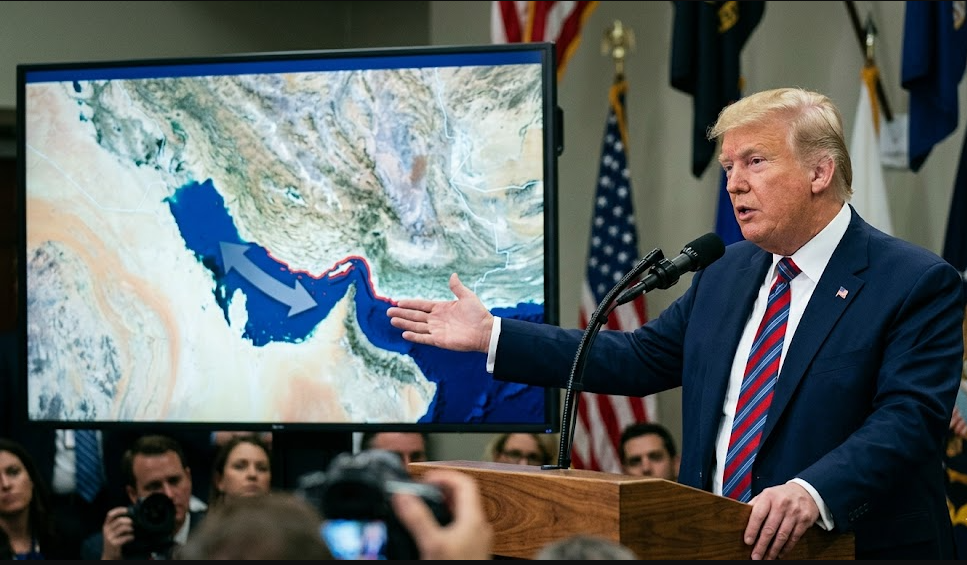
WASHINGTON — The Strait of Hormuz is 21 miles wide at its narrowest point. Through it flows 20 million barrels of oil per day — roughly 20% of the world’s entire petroleum supply, 34% of global seaborne crude trade, and 20% of global LNG. For nearly five decades, Iran has treated that narrow channel as its personal leverage over the world economy. Close the strait, and the planet chokes. Every US president since Carter has known it. None has fundamentally changed it. Until now.
When Trump posted his two-week ceasefire on Truth Social at 6:30 p.m. EDT on April 7, 2026 — demanding the “COMPLETE, IMMEDIATE, and SAFE OPENING of the Strait of Hormuz” as the price of peace — he did something no predecessor had managed. He turned Iran’s greatest strategic weapon into a negotiating concession. Tehran didn’t just agree to stop fighting. It agreed to hand Trump operational influence over the world’s most important energy chokepoint in exchange for two weeks of not being bombed.
Those are the spare keys. And Trump knows exactly what they are worth.
How Iran Lost Its Grip
For decades, the Strait of Hormuz was Iran’s ultimate insurance policy. Analysts called it the “nuclear option” of energy warfare — the one lever Tehran could pull to inflict immediate, catastrophic pain on the global economy without firing a single missile at a Western target. The United States, Europe, China, Japan, South Korea — all hostage to 21 miles of Persian Gulf water.
Iran had threatened closure during the 1980s Tanker War, the 2012 sanctions standoff, and the 2019 tanker seizures. Every time, the world flinched. Every time, Iran backed down — but kept the keys.
On February 28, 2026, after US and Israeli forces launched nearly 900 strikes in 12 hours and killed Supreme Leader Khamenei along with six senior security commanders, Iran finally pulled the lever. The Strait of Hormuz closed — the first enforced closure in modern history. Oil surged from $73 to a physical peak of $144.42 per barrel. The Dallas Federal Reserve called it “the greatest global energy security challenge in history.” The weapon, finally deployed, was every bit as devastating as advertised. But Iran had miscalculated one thing: Trump was willing to call the bluff — and raise.
The Price of the Keys
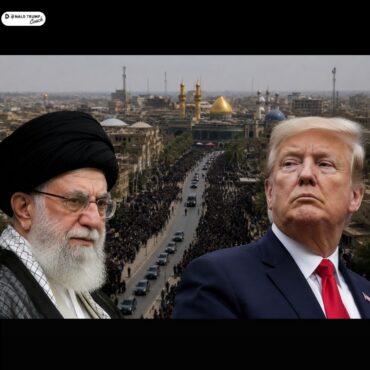
When Trump set his April 7 deadline — “a whole civilization will die tonight” — he wasn’t just threatening military escalation. He was making Iran choose between two forms of destruction: continued war with a superpower that had already killed its Supreme Leader, or surrendering the one strategic asset that had protected it for 47 years. Iran chose survival. And in doing so, it handed Trump something extraordinary.
Under the ceasefire terms, Iran agreed to the “COMPLETE, IMMEDIATE, and SAFE OPENING” of the Strait of Hormuz — with ships coordinating transit through Iranian maritime authorities. Read that carefully. Iran did not simply stop blocking the strait. It agreed to a coordination mechanism that places US-aligned shipping under a framework Iran must actively cooperate with. Trump even signalled what he intends to do next, posting: “I want to make BIG MONEY in the Strait of Hormuz.”
That is not the language of a man who plans to return the keys when the two weeks are up.
What the Keys Are Actually Worth
The strategic value of Hormuz access is almost incalculable. 84% of all Hormuz crude exports go to Asia — China, India, Japan, and South Korea account for 69% combined. Saudi Arabia alone pushes 5.5 million barrels per day through the strait. The only alternative bypass pipelines carry a combined 2.6 million barrels per day — barely 13% of total Hormuz flows.
Whoever influences Hormuz access influences the energy economics of Asia. Whoever influences Asian energy economics holds leverage over China. Trump has understood this geometry his entire presidency. His “BIG MONEY” post was not a throwaway line. It was a strategic declaration.
CNBC analysts noted that even after the ceasefire, Dated Brent spot prices remained above $120 — the physical market’s way of saying the world does not yet fully trust Iran to honor the opening. That gap between futures markets and physical markets is the uncertainty premium still priced into every barrel. Close that gap — normalize Hormuz access, build a reliable coordination framework — and the economic value captured is enormous.
The 47-Year Leverage Shift
Every administration from Carter to Biden crafted its Persian Gulf strategy around one foundational assumption: Iran controls Hormuz and will never voluntarily relinquish that control. Two aircraft carrier groups, diplomatic isolation, snapback sanctions, maximum pressure campaigns — all of it designed to deter Iran from using the key, never to actually take it away.
Trump did not deter. He escalated until the cost of holding the key exceeded the value of having it. Forty days of war. A decapitated leadership. A collapsed economy with 43% inflation, a rial trading above 1 million to the dollar, and 70% food price inflation. The Iranian state was not just weakened — it was structurally unable to sustain the closure it had deployed as its ultimate weapon.
When Pakistan’s PM Shehbaz Sharif and Army Chief Asim Munir brokered the ceasefire in those final hours, Iran was not negotiating from strength. It was negotiating to survive.
The Catch – The spare keys come with conditions neither side has fully resolved. The ceasefire expires April 23. Formal talks are underway in Islamabad, facing the same unresolved core dispute that killed six rounds of negotiations in 2025: Iran insists on the right to domestic uranium enrichment; the US demands dismantlement. Secretary of State Rubio admitted publicly: “I’m not sure you can reach a deal with these guys.” BCA Research warned hostilities could “ignite later this month.”
If talks collapse, Iran may decide the keys are worth reclaiming — and accept the cost. The Strait will close again. Oil will spike again. The leverage returns.
For now, though, the spare keys are in Washington’s pocket. For the first time in 47 years, the world’s most important energy chokepoint is part of an active US negotiating framework — not just a threat to be deterred, but a concession already extracted. Trump called it “a total and complete victory.”
Oil & Energy Markets
A look at crude price swings, OPEC supply moves, and how energy markets react to geopolitical shocks.