Trump has announced he will extend the iran ceasefire past its April 21 expiry. But the state of the Islamabad peace talks is, by every independent assessment, deeply unclear. Iran hasn’t confirmed the extension’s terms. Israel isn’t bound by them. Ships are still being targeted. And “extension” is doing a lot of diplomatic work for
Trump has announced he will extend the iran ceasefire past its April 21 expiry. But the state of the Islamabad peace talks is, by every independent assessment, deeply unclear. Iran hasn’t confirmed the extension’s terms. Israel isn’t bound by them. Ships are still being targeted. And “extension” is doing a lot of diplomatic work for what may simply be a war that has paused without ending.
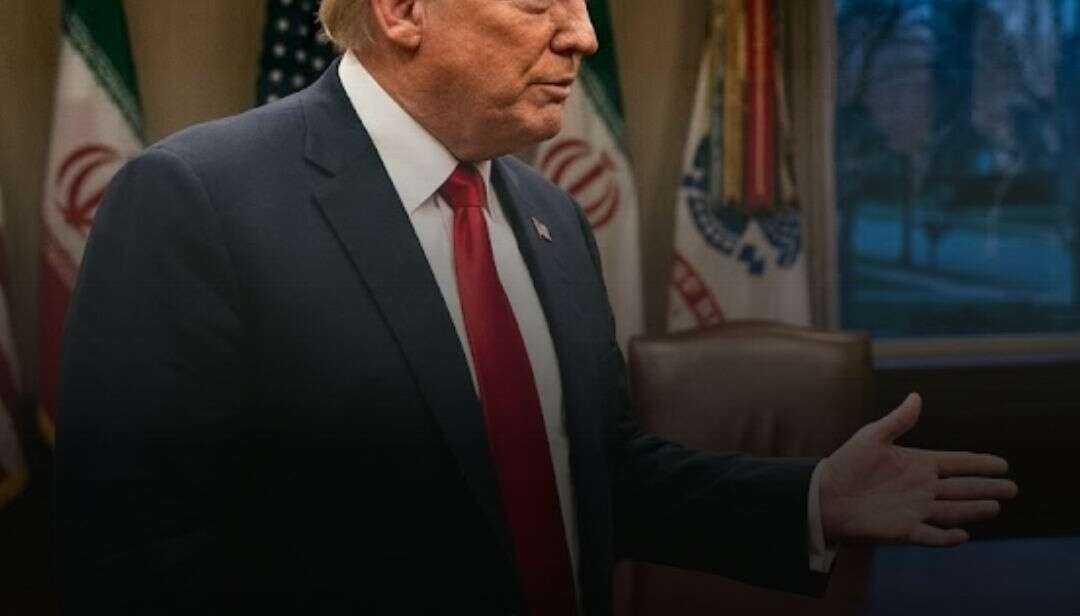
WASHINGTON / ISLAMABAD / TEHRAN — The announcement came, as consequential Trump foreign policy announcements now routinely do, via Truth Social — posted at 9:47 p.m. Monday from the White House residence, without prior consultation with congressional leaders, without a coordinated statement from allied governments, and without a confirmed reciprocal acknowledgment from Tehran.
“Iran has agreed to continue the CEASEFIRE! We are extending the pause for additional time to allow the Agreement to be finalized. The talks in Islamabad are going very well — maybe the best talks anyone has ever had. Iran wants a deal and I want a deal. We will get it done!”
It was, by Trump’s standards, a measured post. No civilization-ending threats. No declarations of total victory. Just an extension announcement, a superlative about the quality of the negotiations, and the implicit assertion that the iran ceasefire is holding when the evidence from the Persian Gulf suggests it is holding selectively, partially, and under strain.
What “Extended” Actually Means
The iran ceasefire that Trump announced on April 7 was a two-week pause structured around a single deliverable: the reopening of the Strait of Hormuz in exchange for the suspension of US and Israeli bombing operations. It expired April 21 without a framework agreement, without resolution of the core enrichment impasse, and amid a series of maritime incidents — the MV Sorena seizure, two IRGC fast boat encounters, and three commercial vessel targeting reports — that both sides have characterized as the other’s fault.
The extension Trump announced Monday does not resolve any of those disputes. It does not define new terms. It does not specify duration — “additional time” is not a diplomatic framework. It does not address the israel iran ceasefire dimension that has complicated every phase of the negotiations: Israel’s ongoing operations in Lebanon, excluded from ceasefire terms by deliberate American design and condemned as bad-faith violations by Tehran with equal deliberateness.
What the extension does accomplish is narrower and more important than it appears: it keeps both sides from formally declaring the iran ceasefire dead, which would trigger immediate resumption of hostilities under the military postures both sides have maintained throughout. The 15-ship US naval blockade remains in position. Iran’s IRGC naval assets remain at elevated readiness. The carrier strike group anchoring the US blockade formation has not stood down. An official ceasefire collapse would convert those postures from deterrence to active combat within hours.
The extension is not a peace announcement. It is a formal postponement of war resumption — a distinction that matters enormously to the sailors in the Strait and somewhat less to the Truth Social audience reading about “the best talks anyone has ever had.”
Tehran’s Non-Confirmation
The diplomatic signal that has most unsettled analysts since Trump’s Monday post is what Tehran has not said.
Iranian FM Abbas Araghchi, who has been the public voice of Iranian engagement with the iran ceasefire framework throughout, issued a statement Tuesday morning that stopped carefully short of confirming the extension on Trump’s terms:
“The Islamic Republic of Iran remains committed to the framework of negotiations as structured through the Pakistani mediation process. Iran’s position on the cessation of hostilities is conditional on the cessation of all hostile acts — including naval aggression, continued sanctions enforcement operations, and Israeli military activity against our allies in Lebanon.”
That statement does not say Iran has agreed to an extension. It says Iran remains committed to a negotiating framework — which is a different, weaker, more conditional formulation. The word “conditional” is doing significant diplomatic work. It preserves Iran’s ability to characterize any further US naval enforcement action, any further Israeli Lebanon strike, or any further targeting incident as a ceasefire violation that nullifies the extension.
The iran and israel ceasefire tension is embedded in that conditionality. Iran has never accepted the israel iran ceasefire architecture that excludes Lebanon — and every day that Israeli operations in Lebanon continue is a day Tehran can invoke its conditional language to declare the extension void.
The Israel Variable
The israel iran ceasefire problem has no clean solution, and the extension announcement does nothing to create one.
Israel’s position, restated Tuesday by PM Netanyahu’s office, is structurally incompatible with Iranian demands: Israel “supports the diplomatic process” but “will not be bound by ceasefire terms that do not address Hezbollah’s reconstitution” and “will not accept any framework that recognizes Iran’s right to uranium enrichment.” Netanyahu’s coalition partners — Smotrich and Ben-Gvir — have issued statements calling the iran ceasefire extension “a strategic mistake” and demanding Israel be included as a formal party to any final agreement rather than a secondary signatory to terms negotiated bilaterally between Washington and Tehran.
The iran and israel ceasefire dynamic produces an irresolvable triangle: every concession the US makes to Iran to keep the ceasefire alive generates Israeli domestic pressure that complicates US-Israel relations. Every Israeli operation in Lebanon that Iran invokes as a ceasefire violation generates Iranian domestic pressure that complicates US-Iran relations. Trump is simultaneously managing both pressures with a single ceasefire framework that was never designed to contain both.
VP Vance, returning to Islamabad for the resumed April 25 talks, acknowledged the complexity without resolving it: “The ceasefire is between the United States and Iran. Israel’s security requirements are a separate conversation that we are having in parallel. We believe both tracks are manageable.”
Iran’s response to that framing, delivered through state media, was precise: “There is no separate track. There is one conflict and one peace. The iran ceasefire that excludes Lebanon is not a ceasefire. It is a pause in one theater of a war that continues in another.”
What the Talks Must Deliver by May 1
The extended iran ceasefire — whatever its precise duration — is now universally understood as expiring no later than May 1, when the Islamabad framework reaches the outer boundary of its political sustainability.
The talks resuming April 25 must navigate six unresolved core issues in six days:
Enrichment: Iran insists on domestic rights. US demands dismantlement. No movement.
Stockpile transfer: US requires 460 kg of 60%-enriched uranium transferred to third country. Iran refuses.
Sanctions: Iran demands immediate full removal. US offers graduated relief.
Lebanon: Iran demands inclusion in ceasefire. Israel refuses. US defers.
Verification: Closest to agreement — both sides accept enhanced IAEA access in principle.
Compensation: Iran demands war reconstruction funding. US has not engaged the number.
Ed Yardeni of Yardeni Research framed the market’s assessment of this list: “The verification progress is real and meaningful. The other five issues are where deals die. The iran ceasefire extension buys time to negotiate — it does not change the negotiating geometry.”
BCA Research’s Matt Gertken was characteristically direct: “Trump extending the ceasefire is the right tactical call. But an extension without structural progress on enrichment is not a path to peace. It is a path to a May 1 crisis with the same dynamics as the April 21 crisis, compounded by three more weeks of accumulated violations.”
The Market’s Verdict
Oil markets processed Trump’s extension announcement with the measured skepticism that has characterized their response to every iran ceasefire development since April 7.
WTI crude fell $3.20 on the extension news — from $105.40 to $102.20 — before recovering to $104.10 as Tehran’s conditional non-confirmation circulated through trading desks. Brent followed a near-identical pattern. Goldman Sachs maintained its $100–$120 near-term price band, noting that “the extension reduces near-term conflict probability without resolving the structural uncertainty that prevents prices from returning to pre-war levels.”
Gas prices at the pump showed no movement. Physical supply chains disrupted by 38 days of Hormuz closure do not respond to ceasefire announcements. They respond to tankers moving.
The tankers are moving — selectively, expensively, under the shadow of a naval blockade and an IRGC that has demonstrated it can target vessels within hours of a ceasefire extension announcement.
Trump says the iran ceasefire is extended. The state of the peace talks remains unclear. The ships in the Strait remain targets. And May 1 is nine days away.
Market Analysis
A quick snapshot of market trends, customer behavior, and competitor movements.