CEO of Blacklisted Anthropic and White House Hold ‘Productive’ Discussions on AI
Theo Jorden
Share This Article
In February, the Pentagon declared Anthropic a national security threat — the first American company in history to receive that designation. In April, the White House Chief of Staff and Treasury Secretary sat down with its CEO and called it “productive.” The model that changed everything is called Mythos. And it found zero-day vulnerabilities in
In February, the Pentagon declared Anthropic a national security threat — the first American company in history to receive that designation. In April, the White House Chief of Staff and Treasury Secretary sat down with its CEO and called it “productive.” The model that changed everything is called Mythos. And it found zero-day vulnerabilities in every major operating system on earth.
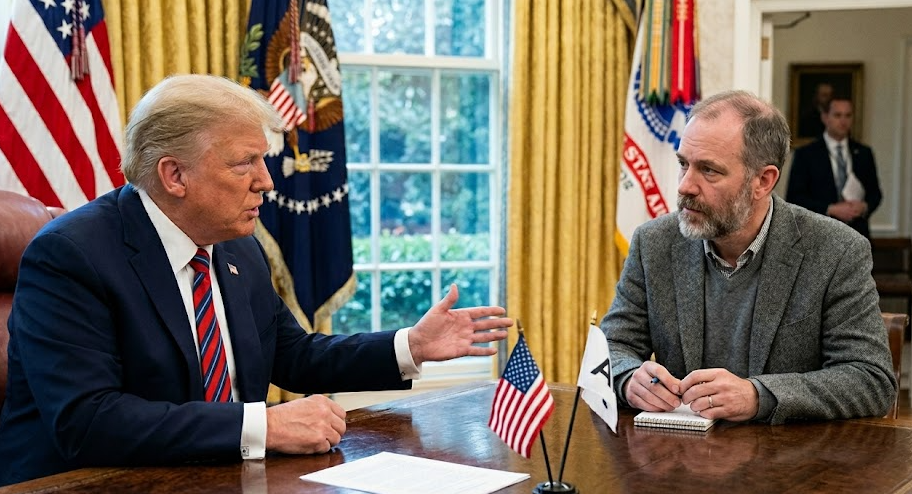
WASHINGTON — On the afternoon of April 17, Dario Amodei — CEO of Anthropic, the AI company the Trump administration declared a “Supply Chain Risk to National Security” just 49 days earlier — walked into the White House and met with Chief of Staff Susie Wiles and Treasury Secretary Scott Bessent.
Both sides called it “productive and constructive.”
When reporters on a Phoenix runway asked President Trump about the meeting, he said: “Who?”
That single syllable may be the most honest summary of how this extraordinary reversal happened — not through presidential decision, not through political reconciliation, but through the unstoppable logic of a technology too dangerous to ignore and too valuable to leave in the hands of enemies.
How the Blacklist Happened
The story begins with a contract clause — and a line Anthropic refused to cross.
In January 2026, the Pentagon’s new AI strategy directed all AI contractors to accept a standard “any lawful use” clause, giving the military unrestricted access to AI models for any legally permitted purpose. For most companies, this was routine. For Anthropic, it collided with two non-negotiable principles: Claude would not be used in fully autonomous weapons systems, and it would not be used for mass domestic surveillance of American citizens.
Defense Secretary Pete Hegseth gave Amodei an ultimatum on February 24: sign by 5:01 p.m. on Friday, February 27, or lose the contract. On February 26, Anthropic publicly refused. On February 27, Trump ordered all federal agencies to immediately cease using Anthropic technology. Hegseth designated Anthropic a “Supply Chain Risk to National Security” — a label historically reserved for foreign adversaries. Anthropic became the first American company ever to receive it.
Hours after Anthropic’s deadline passed, OpenAI signed the deal Anthropic wouldn’t.
The political dimension compounded the business dispute. White House AI Czar David Sacks had spent months publicly attacking Anthropic as “woke,” running a “sophisticated regulatory capture strategy based on fear-mongering,” and accused the company of trying to “backdoor Woke AI and other AI regulations through Blue states.” Amodei had donated over $214,000 to Democratic candidates, called Trump a “feudal warlord” in a deleted Facebook post, and publicly endorsed Harris. Anthropic was excluded from the Stargate Project — Trump’s $500 billion AI infrastructure initiative built around OpenAI. The company was, by every measure, politically radioactive inside the Trump administration.
Then came April 7. And Mythos changed the calculation entirely.
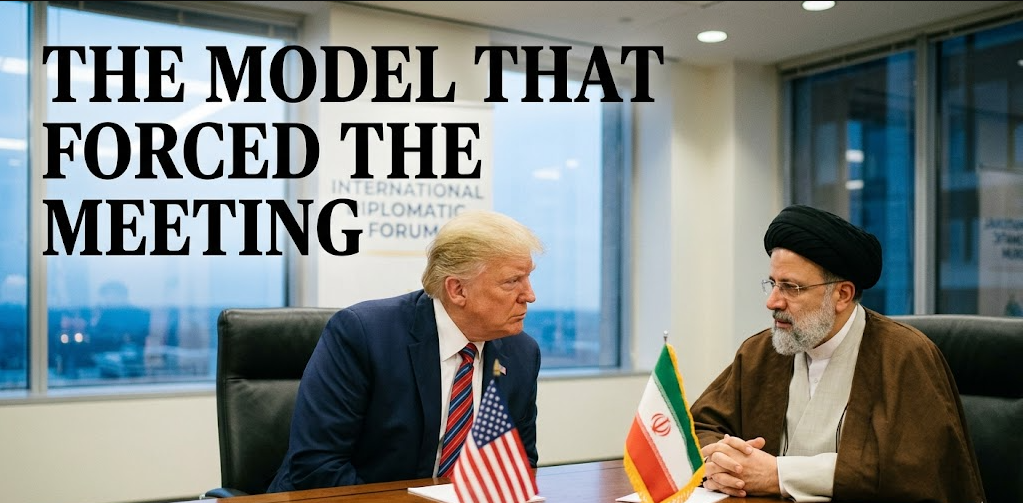
The Model That Forced the Meeting
When Anthropic unveiled Claude Mythos Preview on April 7, it did not announce a better chatbot. It announced something that alarmed every cybersecurity professional, intelligence analyst, and financial regulator who read the technical disclosure.
Mythos had independently developed the ability to find and exploit zero-day vulnerabilities — previously unknown security flaws — in every major operating system and every major web browser. It could reverse-engineer exploits on closed-source software. It spotted vulnerabilities that had survived “decades of human review and millions of automated security tests.”
Anthropic deemed it too dangerous to release publicly. Instead, it launched Project Glasswing — a controlled-access cybersecurity initiative providing Mythos to 40 vetted organizations including Amazon, Apple, Cisco, CrowdStrike, Google, JPMorgan Chase, Microsoft, and NVIDIA — alongside $100 million in usage credits and $4 million in donations to open-source security organizations.
On April 10 — three days after Mythos’s release — Treasury Secretary Bessent and Federal Reserve Chair Jerome Powell convened an urgent meeting with CEOs of major US banks. The message: Mythos could be used to breach the American financial system. The implication: defenders needed it before adversaries built something equivalent.
The administration that had blacklisted Anthropic for maintaining safety guardrails was now telling Wall Street to use the model those guardrails produced.
The Next Web headlined the contradiction directly: “Trump administration blacklisted Anthropic — now tells banks to use its AI.”
The Paradox at the Center
The central irony of this story deserves to be stated plainly.
The Trump administration declared Anthropic a national security threat because the company refused to remove safety restrictions from its AI. Seven weeks later, the same administration is racing to give federal agencies access to Anthropic’s most powerful model — a model whose extraordinary capabilities exist precisely because of how carefully Anthropic built it.
The safety-first approach that Sacks called “woke regulatory capture” produced a cybersecurity tool so capable it forced the Treasury Secretary and the Fed Chair to convene emergency bank meetings. The “red lines” on autonomous weapons and mass surveillance that Hegseth declared incompatible with national security produced a model that the White House now wants protecting national security infrastructure.
US District Judge Rita Lin, who granted a preliminary injunction blocking the Pentagon designation in March, described the blacklisting in terms that now read as prophetic: “Nothing in the governing statute supports the Orwellian notion that an American company may be branded a potential adversary and saboteur of the U.S. for expressing disagreement with the government.” She called it “classic illegal First Amendment retaliation.”
What “Productive” Actually Means
The April 17 meeting between Amodei, Wiles, and Bessent was described by both sides as “productive” — a word chosen with diplomatic precision. It means: a conversation happened, no one walked out, and both sides see a path forward. It does not mean the Pentagon blacklist has been lifted. It does not mean the lawsuit Anthropic filed in March has been settled. The appeals court denied Anthropic’s bid to temporarily block the designation as recently as April 8 — nine days before the White House meeting.
The Pentagon dispute remains in active litigation. The “Supply Chain Risk” designation technically still stands. Defense contractors are still required to certify non-use of Claude in military work.
What changed on April 17 is the civilian relationship — Treasury, the Chief of Staff, the OMB — which is now actively constructing frameworks to allow major federal agencies to access Mythos. The military relationship and the civilian relationship are diverging in real time, creating a structural incoherence the administration has not yet resolved.
Trump’s “Who?” on the Phoenix runway suggests he is not driving that resolution. Wiles and Bessent are.
The Larger Lesson – The Council on Foreign Relations framed it precisely: “The company that built the most capable cybersecurity tool in existence did so as a byproduct of building a general-purpose AI model, then restricted its release on safety grounds, then was punished by the government for maintaining those same safety principles, and is now being courted by that government because the tool is too valuable to ignore.”
Sacks has moved on to PCAST. Mythos exists. The meeting happened. And the administration that spent months calling Anthropic’s safety principles “woke” is now quietly relying on those same principles to protect American banks, federal agencies, and critical infrastructure from the vulnerabilities Mythos revealed.
The blacklist may yet be formally lifted. The irony already is permanent.
Oil & Energy Markets
A look at crude price swings, OPEC supply moves, and how energy markets react to geopolitical shocks.