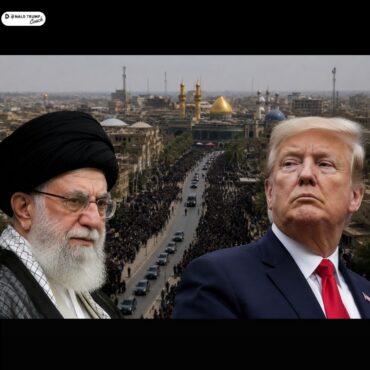
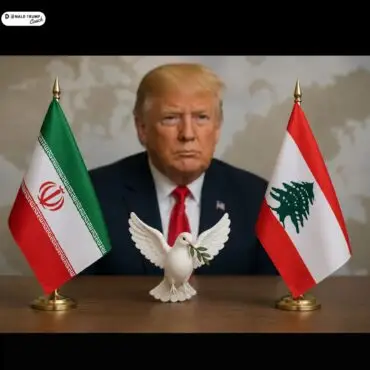
At 6:30 p.m. EDT on April 7, 2026 no Fed meeting, no press briefing, no coordinated global statement one Truth Social post began collapsing oil futures in real time. By morning, trillions had moved. The world had repriced. One man did it alone.
WASHINGTON Call it the most consequential social media post in financial history.
At 6:30 p.m. EDT on April 7, President Donald Trump posted 126 words on Truth Social announcing a two-week US-Iran ceasefire and the immediate reopening of the Strait of Hormuz. No second source confirmed it. No White House press secretary followed up. No G7 partners were consulted publicly. The post was the announcement — and global markets treated it exactly that way.
By the close ofApril 8, WTI crude had crashed 16% to $94.41 per barrel its single largest one-day decline since April 2020 and one of the five biggest daily oil price drops in recorded history. The Dow Jones surged 1,374 points (+2.95%), its best session since April 2025. The S&P 500 jumped 2.56%. The Nasdaq gained 2.82%. Japan’s Nikkei soared 5.39%. South Korea’s KOSPI gained 7% — so sharp it triggered a stock market circuit breaker. Germany’s DAX added 4.7%. European travel stocks led sector gains at +7%. Interest rate cut probabilities for year-end exploded from 14% to over 43% overnight. Every major asset class on Earth is repriced because of a social media post.
The Whiplash That Defined the Day
The scale of the move only makes sense when you see what came before it. That same morning — just ten hours earlier — Trump had posted the opposite:
“A whole civilization will die tonight, never to be brought back again.”
That post drove WTI crude above $116 per barrel as markets priced in imminent strikes on Iranian civilian infrastructure. The ceasefire post at 6:30 p.m. vaporized that premium. One account. Two posts. A $22-per-barrel swing in a single session — among the most dramatic intraday market reversals in modern history.
What that swing was unwinding matters. The Strait of Hormuz — carrying 20 million barrels per day, roughly 20% of the world’s entire oil supply — had been fully closed since February 28, when US and Israeli forces launched nearly 900 strikes on Iran in 12 hours, killing Supreme Leader Khamenei. The Dallas Federal Reserve called it “the greatest global energy security challenge in history.” Oil had surged from a pre-war baseline of $73 per barrel to a physical market peak of $144.42 — a full 97% geopolitical war premium. The ceasefire post didn’t instantly reopen the strait. It simply repriced the probability that it would. That alone was enough to crash oil by 16%.
This Has Happened Before Never at This Scale
The phenomenon of words moving markets is not new. In 1996, Federal Reserve Chairman Alan Greenspan said “irrational exuberance” in a single speech — Tokyo fell 3.2%, Frankfurt and London dropped 4% each, all on two words and zero policy action. In December 2018, Trump’s “I am a Tariff Man” tweet erased $800 billion in market value in one day. Elon Musk’s Dogecoin tweets produced an average 58.52% immediate price surge, confirmed by peer-reviewed research. On April 9, 2025, Trump’s “THIS IS A GREAT TIME TO BUY!!!” Truth Social post — posted at 9:37 a.m., four hours before a tariff pause announcement — sent the Nasdaq up 12%, its biggest single-day gain since 2008. Congressional Democrats called it a “market manipulation scheme.” The Washington Post called for investigation. No charges followed.
April 7, 2026 is that pattern’s logical endpoint.
Why Truth Social Hits Harder Than Twitter Ever Did
Truth Social has 6.3 million users. Twitter has 450 million. Yet Truth Social moves more market value per post than Twitter ever did during Trump’s first term — and the reason is structural, not numerical.
When Trump tweeted in 2017–2021, markets treated it as one signal among many. White House briefings, official statements, and senior officials added context. Today, there is no follow-up. The Truth Social post is the policy. It is the order. Every trading algorithm, every futures desk, every news terminal on Earth monitors one account on a 6.3-million-user platform in real time — because that single account carries sovereign announcement power. Trump Media’s market valuation has surpassed Elon Musk’s X despite generating just $3.7 million in revenue against a $712 million net loss. The platform isn’t valuable because of its audience. It’s valuable because of its one operator.
Experts, Cracks, and What Comes Next
Markets celebrated for less than 24 hours. By April 9, Iran accused the US of breaching the ceasefire. Israel launched 100 airstrikes on Lebanon — excluded from the deal’s terms. The IRGC halted Hormuz shipping again. Oil resumed climbing. Physical Brent never even fell below $120, signalling the market knew futures were pricing hope, not reality.
Tim Waterer of KCM Trade warned of “cautious optimism rather than outright celebration.” BCA Research’s Matt Gertken predicted hostilities would “ignite later this year, if not later this month.” VP JD Vance called it a “fragile truce.” Secretary of State Rubio was blunter: “I’m not sure you can reach a deal with these guys.”
Formal talks open April 10 in Islamabad. The ceasefire expires April 23.
The Bigger Truth – In the analog age, moving global markets required coordinated central bank action or official acts of state. In 2026, it requires one account, 126 words, and a post that goes live before any second source can confirm it.
One Truth Social post crashed a global commodity by 16%, added trillions to world equities, shifted monetary policy expectations, and simultaneously triggered the largest single-day oil drop in six years — all before a single tanker moved through the Strait of Hormuz.
That is not social media anymore. That is financial infrastructure.
And on April 23, when this ceasefire either holds or shatters, every trading desk on earth will be watching not Bloomberg, not the Fed — but the same 6.3-million-user platform where it all began.