A 10-day Lebanon truce took effect Thursday — and was violated within hours. But Trump says the Iran deal is “looking very good” and a weekend meeting may be imminent. Beirut’s skyline lit up with fireworks at midnight Thursday as a 10-day ceasefire between Israel and Lebanon officially took hold. The celebratory gunfire from Hezbollah’s
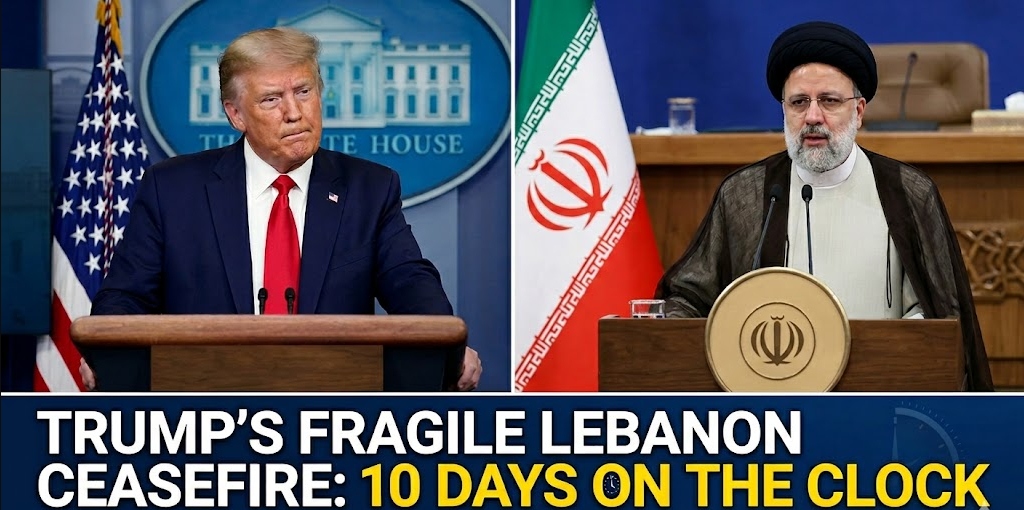
A 10-day Lebanon truce took effect Thursday — and was violated within hours. But Trump says the Iran deal is “looking very good” and a weekend meeting may be imminent.
Beirut’s skyline lit up with fireworks at midnight Thursday as a 10-day ceasefire between Israel and Lebanon officially took hold. The celebratory gunfire from Hezbollah’s strongholds in the city’s southern suburbs echoed across rooftops. For a brief moment, one of the Middle East’s most battered cities exhaled.
The moment lasted roughly 30 minutes.
The Lebanese army confirmed early Friday that Israeli artillery had shelled the southern Lebanese villages of Khiam and Dibbine within half an hour of the ceasefire taking effect. Machine-gun fire was reported during what Israel described as ongoing “sweeping operations” in the area. The Lebanese army issued a formal statement accusing Israel of committing “a number of acts of aggression” in violation of the agreement.
It was a grim but not surprising opening chapter. Israel’s previous Lebanon ceasefire, agreed in 2024, was violated more than 10,000 times by Israeli forces, according to UN peacekeepers. Prime Minister Benjamin Netanyahu, in announcing this truce, made his posture explicit: he would not withdraw Israeli troops from southern Lebanon. “We will attack if threatened by Hezbollah,” a military spokesperson said — a caveat that leaves the definition of “threatened” entirely in Israeli hands.
Why Lebanon Matters to the Iran Deal
The Lebanon ceasefire was not a standalone development. It was, in critical ways, a prerequisite for the broader diplomatic track that Trump is now racing to complete before the US-Iran ceasefire expires April 21.
Iran had told mediators — plainly and repeatedly — that without a halt to Israeli strikes in Lebanon, there would be no progress in US-Iran nuclear talks. Iranian Parliament Speaker Mohammad Bagher Ghalibaf put it on the record this week: a ceasefire in Lebanon is “as important” as one with Iran itself. Tehran framed its demand as non-negotiable. If Hezbollah continued absorbing Israeli strikes while Iran was expected to sit at a nuclear negotiating table, the domestic political optics for the Iranian leadership were untenable.
The Lebanon truce, however tenuous, unblocked that precondition. Iranian state media wasted no time claiming it as a victory — framing the ceasefire as proof that Iran’s insistence on the Lebanon linkage “compelled the United States and Israel to agree.” Whether that interpretation holds in Tehran’s factional politics matters less than the practical effect: Iran now has less justification for refusing to return to the table.
Trump: The Deal Is “Looking Very Good”
Against this backdrop of fragile ceasefires and early violations, Trump stepped in front of cameras Thursday with his most optimistic public assessment of the diplomatic track yet.
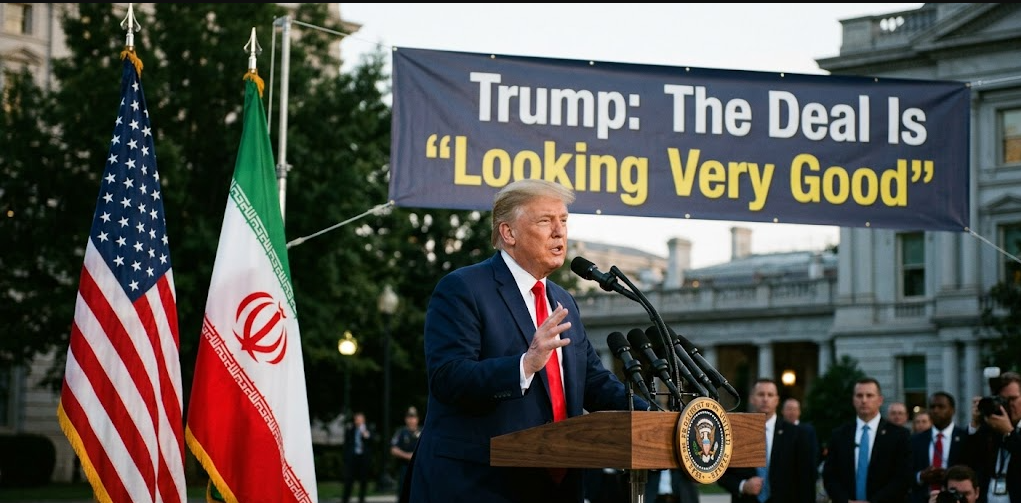
“The deal is looking very good,” he told reporters, per Bloomberg. He added that the next round of direct US-Iran negotiations could take place “probably this weekend” — and dropped a signal that carried unusual personal weight: if a deal were reached and ready to sign in Islamabad, “I might go” to Pakistan to be there for it.
A president announcing he might personally travel to sign a deal is not a routine diplomatic signal. It is a closing argument — a statement of intent calibrated to create momentum and signal seriousness to both the Iranian side and the domestic audience simultaneously.
The White House reinforced the optimism through official channels. CNN reported that Pakistan’s Army Commander Field Marshal Asim Munir had traveled personally to Tehran this week for meetings with Iranian Foreign Minister Araghchi — the most direct Pakistani diplomatic engagement with Tehran since the Islamabad talks collapsed. Axios confirmed that US and Iranian negotiators have made concrete progress toward a framework agreement, with two US officials acknowledging forward movement since last weekend.
The Remaining Gap and the Five-Day Clock
Optimism has a specific obstacle: the enrichment timeline. The US proposed a 20-year suspension in Islamabad — itself a retreat from earlier demands for permanent dismantlement. Iran offered three to five years. The gap between those numbers is not just arithmetic; it represents fundamentally different theories of what security looks like for each side.
The US-Iran ceasefire expires April 21 — five days from now. The Lebanon truce runs 10 days, carrying through April 26, which creates a slightly longer diplomatic runway if the Iranian ceasefire can be extended. But the White House has publicly denied requesting an extension, while privately acknowledging one would be necessary if a framework deal is reached.
NPR’s on-the-ground reporting captured the simultaneous fragility of every element: a Lebanon ceasefire violated within its first hour, a US-Iran ceasefire expiring in five days, and a president saying the deal looks very good while his naval blockade remains in full operational effect off Iranian ports.
The paradox of this moment is that the most optimistic diplomatic signals in weeks are arriving simultaneously with the most visible signs of how easily any of this could collapse. Israel’s artillery is still firing in Lebanon. Iranian tankers are still testing the blockade. The enrichment gap has not closed.
Trump has told the world he might fly to Islamabad to sign this deal. That is either the most powerful closing signal a president can send — or a pressure play that, if it fails, will be the most visible diplomatic stumble of his second term. Either way, the next five days will tell.
Market Analysis
A quick snapshot of market trends, customer behavior, and competitor movements.