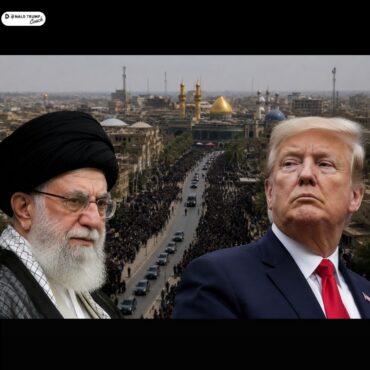
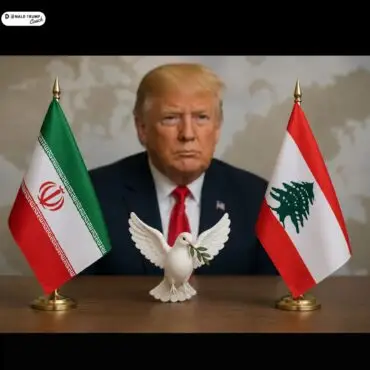
The Hormuz Gamble: Trump’s Naval Blockade of Iran Is Now in Effect
Theo Jorden
Share This Article
As of April 14, 15 US warships — including a carrier strike group and multiple destroyers — have formed a naval blockade around all Iranian ports. The ceasefire expires in 7 days. The Strait of Hormuz, oil markets, and the fragile Islamabad talks now hang on what happens next. PERSIAN GULF — The guns never
As of April 14, 15 US warships — including a carrier strike group and multiple destroyers — have formed a naval blockade around all Iranian ports. The ceasefire expires in 7 days. The Strait of Hormuz, oil markets, and the fragile Islamabad talks now hang on what happens next.
PERSIAN GULF — The guns never fully went quiet. Now the ships have moved.
As of April 14, the United States has deployed 15 warships — anchored by a carrier strike group and supported by guided-missile destroyers, submarine escorts, and maritime patrol assets — into a formal naval blockade formation around Iranian ports in the Persian Gulf and the Gulf of Oman. The blockade, confirmed by CENTCOM and reported by Reuters, NBC News, and Al Jazeera, is the most aggressive US naval posture against Iran since the 1988 Operation Praying Mantis — and it is live, operational, and escalating, with 7 days left before the April 21 ceasefire deadline expires.
This is not a freedom of navigation exercise. This is not a show of force. This is a blockade. And its timing — arriving in the final week of a fragile two-week ceasefire that is already showing structural cracks — is either the most calculated pressure tactic in modern US diplomacy or the most dangerous gamble since the Cuban Missile Crisis.
What the Blockade Actually Is
A naval blockade of Iranian ports constitutes an act of war under international law — specifically Article 51 of the UN Charter and the customary laws of armed conflict. The United States is not claiming peacetime navigation rights. It is physically interdicting access to Iranian sovereign port infrastructure with combat-capable naval assets.
The 15-ship formation includes:
1 carrier strike group (USS Gerald R. Ford, already deployed since January 2026)
Submarine escort assets (undisclosed number, standard carrier group composition)
Maritime patrol and surveillance aircraft covering the northern Gulf approaches
Iranian commercial shipping, oil export terminals, and military port access are all within the blockade’s operational envelope. If Iran attempts to move significant naval assets or restart Hormuz interdiction operations, the blockade formation is positioned to respond within minutes.
Seven Ships Short of a War, Seven Days Short of a Deadline
The ceasefire, announced April 7 via Truth Social, expires April 21 — now just 7 days away. The Islamabad talks that opened April 10 have not produced a framework agreement. The same structural impasse that killed six rounds of 2025 negotiations remains unresolved at the center of every session: Iran demands domestic uranium enrichment rights; the US demands complete dismantlement of Natanz, Fordow, and Isfahan.
The naval blockade lands into that negotiating environment as a maximalist pressure move. The message from Washington is unmistakable: the military posture intensifies as the deadline approaches, not relaxes. Every day without an agreement is a day the blockade tightens.
Defense Secretary Pete Hegseth — who declared Iran had “begged” for the April 7 ceasefire — has confirmed the blockade as a “enforcement mechanism” to ensure Iran does not reconstitute Hormuz interdiction capability during the negotiating window. “We are not standing down while they stall,” a senior Pentagon official told Reuters. “The pressure is the process.”
What the Next 7 Days Could Trigger
Three scenarios are now in active play across every major intelligence assessment and trading desk.
Scenario 1 — Deal Before April 21: Iran accepts a framework agreement — likely a phased enrichment freeze rather than full dismantlement — that gives both sides enough political cover to extend the ceasefire into a longer negotiating process. Oil falls further. Blockade eases. Markets celebrate.
Scenario 2 — Extension Without Resolution: No final deal but both sides agree to extend the ceasefire by 30–45 days, accepting the “Islamabad Accord” framework Pakistan proposed. Oil stabilizes. Blockade remains. The crisis is deferred, not resolved.
Scenario 3 — Ceasefire Collapse on April 21: Talks fail. Iran rejects US terms. Ceasefire expires. The blockade, already in place, becomes the opening posture of Phase 2 of the war. Hormuz closes again. Oil returns toward $130–$140. Global markets crater.
BCA Research’s Matt Gertken assessed Scenario 3 at “a meaningful probability — not the base case but no longer a tail risk.” Morgan Stanley flagged that physical Brent, which never fell below $120 even during the ceasefire oil crash, is already pricing elevated conflict probability back into every barrel.
Iran’s Impossible Position
Tehran is negotiating inside a blockade with a broken economy, a decapitated leadership structure, 43% inflation, a rial above 1 million to the dollar, and the knowledge that the man across the table just publicly said they “begged” for the last ceasefire.
Iran’s new leadership must now choose between three forms of humiliation: accepting US enrichment dismantlement demands and losing its nuclear deterrent permanently; accepting the blockade as a permanent feature of Persian Gulf reality; or rejecting both and resuming a war it has already conclusively demonstrated it cannot win militarily.
Iranian FM Abbas Araghchi called the blockade “a flagrant violation of the ceasefire spirit” and warned of “consequences.” He did not specify what those consequences would be. The IRGC has not moved its remaining naval assets. Yet.
The Market Is Watching
Oil markets reacted to the blockade announcement with immediate volatility. WTI, which had partially recovered from its April 8 crash low of $94.41, pushed back toward $102 on blockade news. Dated Brent climbed above $122. Goldman Sachs issued an intraday note warning that “a ceasefire breakdown now, with the blockade in place, could produce the fastest oil price spike in the instrument’s modern history — potentially $130–$150 in 48 hours.”
The next 7 days will determine whether the Hormuz Gamble produces a historic deal or the most expensive military escalation since the Second World War.
The ships are in position. The clock is running. And every oil futures desk on earth is watching the same 6.3-million-user platform for the next post.
Oil & Energy Markets
A look at crude price swings, OPEC supply moves, and how energy markets react to geopolitical shocks.