Britain’s inflation nightmare returned with a number that economists had dreaded and households had already felt at the pump: 3.3%. The UK inflation rate accelerated sharply in March, driven almost entirely by the most dramatic monthly fuel price surge the country has seen in more than three years — and the war in Iran wrote
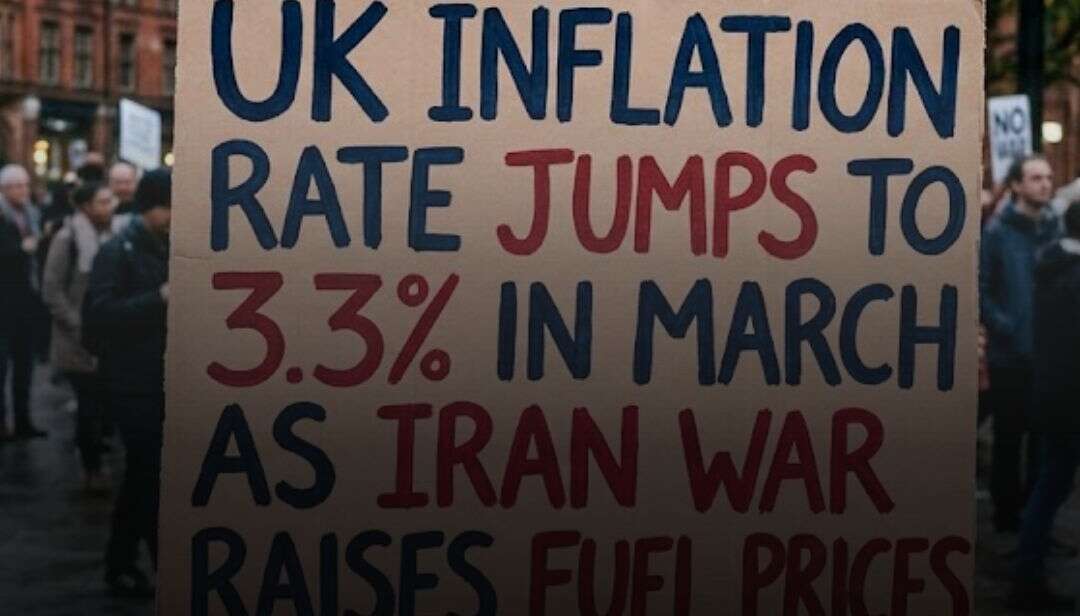
Britain’s inflation nightmare returned with a number that economists had dreaded and households had already felt at the pump: 3.3%. The UK inflation rate accelerated sharply in March, driven almost entirely by the most dramatic monthly fuel price surge the country has seen in more than three years — and the war in Iran wrote every word of it.
The Office for National Statistics confirmed Wednesday that the Consumer Prices Index rose to 3.3% in the twelve months to March 2026, up from 3% in February. The jump was not unexpected — it had been forecast by most major institutions as the inevitable statistical arrival of a crisis that began in late February when Operation Epic Fury launched and the Strait of Hormuz began its slow, devastating closure.
What the number confirmed, definitively, is that the Iran war is no longer just a geopolitical event. It is a British household bill.
The Fuel Numbers That Drove Everything
The ONS data was stark in its specificity. The average price of petrol rose by 8.6 pence per litre between February and March, reaching 140.2p — the highest level since August 2024. Diesel was more severe: up 17.6 pence per litre to an average of 158.7p, the highest since November 2023. Diesel prices in some forecourts near motorways approached £2.00 per litre by the end of March.
Taken together, motor fuel prices rose 8.7% month-on-month — the largest single-month increase since June 2022, when Russia’s invasion of Ukraine was delivering its own energy shock to British consumers. Bloomberg reported UK petrol prices had already surged to their highest level in 18 months by mid-March, well before the full ONS accounting was complete.
Airfares added upward pressure — airlines had been passing on jet fuel cost increases in real time throughout the month. Food prices also contributed, with the Food Policy Institute warning of long-term increases driven by disruption to fertilizer and fuel supply chains that feed directly into agricultural production costs. Heating oil costs nearly doubled at the outset of the conflict, hitting rural households and businesses that rely on oil-fired boilers with a particularly sharp impact.
The Hormuz Transmission Mechanism
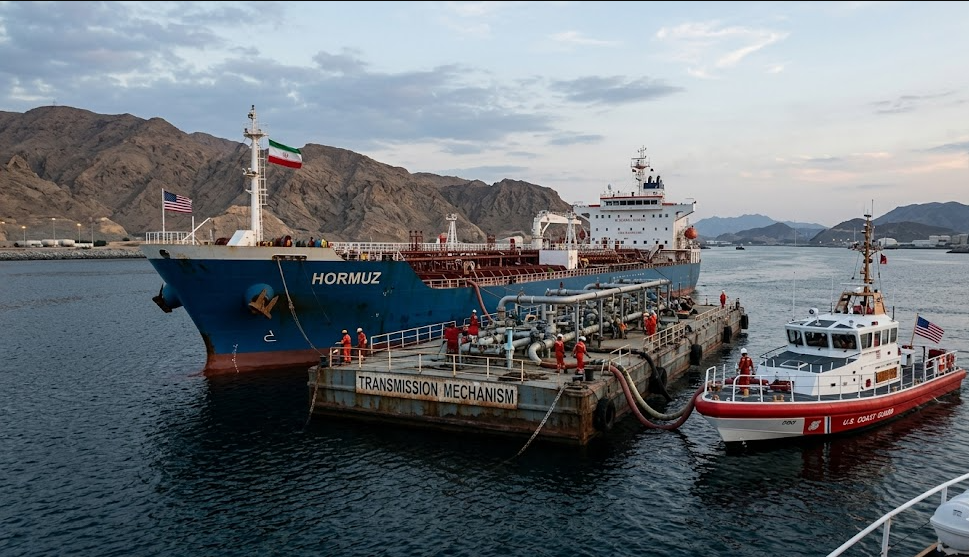
The UK imports approximately 12% of its oil directly from the Persian Gulf region and is exposed indirectly through global spot price benchmarks to the full scale of the Hormuz disruption. When the IRGC effectively closed the strait in early March — through which roughly 20% of the world’s oil trade passes — the global price shock began transmitting through UK petrol stations within days.
The National Institute of Economic and Social Research (NIESR) had modeled the UK-specific inflation impact in a briefing published in March, identifying fuel prices as the primary transmission mechanism and warning that the secondary effects — food, airfares, manufactured goods — would follow with a one-to-two month lag. March’s ONS data is precisely that lag arriving.
The House of Commons Library’s research briefing on the Middle East conflict and the UK economy noted that “the almost complete closure of the Strait of Hormuz created significant disruption to the world energy market” and that the UK’s limited domestic oil production capacity made it structurally more exposed than energy-independent economies to global price movements.
The Bank of England’s Difficult Position
The Bank of England held its base rate at 3.75% at its March Monetary Policy Committee meeting, judging that a knee-jerk rate hike in response to an externally imposed supply shock would damage growth without meaningfully addressing inflation driven by commodity prices rather than wage-push dynamics.
The Bank’s own preliminary estimates now project CPI remaining between 3% and 3.5% through the second and third quarters of 2026 — assuming the iran and israel ceasefire holds and global oil prices do not re-escalate toward the $120 peak seen in early March. In a pessimistic scenario — one in which the ceasefire iran collapses and hostilities resume — internal Bank models project inflation climbing toward 5% by late 2026.
The EY Item Club cut its UK GDP growth forecast to 0.7% for 2026, down from 1.4% the previous year, warning the economy could “flirt” with recession through the second and third quarters. The IMF’s own projection for UK growth was revised to 0.8% — the steepest downgrade among G7 economies.
The Human Cost: 250,000 Jobs at Risk
Behind the headline inflation figure is an employment warning that carries its own political weight.
Forecasters at the EY Item Club projected that UK unemployment could peak at 5.8% by mid-2027, representing nearly 250,000 additional people out of work compared to pre-war projections. Energy-intensive manufacturing, logistics, and aviation are identified as the most exposed sectors.
The timing compounds existing pressures. Council tax increases took effect in April. The energy price cap had already been adjusted upward. And the UK inflation rate surge arrives at precisely the moment when the ceasefire iran framework — extended by Trump indefinitely on Tuesday — offers fragile hope of stabilization rather than confirmed resolution.
The Bank of England’s models project two further rate cuts by mid-2027, once inflation begins retreating. But that trajectory assumes the Strait of Hormuz reopens fully and oil markets normalize — an assumption that, with the blockade still active and the Iran and Israel ceasefire still unresolved, cannot be taken as given.
What can be taken as given: the March inflation figure is not the peak. Economists project the UK inflation rate rising further in April and May as the full energy shock cycles through utility bills, food supply chains, and service sector costs that trail commodity prices by weeks. Britain is paying the price of a war it did not start, in a strait it cannot reach, for oil it cannot avoid.
Market Analysis
A quick snapshot of market trends, customer behavior, and competitor movements.