Trump Says 7 Iranian Boats Shot Down and Invites South Korea to ‘Join the Mission’
Theo Jorden
Share This Article
May 5, 2026 | Defense & Geopolitics What began as a US Navy escort operation quickly turned into the most direct military confrontation in the Strait of Hormuz since Project Freedom launched and now President Donald Trump is using the moment to recruit allies, starting with Seoul. On Monday, Trump took to Truth Social to
What began as a US Navy escort operation quickly turned into the most direct military confrontation in the Strait of Hormuz since Project Freedom launched and now President Donald Trump is using the moment to recruit allies, starting with Seoul.
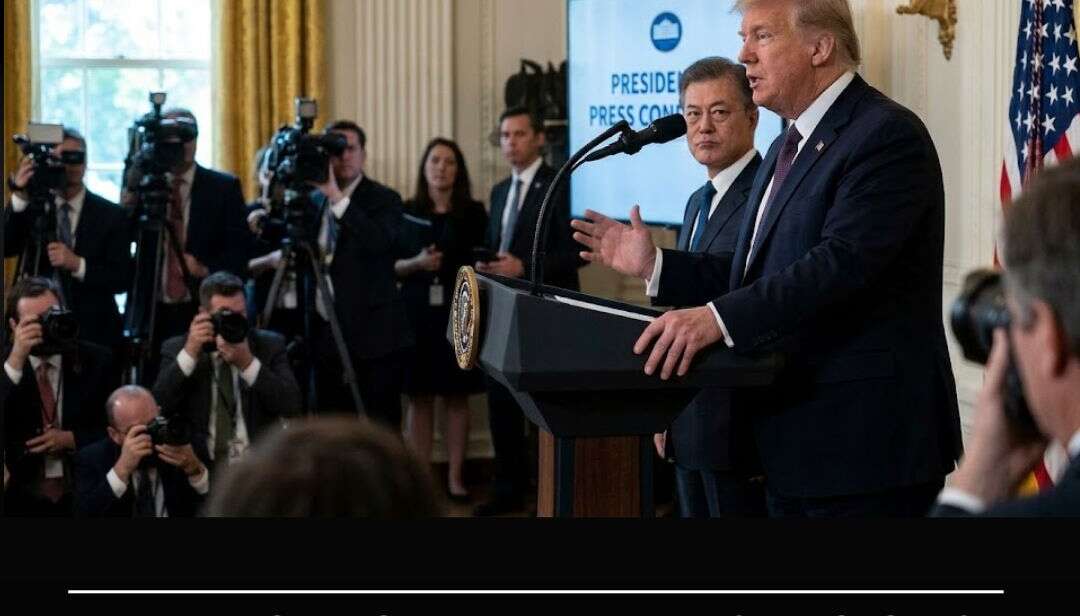
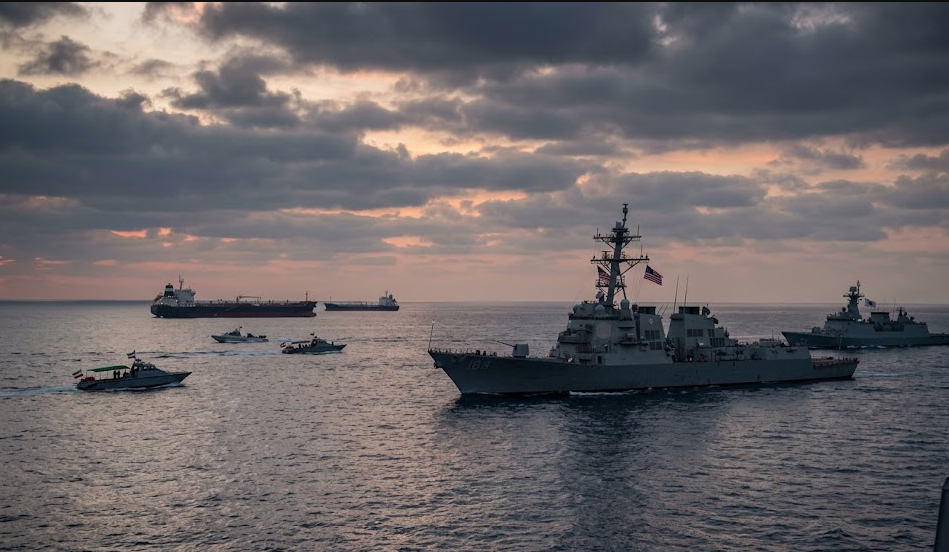
On Monday, Trump took to Truth Social to announce that US forces had “shot down seven small Boats or, as they like to call them, ‘fast’ Boats. It’s all they have left.” The statement came hours after US Army AH-64 Apache and US Navy MH-60 Seahawk helicopters engaged and destroyed Iranian fast-attack boats that moved to intercept commercial vessels operating under Project Freedom’s protection. US Central Command Admiral Brad Cooper confirmed the engagements. Iran flatly denied any of its vessels were sunk, claiming instead that US forces had attacked civilian passenger boats, killing five Iranian civilians.
The dueling narratives are unlikely to be resolved quickly but the military reality on the water is not in dispute: something was shot, something sank, and the fragile April 8 ceasefire is now under its most serious strain since it took effect.
The South Korean Angle
In the same Truth Social post, Trump escalated beyond the tactical. Noting that Iran had “taken some shots at unrelated Nations with respect to the Ship Movement,” he pointed directly to a South Korean cargo vessel caught in the crossfire and issued a pointed diplomatic invitation: “Perhaps it’s time for South Korea to come and join the mission!”
The ship in question is a Panama-flagged vessel operated by HMM Co., one of South Korea’s largest shipping firms. An explosion and fire broke out onboard near the UAE coast in the Strait of Hormuz, damaging the vessel’s left-side engine. All 24 crew members — six South Koreans and 18 foreign nationals — were accounted for with no casualties reported. Investigators are working to determine whether the damage was caused by an Iranian strike or a drifting sea mine, both of which remain active threats throughout the waterway.
For Seoul, the political calculus is uncomfortable. South Korea has significant trade exposure to Gulf shipping routes and has watched the Hormuz crisis disrupt its energy supply chains since February. But joining a US military operation that Iran has explicitly warned will be treated as a ceasefire violation puts South Korea in direct conflict with Tehran — a country it has historically maintained working diplomatic relations with. As of publication, South Korean officials have not responded to Trump’s invitation.
Iran’s Counter-Narrative
Tehran has pushed back hard on both the military and diplomatic fronts. Iranian state television denied that any IRGC naval vessels were destroyed, framing the US engagement as an unprovoked attack on civilian watercraft. Iran’s armed forces said US helicopters targeted passenger boats, and the government announced that five Iranian civilians were killed in the incident — a claim US officials have not acknowledged.
Iran also launched a broader set of attacks on Monday that extended well beyond the strait itself. The UAE and Oman both reported suspected Iranian cruise missile and drone strikes, widening the theatre of conflict at a moment when the ceasefire was already under intense pressure from Project Freedom’s launch. Trump warned Iran directly against targeting US vessels, stating that consequences would be “far worse” than anything experienced thus far.
A Coalition Under Construction
Trump’s call to South Korea is part of a broader pattern. Since Project Freedom launched, Washington has leaned heavily on allied nations — particularly those with direct economic stakes in Hormuz — to contribute naval assets and personnel. South Korea is a natural fit: it is one of Asia’s largest oil importers, its shipping firms are directly exposed, and the HMM vessel incident has now given Trump a politically usable grievance to press Seoul into action.
The question is whether South Korea views Trump’s “join the mission now” framing as an opportunity or a trap. Contributing forces would deepen Seoul’s alignment with Washington and potentially deter future Iranian targeting of Korean-flagged vessels. It would also put South Korean sailors in a waterway where Iranian fast-attack boats, sea mines, cruise missiles, and drones are all active threats — and where the rules of engagement remain publicly undefined.
Seven Iranian navy boats destroyed on day one of Project Freedom. A South Korean ship hit. A ceasefire teetering. Trump’s coalition pitch to Seoul is being made at exactly the moment the risks of joining are most visible.
Oil & Energy Markets
A look at crude price swings, OPEC supply moves, and how energy markets react to geopolitical shocks.