May 5, 2026 Global oil markets jolted sharply higher on Monday after Iranian state media reported that a United States naval vessel had been struck by missiles in the Strait of Hormuz — a claim the U.S. military swiftly and flatly denied, but not before crude benchmarks registered one of their single-day surges of the
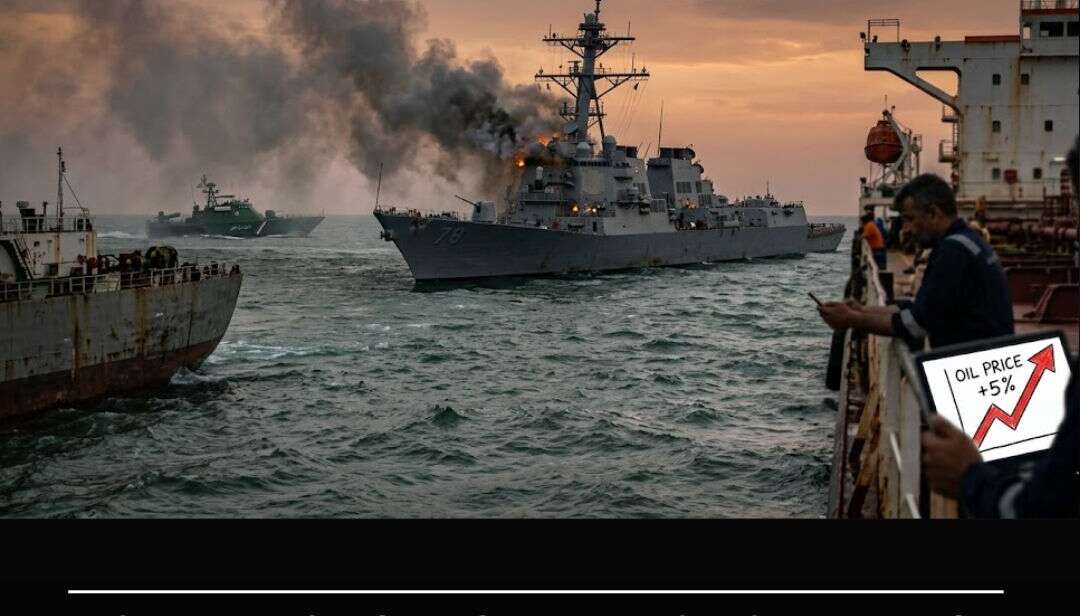
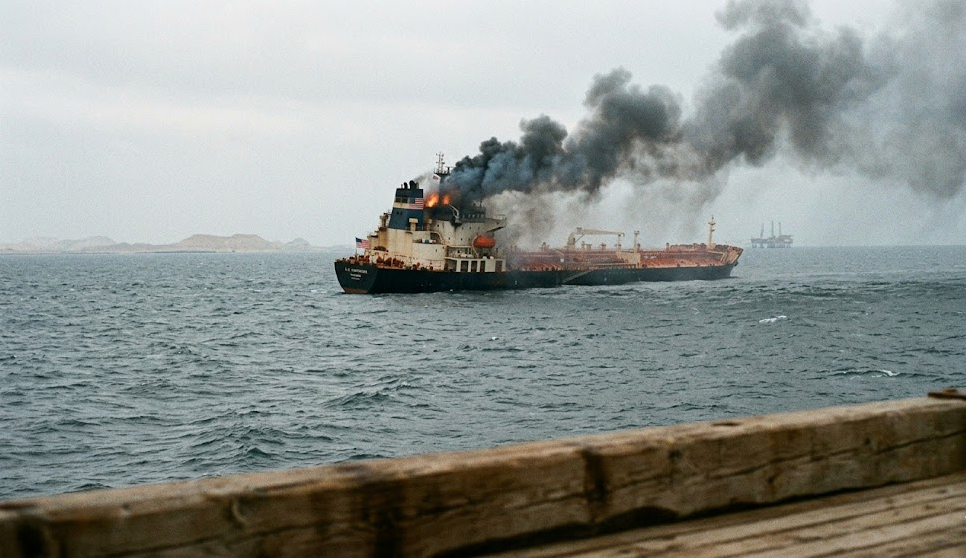
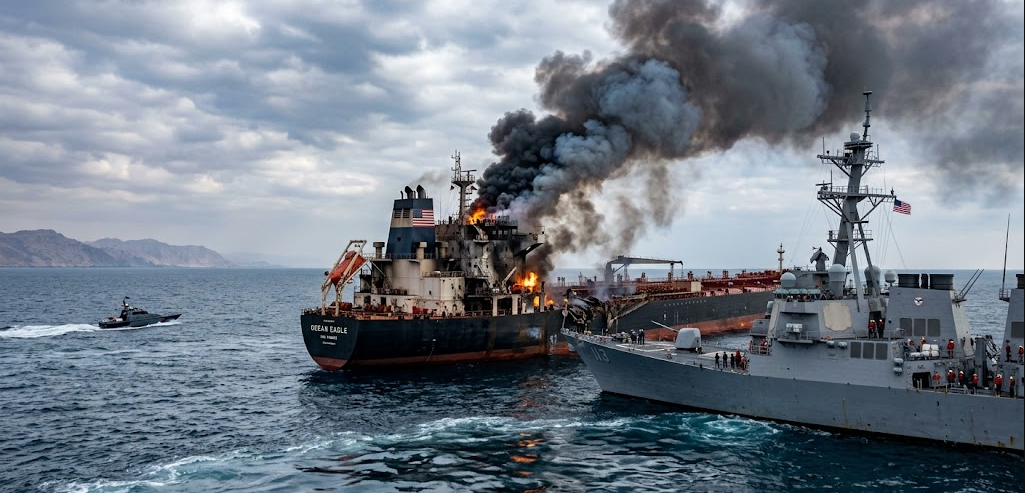
Global oil markets jolted sharply higher on Monday after Iranian state media reported that a United States naval vessel had been struck by missiles in the Strait of Hormuz — a claim the U.S. military swiftly and flatly denied, but not before crude benchmarks registered one of their single-day surges of the year.
The episode underscores how razor-thin the line between market stability and energy shock has become as Washington and Tehran trade blows over one of the world’s most critical maritime chokepoints.
The Claim That Moved Markets
Iran’s Fars News Agency was first to publish the report, alleging that a U.S. frigate attempting to transit the Strait of Hormuz had been struck by two Iranian missiles after ignoring repeated warnings from the Islamic Revolutionary Guard Corps Navy. The agency claimed the vessel was forced to retreat near the Iranian port city of Jask.
The report spread instantly across financial terminals and trading floors worldwide. Within minutes, international benchmark Brent crude futures surged nearly 6%, reaching $114.44 per barrel. U.S. West Texas Intermediate (WTI) followed, rising more than 4% to settle at $106.42 per barrel — its highest level in weeks.
Bond markets tightened, equity indices wobbled, and energy sector stocks across the Gulf and Europe moved in a single direction: up.
CENTCOM Denial: No US Naval Vessels Were Hit
The U.S. military’s Central Command (CENTCOM) moved quickly to contain the narrative.
“No U.S. Navy ships have been struck,” CENTCOM said in an official statement, adding that U.S. naval vessels and forces were actively supporting Project Freedom — the newly launched American military initiative to escort commercial shipping through the blocked Strait of Hormuz.
CENTCOM commander Admiral Brad Cooper later confirmed to reporters that Iran had indeed launched a coordinated assault using cruise missiles, drones, and fast-attack small boats against both American military and commercial vessels — but stressed that no U.S. naval vessel had sustained a direct missile strike. U.S. forces responded decisively, destroying six Iranian fast-attack boats using AH-64 Apache helicopters and SH-60 Seahawk naval helicopters.
Once the CENTCOM denial circulated widely, oil prices pared a portion of their gains — but markets remained unsettled, with Brent settling approximately 2.5% above its pre-spike level by mid-afternoon GMT, reflecting lingering investor anxiety about what comes next.
What Are the US Naval Vessels in the Strait?
The vessels at the centre of the confrontation are among the most capable in the U.S. fleet. The USS Truxtun and USS Mason — both Arleigh Burke-class guided-missile destroyers — transited the Strait of Hormuz on Monday as part of the Project Freedom convoy, backed by fighter aircraft, Apache attack helicopters, and multi-domain unmanned platforms.
The two US naval vessels represent a class specifically designed for high-threat environments: each armed with the Aegis Combat System, vertical launch missile batteries, and advanced electronic warfare suites. They are among the most modern and battle-tested U.S. Army vessels and naval surface combatants in active deployment.
Alongside these destroyers, CENTCOM confirmed a broader force package: two aircraft carrier strike groups, over 100 land- and sea-based aircraft, and approximately 15,000 U.S. service members committed to the Project Freedom operation. These are not legacy platforms — they represent the cutting edge of new US Navy vessels deployed to enforce freedom of navigation under live-fire conditions.
Project Freedom: Ambition Meets Resistance
President Donald Trump unveiled Project Freedom on Sunday, May 3, describing it as a mission to “guide” commercial vessels through the Strait of Hormuz — a waterway through which roughly 20% of the world’s oil supply and a significant share of global liquefied natural gas (LNG) ordinarily flows.
On day one of the operation, two American-flagged merchant ships successfully completed the crossing under naval escort — a symbolic win for Washington. However, analysts noted that only four vessels total transited the strait on the day, raising questions about whether the operation can be sustained at the scale needed to meaningfully reopen global energy supply chains.
Iran labelled the escort mission a direct violation of the April 8 ceasefire agreement, with a senior IRGC officer warning that “U.S. military adventurism” would be met with escalating force.
Energy Markets on Edge
Monday’s price surge did not occur in isolation. It followed weeks of elevated crude prices driven by Hormuz blockade fears, an Iranian drone strike on the UAE’s Fujairah oil port, and persistent uncertainty over U.S.-Iran peace negotiations.
Brent had already climbed as high as $126 per barrel during an earlier escalation spike in late April before cooling. Analysts at S&P Global Commodity Insights warned that any confirmed strike on a U.S. naval vessel — as opposed to an unverified claim — could send Brent crude past $130 per barrel and push global economies already dealing with war-driven inflation into outright recession.
“Markets are essentially pricing in a geopolitical risk premium on every barrel,” one London-based energy strategist noted. “The moment a US navy vessel collision or confirmed strike enters the picture, you’d see an immediate rerating.”
For now, CENTCOM’s denial held the line. But with Iranian missiles continuing to fly and U.S. naval vessels patrolling one of the world’s most contested waterways, the gap between a near-miss and a market-moving incident has never been narrower.
Market Analysis
A quick snapshot of market trends, customer behavior, and competitor movements.