This Is What Pricing Power Actually Looks Like: One Post on Truth Social. Oil Down 16%. Stock Futures Up 2%.
Theo Jorden
Share This Article
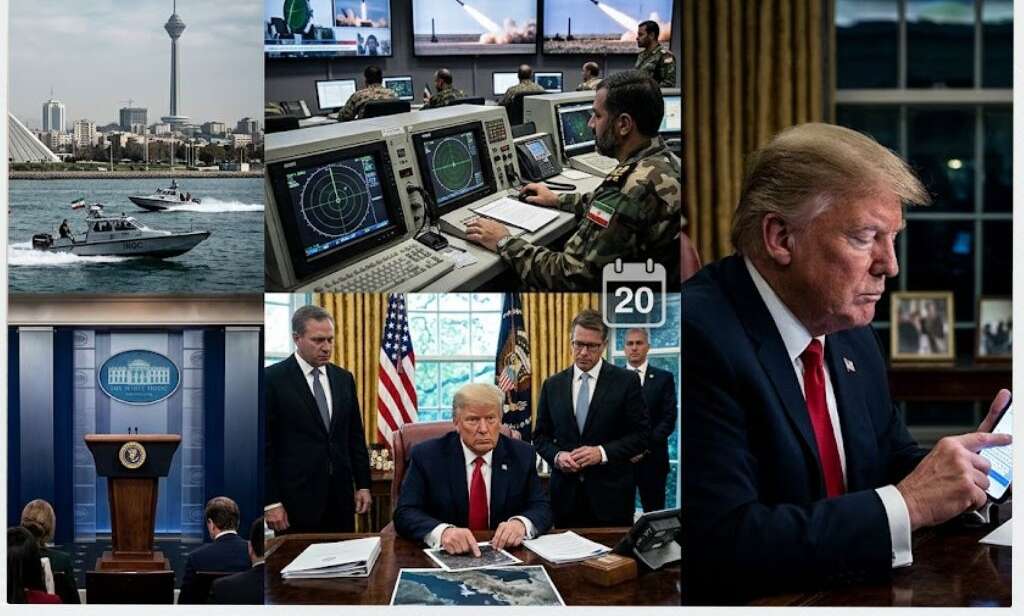
At 6:32 p.m. on Tuesday, April 7, 2026, Donald Trump tapped out a post on Truth Social. He announced a two-week ceasefire with Iran and said Tehran’s 10-point peace proposal was a “workable basis on which to negotiate.” The Strait of Hormuz — the 21-mile chokepoint through which 20% of the world’s daily oil supply
At 6:32 p.m. on Tuesday, April 7, 2026, Donald Trump tapped out a post on Truth Social.
He announced a two-week ceasefire with Iran and said Tehran’s 10-point peace proposal was a “workable basis on which to negotiate.” The Strait of Hormuz — the 21-mile chokepoint through which 20% of the world’s daily oil supply flows — would reopen. What happened next was one of the most violent, simultaneous market reversals in modern financial history.
WTI crude plunged 16.41% to $94.41 per barrel — its largest single-session drop since April 2020. Brent crude fell 13.29%, its steepest one-day decline since the Gulf War of 1991. The Dow Jones Industrial Average rocketed 1,325 points, or 2.85%, its best day since April 2025. The S&P 500 surged 2.51%. The Nasdaq jumped 2.80%.
In Asia, South Korea’s Kospi closed 6.87% higher. Japan’s Nikkei posted its best day in a year, gaining 5.39%. Germany’s DAX soared 5.06%. France’s CAC 40 jumped 4.49%. A single post. Forty words. Trillions of dollars in motion.
The 40-Day Build-Up Behind the 40-Word Post
To understand the magnitude of this market event, you need to understand what came before it. When US and Israeli forces began striking Iran on February 28, the Strait of Hormuz — through which Saudi, Emirati, Kuwaiti, and Iraqi oil all transit — did not quietly absorb the shock. Iran blocked it. Tanker traffic collapsed by approximately 70%. Over 150 ships anchored outside the strait, waiting. The Dallas Federal Reserve described what followed as “the largest disruption to energy supply since the 1970s oil crisis.”
Brent crude surpassed $100 per barrel on March 8 for the first time in four years, eventually peaking at $126 per barrel. Goldman Sachs and Morgan Stanley analysts openly modeled scenarios in which Brent hit $170 or even $200 — a level that would have triggered stagflation, crushed consumer spending, and threatened to flip the US economy into recession. Energy stocks, meanwhile, were the only winners: the sector surged roughly 34% during the conflict period, advancing almost 8% from the first day of strikes alone. The world had spent 40 days pricing in a worst-case scenario. Then Trump posted.
The Trading Window Nobody Can Explain
There is a more unsettling footnote to this story. CNBC reported that futures for oil and stocks worth billions of dollars changed hands just 15 minutes before Trump’s market-turning post went live. Bloomberg confirmed it: oil markets saw a spike in trades ahead of Trump’s Iran pivot post, with over 13,000 lots — equivalent to 13 million barrels — trading in under 60 seconds as the post landed. The Securities and Exchange Commission has not commented publicly. The trades raised questions that Capitol Hill has been slow to ask.
This is not the first time. A similar pattern appeared in March 2026, when Trump posted about postponing strikes on Iran and stocks briefly surged before reversing. PBS and Reuters both flagged the recurring question of trades timed suspiciously close to presidential social media activity — a dynamic with no clean precedent in US market history.
Pricing Power in the Age of Truth Social
No CEO, central bank governor, or sovereign wealth fund manager commands this kind of single-point market leverage. When Jerome Powell speaks, markets move — but gradually, and with context. When the Saudi Energy Minister adjusts OPEC output guidance, oil shifts a few percentage points. When earnings season delivers surprises, individual stocks whipsaw.
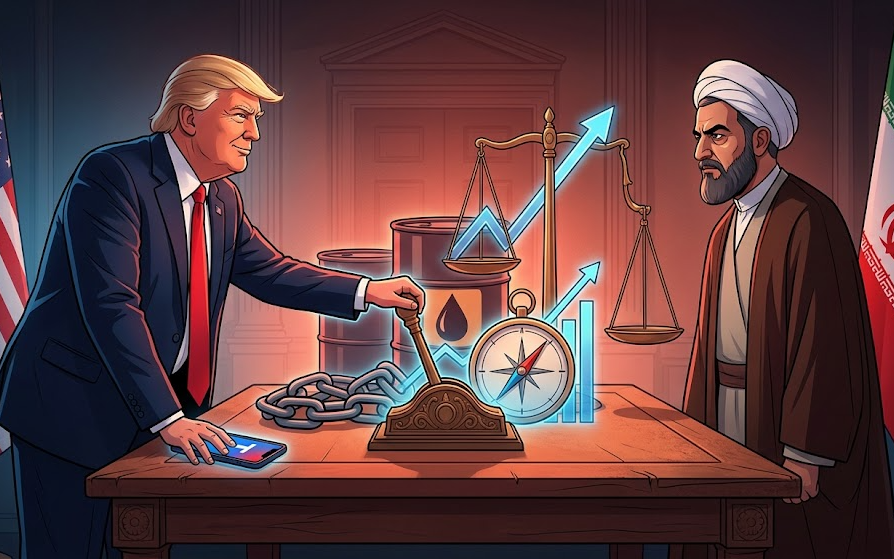
Trump’s post did something different: it repriced the entire global risk complex simultaneously — energy, equities, currencies, and inflation expectations — in minutes.
That is not a function of policy. It is a function of narrative monopoly. In a market environment where every algorithmic trader, every macro fund, and every energy desk was watching Truth Social as the primary signal source for geopolitical risk, Trump’s post was the only variable that mattered. The Dow’s best day in a year was not built on earnings, GDP data, or Fed minutes. It was built on forty words from one man’s phone.
Whether the ceasefire holds — Iran has already accused the US of violating three clauses of the 10-point proposal, and the strait faces ongoing uncertainty — is a separate question. The market understood that too: by the next morning, stock futures had already dipped, and analysts at CNBC warned that “hurdles remain” and the ceasefire agreement is “extremely fragile.”
But for one evening, the calculus was clear. Oil down 16%. Stocks up 2%. One post. That is not politics. That is pricing power — in its most raw, concentrated, and unregulated form.
Oil & Energy Markets
A look at crude price swings, OPEC supply moves, and how energy markets react to geopolitical shocks.