US Seeks New Coalition to Safeguard Strait of Hormuz as Ship Traffic Pauses
Theo Jorden
Share This Article
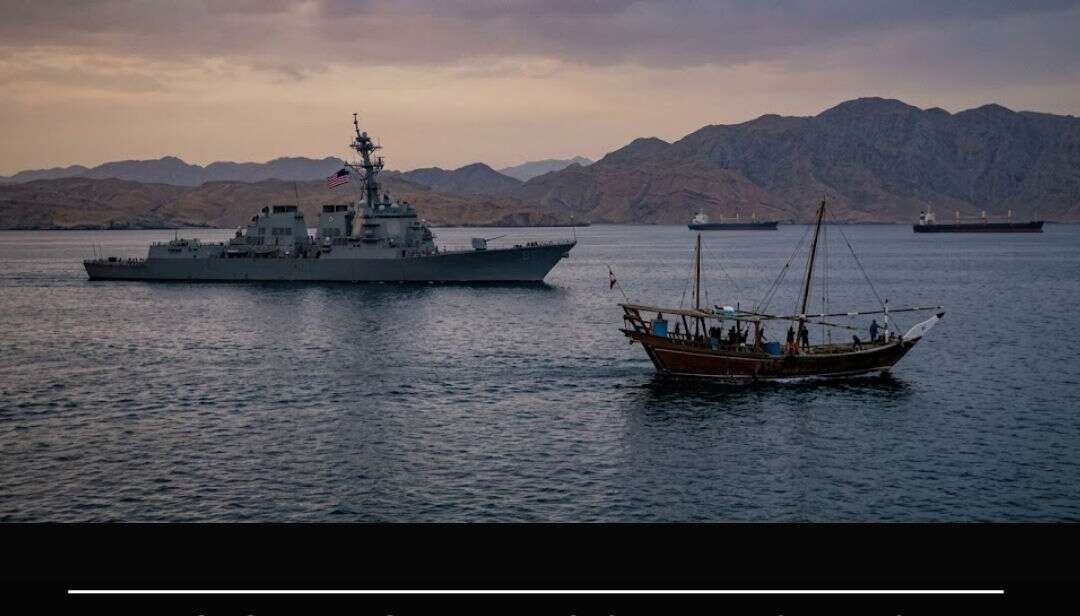
The Trump administration is rallying international partners to form a new naval and diplomatic alliance aimed at restoring commercial shipping through the Strait of Hormuz, as vessel traffic through one of the world’s most critical energy chokepoints remains at a near-standstill following months of escalating conflict with Iran. A State Department cable dated April 28,
The Trump administration is rallying international partners to form a new naval and diplomatic alliance aimed at restoring commercial shipping through theStrait of Hormuz, as vessel traffic through one of the world’s most critical energy chokepoints remains at a near-standstill following months of escalating conflict with Iran.
A State Department cable dated April 28, 2026, and approved by Secretary of State Marco Rubio, outlines the proposed “Maritime Freedom Construct” (MFC) — a joint initiative between the State Department and US Central Command designed to coordinate intelligence sharing, diplomatic pressure, and sanctions enforcement against Iran. US diplomats have been directed to press foreign governments to commit as either diplomatic or military partners to the coalition.
“Your participation will strengthen our collective ability to restore freedom of navigation and protect the global economy,” the cable reportedly states. “Collective action is essential to demonstrate unified resolve and impose meaningful costs on Iranian obstruction of transit through the Strait.”
How the Strait of Hormuz Was Closed
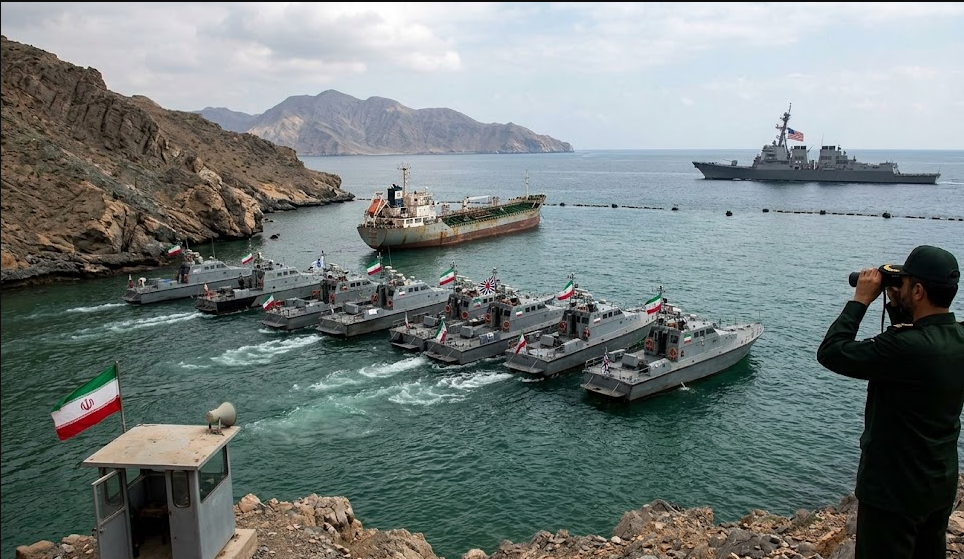
The Strait of Hormuz has been effectively shut to commercial shipping since February 28, 2026, when US and Israeli forces launched coordinated air strikes against Iran and killed Supreme Leader Ali Khamenei. In swift retaliation, Iran’s Islamic Revolutionary Guard Corps (IRGC) issued warnings forbidding ships from transiting the strait, boarded and attacked merchant vessels, and reportedly seeded the waterway with naval mines.
Prior to the conflict, the strait handled approximately20% of the world’s oil and natural gas trade — around 15 million barrels of crude per day — and saw nearly 3,000 vessels transit every month. Today, traffic has dropped to roughly 5% of pre-war levels.
The economic fallout has been severe. Oil prices have surged to their highest levels in more than four years, US gas prices spiked over 30% in March, and war-risk insurance premiums for ships attempting the passage climbed from 0.125% to between 0.2% and 0.4% per transit — an added cost of over $250,000 for large oil tankers.
Can Iran Close the Strait of Hormuz? The Legal Reality
A key question now gripping international legal circles is: can Iran close the Strait of Hormuz permanently or with legal authority?
The short answer is: no — but it can make closure a practical reality.
Under the UN Convention on the Law of the Sea (UNCLOS), the Strait of Hormuz falls under the “transit passage” regime, which guarantees ships the continuous and unimpeded right to pass through straits used for international navigation. Article 44 of the treaty explicitly prohibits coastal states from hampering transit passage — and crucially, this right cannot be suspended. While Iran signed UNCLOS, it never ratified the treaty. However, experts note the provisions represent binding customary international law.
In practice, legal experts describe a “dual closure” dynamic: Iran cannot lawfully shut the strait, but through drone attacks, sea mines, and IRGC naval harassment, it has made the passage economically and physically untenable for commercial shipping. As legal analysts have observed, “straits like Hormuz are rarely actually closed, but rather economically closed — when risk, markets and fear accomplish what navies might otherwise attempt.”
A UN Security Council resolution calling on Iran to open the strait was vetoed by China and Russia in April, leaving multilateral legal remedies effectively blocked.
The Dual Blockade and Coalition Push
The crisis has evolved into a “dual blockade”: Iran controlling what enters the Gulf from the south, and the US Navy — since April 13 — blockading all shipping to and from Iranian ports. The standoff has made Iran’s stranglehold on the strait Washington’s most urgent strategic problem.
The MFC proposal is widely seen as an implicit acknowledgment that the US cannot reopen the strait unilaterally. Despite President Trump’s March claim that Iran’s military had been “destroyed” and the strait re-opened, ship traffic has continued to stall.
The US coalition effort runs parallel to a European initiative led by the UK and France. British Prime Minister Keir Starmer and French President Emmanuel Macron held an online conference on April 17 with over 50 countries to discuss a “defensive multilateral mission.” The UK, France, and 36 other nations have signed a joint statement condemning attacks on commercial shipping and expressing readiness to contribute to safe passage efforts.
However, American officials have reportedly criticized the European effort as moving too slowly, prompting Washington to launch its own parallel framework.
What Happens Next
Peace negotiations between the US and Iran, mediated in part through Pakistan, remain deadlocked — with the status of the Strait of Hormuz identified as a central unresolved issue. Iran has proposed a “new legal regime for the Strait,” a demand that analysts say amounts to a fundamental challenge to the international rules-based maritime order.
Defense analysts at CSIS warn that Iran’s arsenal of drones, naval mines, and fast-attack boats creates an “asymmetric equilibrium” — one in which Tehran can impose high costs on shipping and US operations even as it absorbs far heavier military damage itself.
Until diplomatic talks break the deadlock, the Maritime Freedom Construct — however broadly supported — remains, as one analysis put it, “a framework in search of a resolution.” For global energy markets, consumers, and the millions who depend on unimpeded oil and gas flows, the stakes could not be higher.
Oil & Energy Markets
A look at crude price swings, OPEC supply moves, and how energy markets react to geopolitical shocks.