When the United States imposed a naval blockade on the Strait of Hormuz in April 2026 — locking down one of the world’s most critical energy chokepoints as part of its ongoing war against Iran — energy analysts feared India faced an imminent supply crisis. Nearly half of India’s crude oil imports and roughly 60%
When the United States imposed a naval blockade on the Strait of Hormuz in April 2026 — locking down one of the world’s most critical energy chokepoints as part of its ongoing war against Iran — energy analysts feared India faced an imminent supply crisis. Nearly half of India’s crude oil imports and roughly 60% of its natural gas move through that narrow channel. Yet oil and LPG tankers are still reaching Mumbai. Here is how they are getting through — and what it reveals about the limits of even the most powerful naval blockades in history.
The Scale of the Blockade
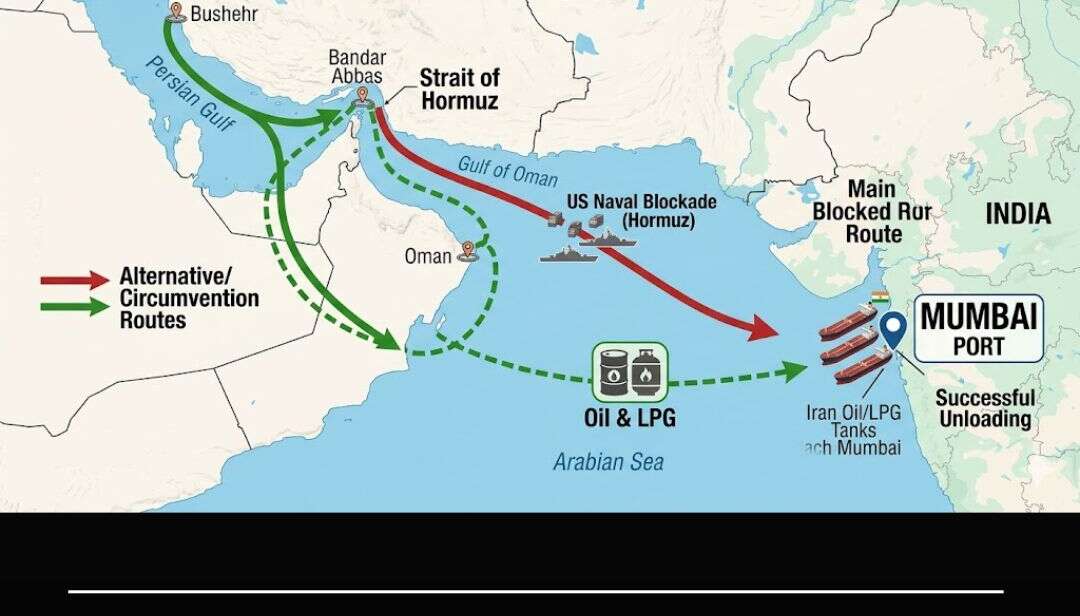
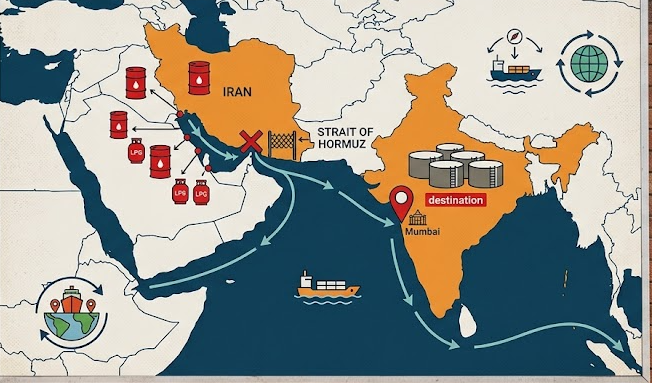
The current situation is unlike anything seen in modern maritime history. Since Iran asserted strict control over the Strait of Hormuz on February 28, 2026 — the same day the United States and Israel launched a combined air campaign against Tehran — and the US responded by announcing a full naval blockade of Iranian ports on April 13, a dangerous “dual blockade” has taken shape. Both Iran and the US Navy are now, in effect, controlling who passes through one of the world’s busiest waterways.
The Strait of Hormuz traffic has collapsed by roughly 95%, with only a trickle of vessels moving where hundreds once sailed freely. India’s oil supplies through the strait plummeted from 2.8 million barrels per day in February to just 247,000 barrels per day by late April — a stunning 91% drop that sent shockwaves through the country’s energy planning apparatus. The disruption has been called the largest oil supply crisis since the 1970s energy shock, dwarfing even the impacts of previous blockade episodes including the US blockade of Cuba and the US blockade of Venezuela’s oil exports in prior decades.
How Oil Tankers Evade the US Blockade
Despite the stranglehold, maritime trackers and investigative reports have confirmed that oil tankers are finding ways through — and reaching Indian ports including Mumbai.
Coastal and Territorial Water Routes: Maritime analysts have identified navigation corridors that allow vessels to hug Iranian territorial waters between islands such as Larak Island and Qeshm Island, moving through areas where the US Navy’s interception authority is legally and diplomatically constrained. Iranian tankers have used these coastal routes to bypass the blockade perimeter and reach Indian ports, sometimes making complex multi-leg passages that keep them within or adjacent to territorial waters for extended stretches of their journey.
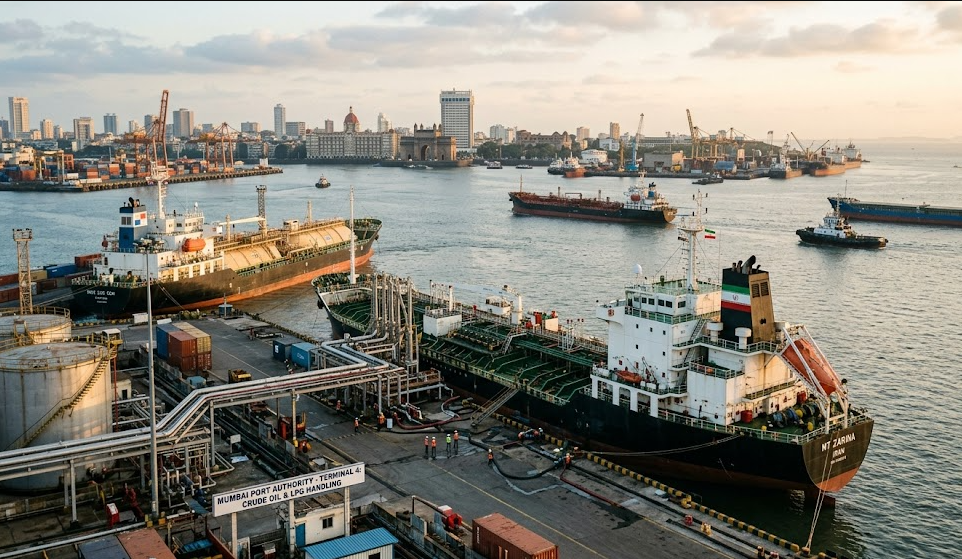
Documented Arrivals: India Today reported that at least 34 tankers with links to Iran have bypassed the US blockade since it began on April 13. One notable example is the Indian vessel Desh Garima, which successfully docked in Mumbai carrying 97,000 metric tonnes of crude oil originally loaded at Ras Laffan in Qatar — demonstrating that non-Iranian Gulf shipments are also finding passage where conditions permit.
Shadow Fleet Operations: A network of vessels operating without standard transponder signals — similar to the shadow fleets used to move Russian oil after 2022 sanctions — has reportedly been activated to move LPG oil and gas cargoes into South Asian markets. These ships take longer, less predictable routes but are proving difficult to intercept at scale.
India’s Broader Energy Rerouting Strategy
India is not relying solely on blockade-evading tankers. In parallel, New Delhi has executed a rapid and multi-pronged energy pivot to protect domestic supply chains.
Russian Oil Surge: India’s imports of Russian crude have jumped from 1.1 million barrels per day in February to an estimated 1.8–2.0 million barrels per day in April, routed through the Arctic and Pacific corridors entirely clear of the Hormuz zone.
Iran Resumption: In a significant geopolitical signal, India has resumed direct oil and gas imports from Iran after a seven-year hiatus — a move that signals the limits of US pressure on New Delhi at a time of acute energy need.
West Africa, Australia, and the US: Indian refiners have accelerated procurement from West African suppliers, Australian LNG exporters, and even US energy producers, diversifying away from what planners now call “Hormuz risk.”
Cape of Good Hope Rerouting: For shipments that must originate in the Gulf but cannot risk the strait, major shipping lines including Maersk have rerouted vessels around Africa’s Cape of Good Hope — adding weeks to transit times and substantially increasing freight costs, but guaranteeing delivery.
Mumbai’s Energy Supply: Stressed but Holding
The combined effect of these strategies has kept Mumbai — and India more broadly — from facing the acute LPG and fuel shortages that many feared in the blockade’s early days. Prices have risen, and the logistical strain is real. But the flow has not stopped.
What the Mumbai tanker story ultimately reveals is that in an era of global commodity markets, decentralized shipping networks, and determined state actors, even the most sweeping naval blockade faces inherent limits. Oil and gas, like water, tend to find a way through.
Market Analysis
A quick snapshot of market trends, customer behavior, and competitor movements.