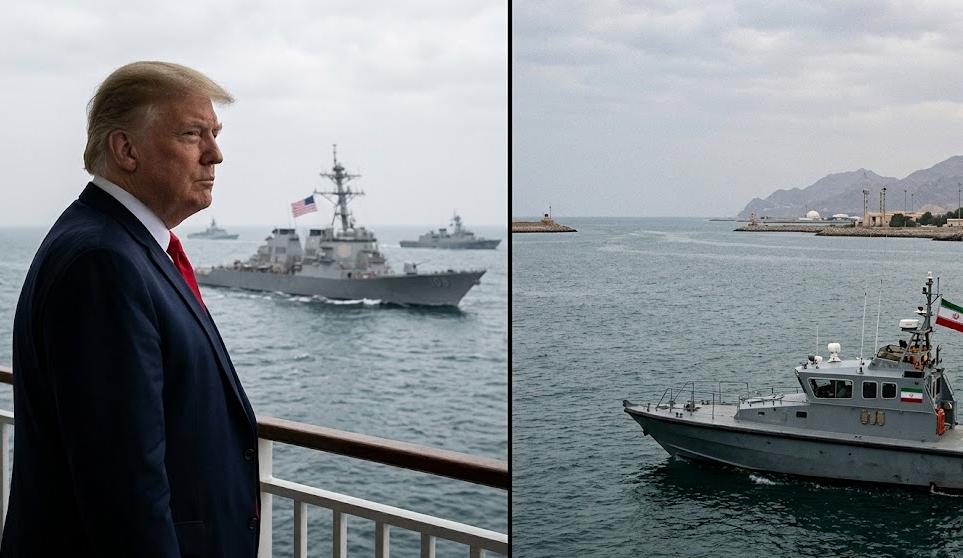
PERSIAN GULF / WASHINGTON — This is what maximum pressure looks like from the water. As of April 14, the United States has deployed 15 warships — anchored by a carrier strike group, guided-missile destroyers, submarine escorts, and maritime patrol aircraft — in a naval blockade formation encircling Iranian ports across the Persian Gulf and
PERSIAN GULF / WASHINGTON — This is what maximum pressure looks like from the water.
As of April 14, the United States has deployed 15 warships — anchored by a carrier strike group, guided-missile destroyers, submarine escorts, and maritime patrol aircraft — in a naval blockade formation encircling Iranian ports across the Persian Gulf and Gulf of Oman. It is the most aggressive US naval posture against any nation since Operation Praying Mantis in 1988. It is live, operational, and escalating. And it is running directly into the final seven days of a ceasefire that expires April 21.
The blockade is not a background detail. It is the central strategic gamble of the entire Iran conflict — and its outcome will determine whether the next chapter of this war is written at a negotiating table in Islamabad or on a battlefield in the Persian Gulf.
Why the Blockade Exists
Defense Secretary Pete Hegseth framed the blockade in clinical terms: an “enforcement mechanism” ensuring Iran cannot reconstitute Hormuz interdiction capability during the negotiating window. The Pentagon’s logic is straightforward — Iran closed the Strait of Hormuz on February 28, triggering the worst global energy supply shock in recorded history, pushing oil to a physical peak of $144.42 per barrel. The blockade prevents a repeat.
But the strategic calculation runs deeper than enforcement. The blockade is also pressure architecture — a physical manifestation of the same four-step Trump formula that produced the April 7 ceasefire. Deadline. Threat. Silence. Deal. The warships are the threat made tangible. Every day they remain in position without a final agreement is another day Iran negotiates inside a tightening vice.
“The pressure is the process,” a senior Pentagon official told Reuters. “We are not standing down while they stall.”
What the Next 7 Days Could Trigger
Three scenarios now dominate every intelligence assessment, trading desk, and foreign ministry calculation on earth.
Scenario 1 — Deal Before April 21: Iran accepts a phased enrichment framework — not full dismantlement, but a credible freeze with enhanced IAEA verification — that gives both sides enough political cover to extend the ceasefire into a longer negotiating process. The blockade eases. Oil falls. Markets surge. Trump claims total victory.
Scenario 2 — Ceasefire Extension Without Resolution: No final deal, but both sides accept Pakistan’s “Islamabad Accord” — a 45-day two-phase framework — buying time. The blockade remains. Talks continue. The crisis is deferred, not resolved. Oil stabilizes around $100–$110. Markets price continued uncertainty.
Scenario 3 — Ceasefire Collapse: Talks fail on the core enrichment impasse. Iran rejects US demands. April 21 arrives without agreement. The blockade — already in place — becomes the opening posture of Phase 2 of the war. The Strait closes again. Goldman Sachs has warned this scenario could produce “the fastest oil price spike in the instrument’s modern history — potentially $130–$150 in 48 hours.”
BCA Research’s chief geopolitical strategist Matt Gertken places Scenario 3 at “a meaningful probability — not the base case, but no longer a tail risk.”
The Immovable Negotiating Gap
At the center of the Islamabad talks sits the same structural impasse that killed six prior rounds of US-Iran negotiations in 2025 and has never been bridged by any administration since the JCPOA collapsed in 2018.
Iran’s 10-point framework insists on domestic uranium enrichment rights — the sovereign right to enrich uranium on Iranian soil, at Iranian facilities, under Iranian control. It entered these talks with 460 kilograms of 60%-enriched uranium — enough for approximately 11 nuclear devices according to Special Envoy Steve Witkoff — and it has no intention of surrendering the program that cost decades of sanctions, isolation, and now 38 days of war to protect.
The US 15-point counter-proposal demands complete dismantlement of enrichment facilities at Natanz, Fordow, and Isfahan, full transfer of enriched uranium stockpiles to a third country, and strict unconditional IAEA verification with no sunset clauses.
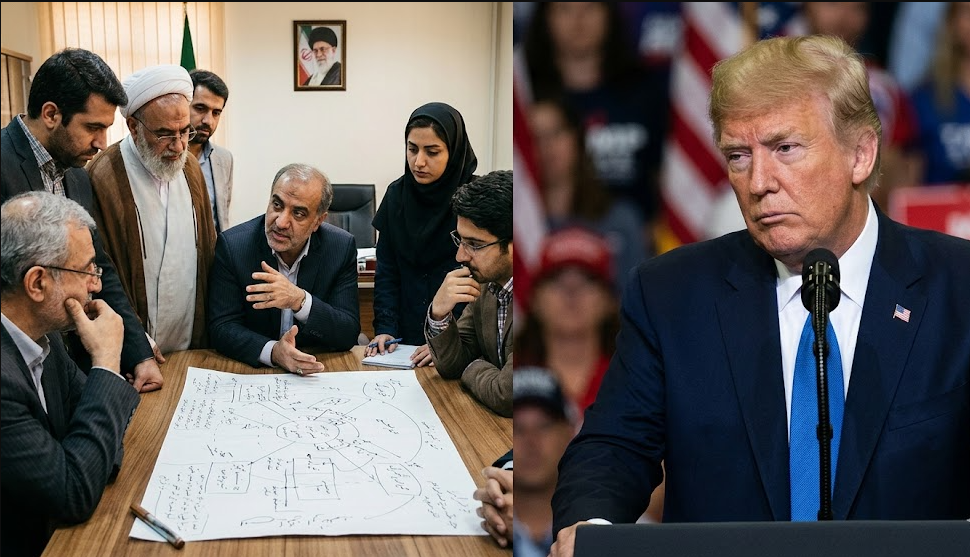
These are not positions that are close to each other. They are positions that are structurally incompatible on their central axis. Secretary of State Marco Rubio admitted publicly: “I’m not sure you can reach a deal with these guys.” Every diplomat in Islamabad knows the gap. The blockade outside does not close it — it merely raises the cost of leaving it open.
Iran’s Impossible Calculation
Tehran is making its decisions inside a naval blockade, with a broken economy running at 43% inflation, a rial above 1 million to the dollar, a decapitated leadership structure, and the knowledge that the man across the table publicly declared they “begged” for the last ceasefire.
Iran’s new leadership faces three forms of simultaneous humiliation: accepting US enrichment dismantlement demands and permanently surrendering its nuclear deterrent; accepting the blockade as a permanent feature of Persian Gulf reality; or rejecting both and resuming a war it has conclusively demonstrated it cannot win conventionally.
Iranian FM Abbas Araghchi called the blockade “a flagrant violation of the ceasefire spirit” and warned of “consequences.” The IRGC has not moved its remaining naval assets. Yet.
What the Markets Are Pricing
Oil markets are reading the blockade with surgical precision. WTI, which crashed to $94.41 on the April 7 ceasefire euphoria, has climbed back toward $102 on blockade and ceasefire-breach news. Dated Brent — the physical market that prices actual barrels rather than geopolitical hope — has held above $122 throughout, never fully believing the ceasefire would hold.
Morgan Stanley’s April 14 note flagged that “the gap between futures optimism and physical market pricing reflects deep uncertainty about whether the April 21 deadline produces resolution or resumption.” The physical market, as it has throughout this conflict, is pricing reality. Futures are still pricing hope.
The Historical Precedent Nobody Wants to Name
Naval blockades in modern history have resolved in one of two ways: negotiated settlement under pressure — the Cuban Missile Crisis, 1962 — or military escalation that neither side intended but neither side could stop.
The Cuban Missile Crisis lasted 13 days. The US blockade of Soviet ships carrying missiles to Cuba was universally described at the time as the closest the world had come to nuclear war. It resolved through a secret back-channel deal — the US quietly removed missiles from Turkey; the Soviets withdrew from Cuba — that neither side publicly acknowledged for decades.
The Iran blockade has 7 days before its ceasefire framework expires. There is no secret back-channel deal known to be in place. There is a public negotiating process in Islamabad that has not yet produced a framework on its most fundamental question.
The warships are in position. The clock is running.
In seven days, we will know whether this gamble produced the deal of the decade — or the war’s most dangerous chapter.
Market Analysis
A quick snapshot of market trends, customer behavior, and competitor movements.