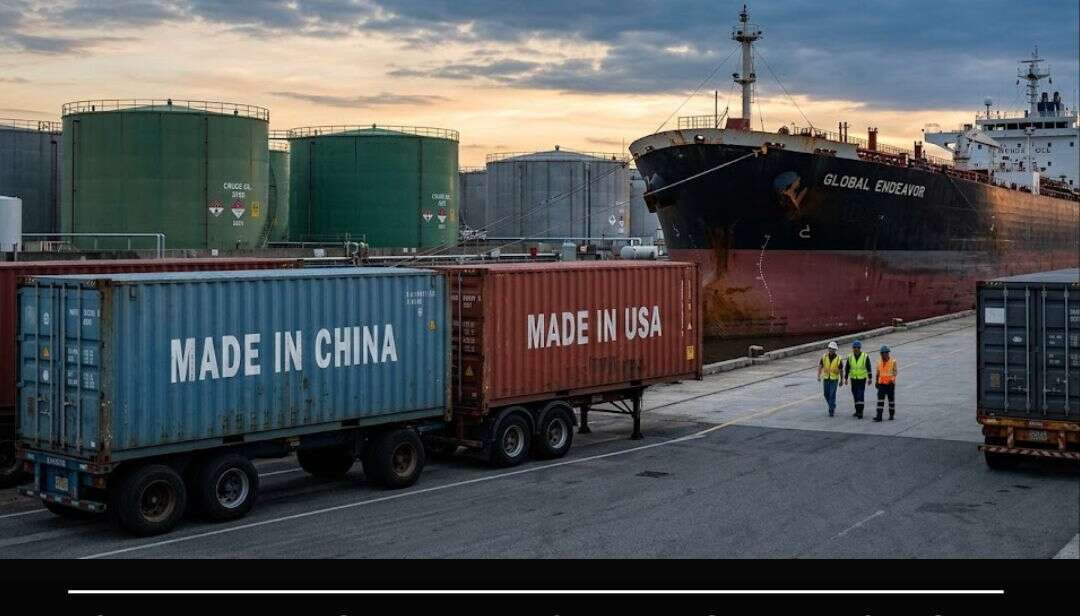
The closure of the Strait of Hormuz in 2026 — the world’s most critical oil transit chokepoint — has turned strategic petroleum reserves from a dry policy topic into a live national security question. As global oil prices surge to historic highs and the International Energy Agency coordinates the largest emergency reserve release in history,
The closure of the Strait of Hormuz in 2026 — the world’s most critical oil transit chokepoint — has turned strategic petroleum reserves from a dry policy topic into a live national security question. As global oil prices surge to historic highs and the International Energy Agency coordinates the largest emergency reserve release in history, one question has moved to the centre of energy policy discussions worldwide: which countries are actually prepared for a prolonged supply disruption and which are dangerously exposed?
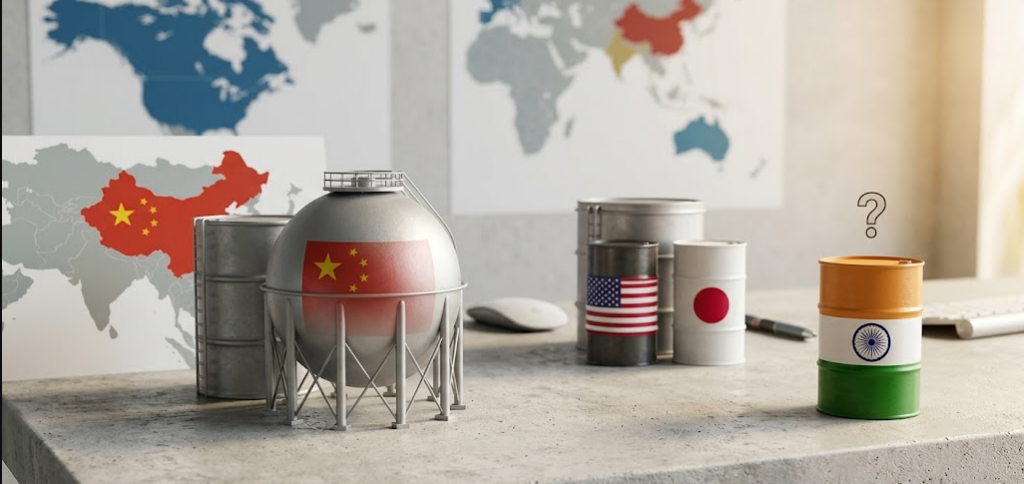
The answer is a stark ranking that puts China at the top, the United States and Japan close behind, and India in a position that experts describe as a structural vulnerability.
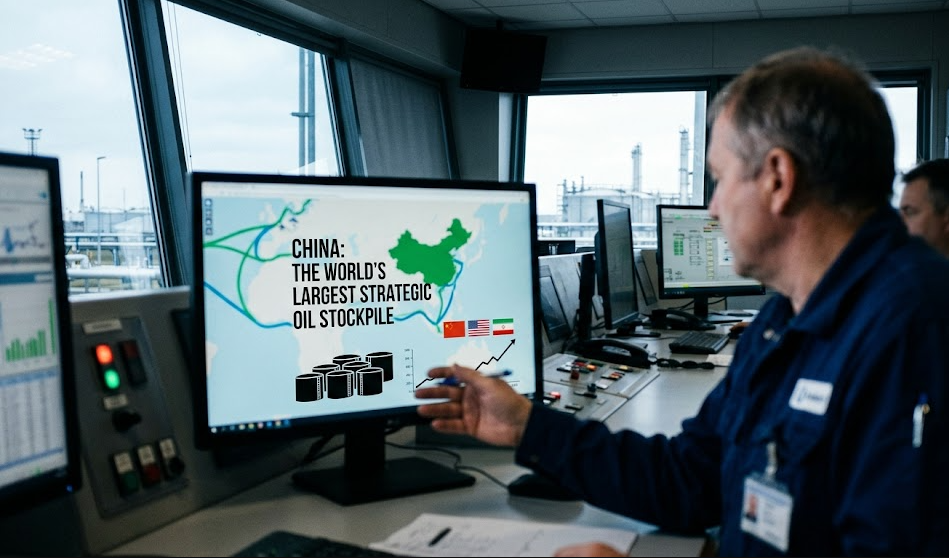
China: The World’s Largest Strategic Oil Stockpile
China holds the largest strategic oil inventories on the planet. According to the US Energy Information Administration (EIA), China’s total strategic crude oil holdings — combining government-held emergency reserves of approximately 360 million barrels with an estimated 1 billion barrels in commercial crude inventories — amount to roughly 1.3 billion barrels. No other country comes close on a combined basis.
China’s strategic reserve build-up has been a deliberate, decades-long project driven by the country’s acute awareness of its energy import dependency. Beijing began constructing underground and above-ground reserve sites in the early 2000s following the oil shocks of the 1990s. Today, that investment is paying dividends: as the Hormuz crisis bites, China is drawing down reserves from a position of relative strength, buying time for diplomatic and logistical alternatives to take shape.
United States and Japan: Prepared, but Now Depleting
The United States holds the world’s second-largest government-managed strategic petroleum reserve. The US Strategic Petroleum Reserve (SPR) stood at approximately 413–415 million barrels as of early 2026 — a figure that has fallen sharply since the Biden-era releases of 2022. Amid the current Hormuz crisis, the US government has committed to releasing 172 million barrels from the SPR as part of a coordinated IEA response, underscoring both the reserve’s scale and its present rate of depletion.
Japan, the third-largest holder, maintained approximately 263 million barrels in government-held inventories as of December 2025. Tokyo moved decisively when the crisis hit: on March 16, 2026, Japan began releasing 80 million barrels from its strategic reserves — equivalent to 15 days of domestic demand — as part of the IEA’s 400-million-barrel coordinated release, the largest in history.
The IEA’s combined release, while historic, illustrates the limits of even well-stocked reserve systems. With global oil consumption averaging 105.17 million barrels per day in 2026, the entire 400-million-barrel release covers barely four days of worldwide demand.
Venezuela Oil Reserves: The Distinction That Matters
Any discussion of global oil reserves must account for Venezuela, which officially holds the world’s largest proven crude oil reserves — approximately 303 billion barrels, representing roughly 17% of total global reserves, according to OPEC data. Saudi Arabia (267 billion barrels), Iran (209 billion), Canada (163 billion), and Iraq (145 billion) follow.
However, Venezuela’s oil reserves and Venezuela’s strategic petroleum reserves are entirely different things. Proven reserves refer to oil in the ground that can theoretically be extracted. Strategic petroleum reserves are physically stored, government-controlled stockpiles ready for emergency deployment within days. Venezuela — despite its staggering in-ground wealth — lacks a meaningful strategic reserve infrastructure, and its actual production capacity has collapsed due to years of economic mismanagement and sanctions. The Venezuela oil reserves story is a cautionary tale: geological wealth does not translate to energy security without the infrastructure to extract and deploy it.
India: 21.4 Million Barrels and Just 9.5 Days of Cover
For India, the picture is concerning. As of March 2025, the US EIA estimated India held just 21.4 million barrels of crude in its Strategic Petroleum Reserve — enough to cover approximately 9.5 days of domestic consumption. India’s SPR infrastructure consists of three underground rock cavern facilities at Mangaluru, Visakhapatnam, and Padur in Karnataka, with a combined capacity of 5.33 million metric tonnes. As of early 2026, those facilities were only 64% full, holding 3.37 million metric tonnes against their maximum capacity.
The gap between India and the IEA’s recommended benchmark of 90 days of net import cover is not a minor shortfall — it is a structural vulnerability. India imports approximately 85% of its crude oil needs, with nearly half of those imports historically transiting the Strait of Hormuz. The current crisis has exposed that dependency in real time.
India’s Expansion Plans: Ambitious, But Delayed
India has not been entirely passive. The government has been advancing a Phase II expansion that would increase SPR capacity from 5.33 million metric tonnes to 11.83 million metric tonnes, with an ultimate goal of reaching approximately 20 million metric tonnes — equivalent to roughly 35.6 days of coverage. Proposed sites include Chandikhol in Odisha and Padur expansion zones.
But these plans have faced persistent delays driven by land acquisition challenges, financing constraints, and shifting political priorities. In the meantime, India’s total petroleum stocks — combining strategic and commercial inventories — cover approximately 74 days of imports, a figure that offers some cushion but still falls well short of the IEA’s 90-day standard that countries like the United States and Japan comfortably meet.
The Lesson of the Hormuz Crisis
The 2026 Strait of Hormuz closure has been the most consequential test of global strategic petroleum reserves since the 1970s oil embargo. Countries with deep stockpiles — China, the United States and Japan — have absorbed the shock better than those without. For India, the crisis is both a warning and an opportunity: the strategic petroleum reserve expansion that has been deferred for years can no longer wait. In an era of geopolitical volatility, the size of a nation’s emergency oil buffer is not an abstract statistic — it is a direct measure of economic resilience.
Market Analysis
A quick snapshot of market trends, customer behavior, and competitor movements.