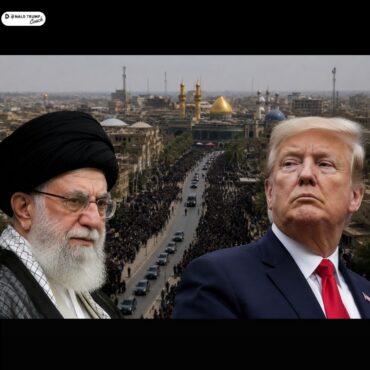
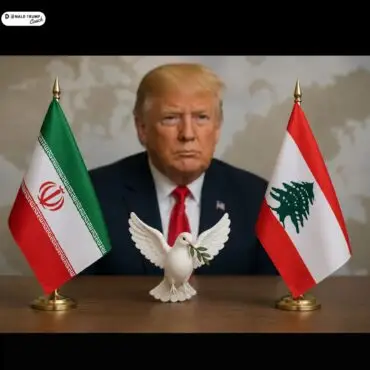
President Donald Trump on Thursday praised Israeli Prime Minister Benjamin Netanyahu as a “warrior PM,” touting their “great relationship” a notably warm gesture that came just hours after a U.S. intelligence assessment reportedly warned that Netanyahu’s actions could undermine the fragile US-Iran agreement signed earlier this month.
The juxtaposition captures the delicate diplomatic balancing act now underway in Washington as the Trump administration tries to hold together one of the most consequential Middle East agreements in years.
A Hard-Won Iran Deal, Built on the Strait of Hormuz
The Trump Iran deal traces back to a memorandum of understanding signed on June 17 by Trump and Iranian President Masoud Pezeshkian, following a 60-day ceasefire framework brokered with help from Pakistani Prime Minister Shehbaz Sharif. The agreement formally ended the active phase of the 2026 Iran war that began on February 28, when the U.S. and Israel launched airstrikes that killed Iran’s then-supreme leader.
Central to the deal was the reopening of the Strait of Hormuz, the narrow waterway through which roughly one-fifth of the world’s oil trade once flowed before Iran effectively shuttered it for more than three months. Under the terms of the signed memorandum, Iran committed to making “best efforts for the safe passage of commercial vessels with no charge” for 60 days, with demining operations to follow within 30 days. In exchange, the U.S. immediately lifted its naval blockade of Iranian ports.
The 14-point US-Iran agreement also included a cessation of hostilities in Lebanon, sanctions relief for Tehran, a reduction of U.S. military assets in the region, and a U.S.-backed commitment of at least $300 billion toward Iran’s reconstruction. Nuclear negotiations the most contentious unresolved issue were pushed into the 60-day talks window, with Iran reaffirming a long-standing commitment not to build a nuclear weapon.
The Intelligence Warning
Despite the diplomatic breakthrough, cracks emerged almost immediately. According to a Washington Post report, U.S. intelligence agencies have assessed that Netanyahu appears determined to continue Israeli military operations against Hezbollah in Lebanon even though the cessation-of-hostilities provision in the Iran deal explicitly calls for those operations to stop.
The warning, sourced to current and former U.S. officials, suggests Washington is increasingly worried that Israeli actions in Lebanon could provoke Iran into walking away from the broader agreement, reigniting the very conflict the memorandum was designed to end.
That concern was reinforced on the ground. A four-person Israeli Defense Forces tank crew, including a battalion commander, was killed by Hezbollah in southern Lebanon, prompting Israeli retaliation that reportedly killed 47 Lebanese in response. The U.S. and Qatar subsequently brokered a renewed truce — notably routing negotiations through Tehran rather than Beirut, an acknowledgment of Iran’s continued influence over Hezbollah that Lebanon’s own government cannot match.
Trump Calls Netanyahu Amid the Tension
The Trump Netanyahu phone call dynamic has reportedly grown tense behind closed doors. Trump told NBC News in a phone interview that he had spoken with Israeli officials and urged restraint, telling them, “You just gotta calm down sometimes and use your head” though he declined to confirm whether he spoke with Netanyahu directly.
Vice President JD Vance, for his part, pushed back publicly on criticism of the administration’s approach, dismissing what he called Israel’s “freakout” over the Iran deal and asserting that Trump remains “the only world leader who still likes Israel.”
Yet at the unveiling of a new Air Force One aircraft a gift from Qatar Trump struck a markedly different tone, going out of his way to praise Israel’s wartime performance. “We fought very well with Israel, and we’ve had a great relationship with Israel,” Trump said, crediting Gulf allies for “fighting with us” before turning to Netanyahu specifically: “Warrior prime minister” Netanyahu, Trump said, deserves credit. “They should give him credit.”
Trump also brushed back Israeli criticism of the Iran deal’s terms, pointedly noting that Israel had itself previously backed away from a planned strike on former Iranian general Qassem Soleimani an implicit suggestion that Jerusalem’s objections carry less weight given its own history of caution.
Why the Stakes Remain High
For the global economy and the Strait of Hormuz in particular, the durability of the US-Iran agreement matters far beyond regional politics. U.S. officials have argued that toll-free transit through the strait won’t simply lapse after the 60-day window, reasoning that Persian Gulf states including Saudi Arabia and the UAE will never accept an arrangement that doesn’t guarantee free passage for their own industries.
Iran, meanwhile, has signaled it still wants a say in how the strait operates long-term, reportedly continuing to demand that some ships transiting Hormuz coordinate routes with Iranian authorities a sticking point regional mediators meeting in Cairo, including Pakistan, Saudi Arabia, Turkey, and Egypt, are working to resolve. As Trump put it bluntly regarding the broader negotiations: “We didn’t meet out of desperation, Iran did.”
Whether the fragile peace holds may depend less on the text of the memorandum than on whether Washington can keep its two key partners Israel and Iran from undoing it themselves. For now, Trump appears to be betting that warm words for Netanyahu, paired with private pressure, can buy the deal enough time to survive its first real test.