IRGC Issues Stark Warning Ships Ordered Out of the Persian Gulf in Alarming New Escalation: Report
Theo Jorden
Share This Article
The Islamic Revolutionary Guard Corps has issued one of its most sweeping maritime warnings of the entire Iran war ordering commercial vessels to immediately vacate Persian Gulf anchorages near the United Arab Emirates, triggering what observers described as a mass exodus of ships toward Dubai and raising fears of a dramatic new escalation in one
The Islamic Revolutionary Guard Corps has issued one of its most sweeping maritime warnings of the entire Iran war ordering commercial vessels to immediately vacate Persian Gulf anchorages near the United Arab Emirates, triggering what observers described as a mass exodus of ships toward Dubai and raising fears of a dramatic new escalation in one of the world’s most critical waterways.
The warning, broadcast via VHF radio and reported by Iran’s state-linked Fars News Agency on May 4, 2026, adds a dangerous new dimension to the ongoing Persian Gulf standoff moving the IRGC Iran confrontation with international shipping from the Strait of Hormuz into the broader body of the gulf itself.
The Warning: Ships Ordered to Move or Face Consequences
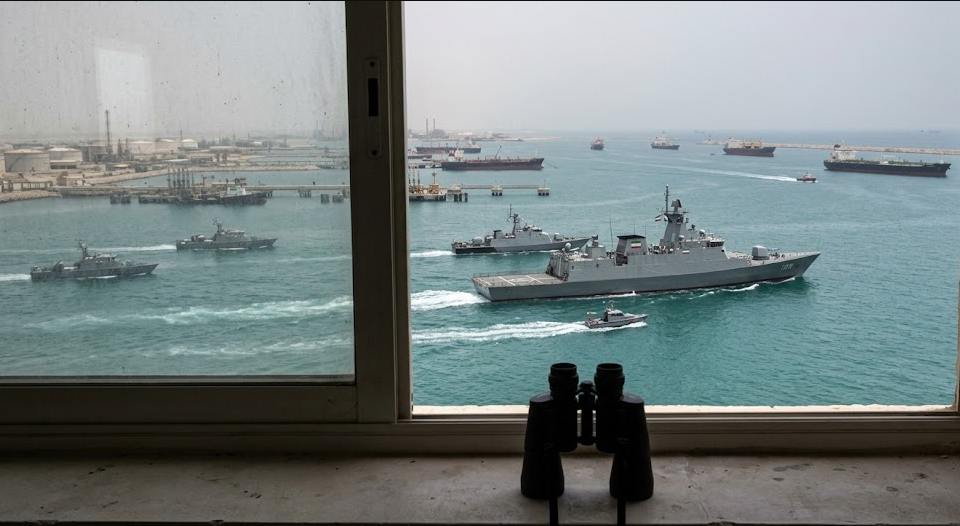
According to multiple reports confirmed by maritime monitoring agency UKMTO the United Kingdom Maritime Trade Operations — several ship captains operating near Ras Al Khaimah in the UAE received direct VHF radio broadcasts instructing them to vacate their anchorage positions. UKMTO confirmed it had received reports from multiple Masters in the vicinity and immediately issued alerts to vessels operating in the region.
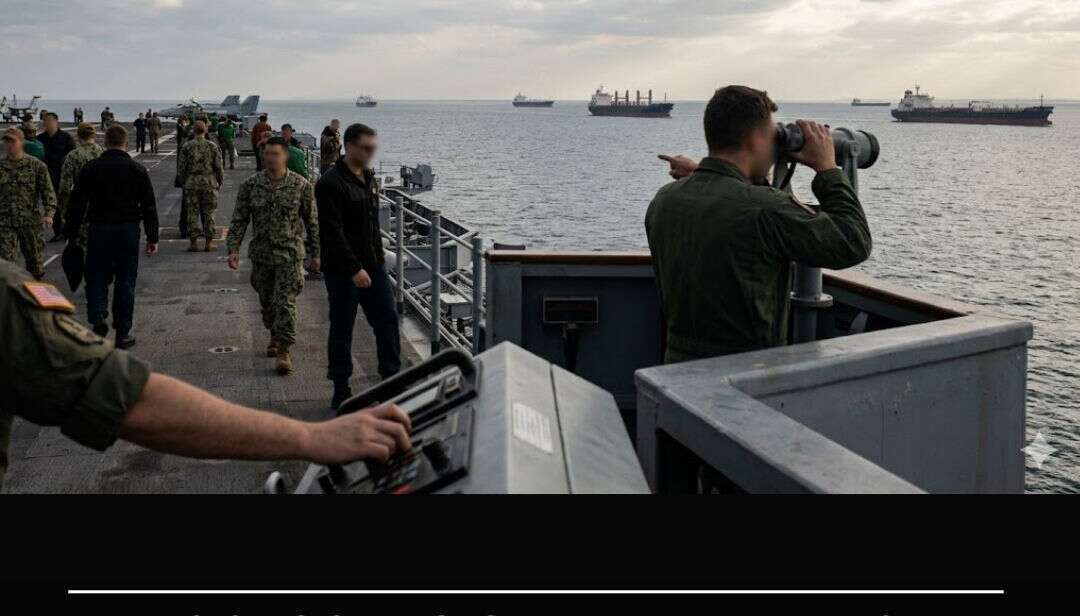
The instruction to leave was not accompanied by a specific stated consequence, but given the IRGC’s documented record of boarding, seizing, and attacking vessels throughout the conflict, ship operators did not wait to find out. Multiple commercial vessels departed Persian Gulf anchorages and headed toward Dubai in what maritime trackers characterised as a mass evacuation of the anchorage zone.
Iran’s IRGC framed the warning within a dramatically expanded set of strategic ambitions. In a separate statement issued through state broadcaster PressTV, the IRGC declared that the “expulsion of arrogant powers from the Persian Gulf is coming soon,” asserting that the gulf “cannot be secured by arrogant powers” direct language targeting the US Navy’s presence in the waterway and signalling that the IRGC views the broader Persian Gulf, not merely the Strait of Hormuz, as a theatre of active military contest.
Iran IRGC’s Full Naval Arsenal: Mines, Fast Boats, and Toll Controls
The IRGC’s VHF warning does not exist in isolation — it is the latest move in a comprehensive maritime strategy that has been unfolding since the war began on February 28, 2026. Iran IRGC has deployed its naval assets across multiple layers of escalation in the Persian Gulf and Strait of Hormuz.
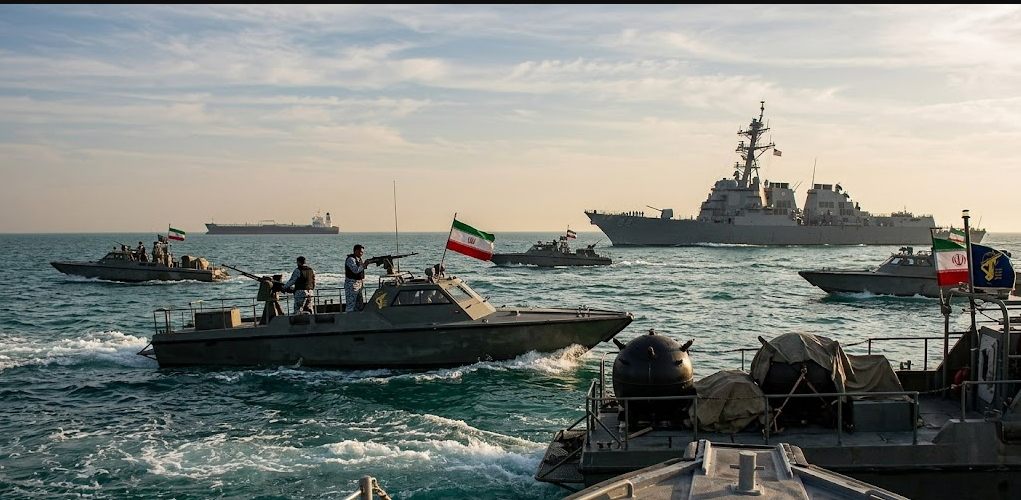
Iran has laid naval mines throughout sections of the Strait of Hormuz, a development that has forced the US Navy to commit significant resources to mine-clearing and detection operations. The IRGC has deployed swarms of fast attack boats to harass, board, and in some cases seize commercial vessels — with at least two dozen attacks on shipping in and around the strait documented since the conflict began, according to the US Maritime Administration (MARAD), which issued a formal advisory — 2026-004 — covering Iranian attacks on commercial vessels in the Persian Gulf, Strait of Hormuz, and Gulf of Oman.
Adding to the complexity, the IRGC has published an official map designating what it calls “alternative routes for transit” — channels that run through Iranian territorial waters past Larak Island — while simultaneously marking the previously established International Maritime Organization shipping corridor as a “danger zone.” In effect, the IRGC Iran command has unilaterally redrawn the rules of navigation in the world’s most critical energy waterway. Ships affiliated with countries other than the United States or Israel have been told they may pass if they pay a toll — a form of maritime extortion that has no precedent in modern international law.
The Times of Israel reported Iran’s most dramatic threat in this vein: that it would “set shipping there ablaze” if vessels defied its directives. Fortune reported that the IRGC issued what it called a “last warning” to US warships attempting to assert freedom of navigation through the strait.
The Dual Blockade and Trump’s Response
The IRGC’s Persian Gulf warnings are occurring within the context of what analysts have described as an unprecedented dual blockade. Iran is contesting passage from the east, using mines, fast boats, and VHF warning broadcasts. The US Navy is blockading Iranian ports from the west, directing more than thirty vessels to turn around and preventing ships that have docked at Iranian ports from passing through the strait.
Traffic through the Strait of Hormuz has collapsed by approximately 95%. President Trump acknowledged on May 3 that the US was launching an active effort to “guide” stranded ships out of the Strait of Hormuz — an implicit admission that the commercial shipping paralysis has reached a level requiring direct US military escort operations.
The US Navy currently has two carrier strike groups in the Arabian Sea — the USS George H.W. Bush and the USS Abraham Lincoln — enforcing the blockade of Iranian ports. The USS Gerald R. Ford, which had been operating in the Red Sea, has departed for repairs after ten months of record-breaking deployment.
Peace Talks, 14 Points, and a 30-Day Ultimatum
The maritime escalation is unfolding even as diplomatic efforts continue — or attempt to. Iran submitted a 14-point response to the US peace proposal through Pakistani intermediaries, demanding a permanent and comprehensive end to the war on all fronts, including Lebanon, the full removal of sanctions, and the establishment of a new international mechanism governing the Strait of Hormuz. Tehran has insisted all issues be resolved within 30 days — significantly tighter than the US-proposed two-month framework.
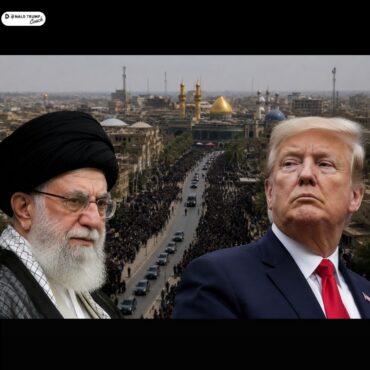
Trump has publicly expressed doubts that Iran’s proposals are negotiating in good faith. Meanwhile, the IRGC’s Persian Gulf warning — broadcast to civilian ship captains in UAE waters — suggests that Tehran’s military command is simultaneously pursuing a pressure track that has no intention of easing until a deal is finalised on Iranian terms.
For the vessels that scrambled toward Dubai on May 4, the abstract language of peace talks offered cold comfort. The IRGC had spoken, clearly and directly, over VHF channel 16 — the international maritime distress frequency — and the ships moved.
Oil & Energy Markets
A look at crude price swings, OPEC supply moves, and how energy markets react to geopolitical shocks.