When U.S. Vice President JD Vance landed in Pakistan last month to lead a second round of peace talks, he walked into a vacuum. Iran’s negotiating team never showed up. They had been blocked — not by Washington’s demands, not by Islamabad’s mediation, but by generals inside Tehran who refused to let their own diplomats
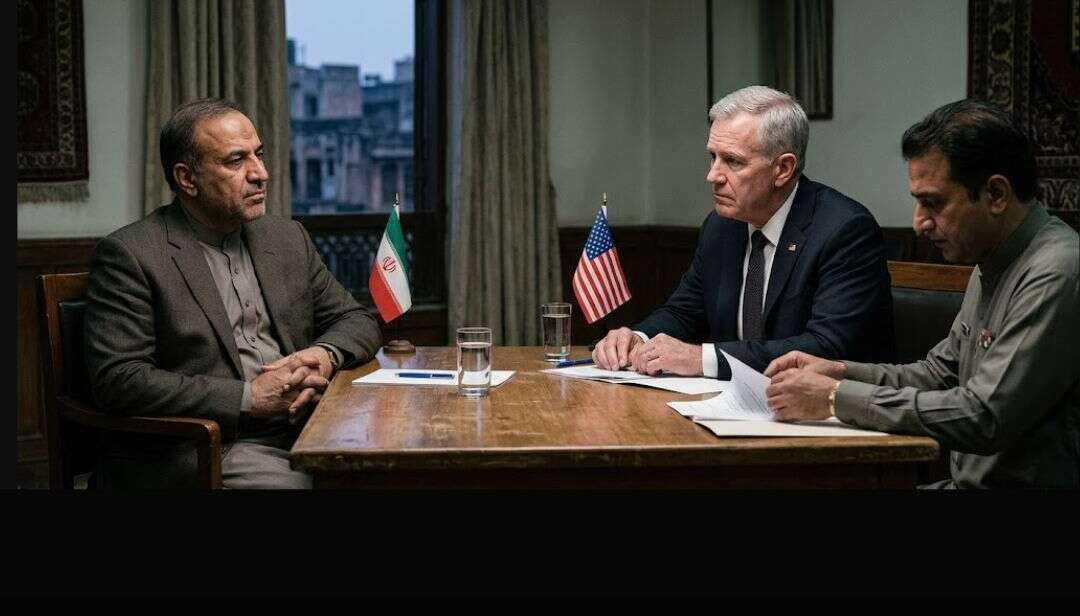
When U.S. Vice President JD Vance landed in Pakistan last month to lead a second round of peace talks, he walked into a vacuum. Iran’s negotiating team never showed up. They had been blocked — not by Washington’s demands, not by Islamabad’s mediation, but by generals inside Tehran who refused to let their own diplomats board the plane.
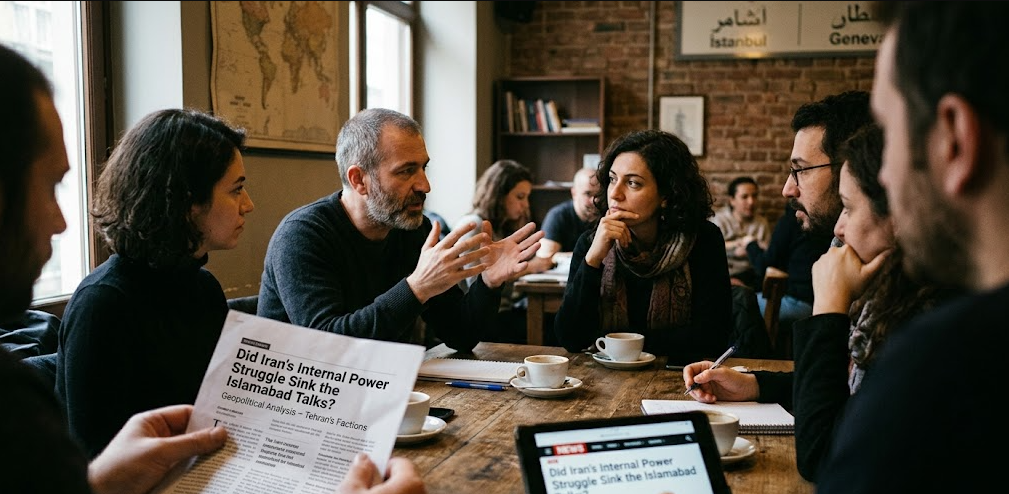
It was the clearest sign yet that Iran’s internal power struggle has become the single biggest obstacle to ending the most dangerous conflict in the Middle East in a generation.
The Promise of Islamabad
The US embassy Islamabad and Pakistani diplomatic infrastructure had been the unlikely venue for one of the most consequential diplomatic experiments of 2026. Pakistan, walking a careful geopolitical line between its traditional ties to China and its need for a stable neighborhood, stepped forward as the neutral broker for US-Iran peace talks. Islamabad offered meeting rooms, security guarantees, and political credibility at a moment when Washington and Tehran had no direct channel.
The first round of the Islamabad Talks, held on April 11-12, 2026, brought together a 300-member U.S. delegation led by Vance, alongside special envoys Steve Witkoff and Jared Kushner, and a 70-member Iranian team headed by parliamentary speaker Mohammad Bagher Ghalibaf and Foreign Minister Abbas Araghchi. Over 21 hours and three rounds of talks — the first indirect, the latter two face-to-face — the two sides made halting progress. But they left without a deal.
The US Islamabad embassy corridor had buzzed with cautious optimism for days. That optimism did not survive contact with Tehran’s parallel power structure.
The IRGC Veto
What unraveled the talks was not American intransigence. It was a rebellion inside Iran’s own chain of command. U.S. officials, according to multiple reports, first noticed the fracture after the first round, when it became clear that IRGC commander General Ahmad Vahidi and his deputies had systematically rejected concessions Iran’s own negotiators had floated at the table.
The breaking point came when Foreign Minister Araghchi announced the reopening of the Strait of Hormuz — a major potential confidence-building measure. Iran’s military power, concentrated in the Islamic Revolutionary Guard Corps, flatly refused to implement it. The IRGC then went further: generals began publicly attacking Araghchi, with Mohammad Bagher Zolghadr, the new secretary of Iran’s Supreme National Security Council, formally filing a report criticizing the foreign minister for “deviation from the delegation’s mandate.”
The civilian negotiators had been effectively handcuffed. According to the Jerusalem Post, the Iranian delegation was told explicitly not to raise iran’s nuclear power as a subject in the talks. That instruction alone made a comprehensive deal structurally impossible: Washington’s core demand was a verifiable commitment that Iran would not develop nuclear weapons capability, and Iran’s own team was barred from discussing the topic.
Why the IRGC Holds the Cards
The fracture traces back to a single assassination. In March, Israel killed Ali Larijani — the secretary of Iran’s Supreme National Security Council and the political heavyweight who had previously held Iran’s fractious factions together. His replacement, Zolghadr, lacks both Larijani’s authority and his skill in navigating between the IRGC’s hardline posture and the need for diplomatic flexibility.
Meanwhile, supreme leader Mojtaba Khamenei remains effectively unreachable. With the IRGC filling that vacuum, Iran’s military power has ceased to be a tool of state policy and has become the state policy itself. Ghalibaf and Araghchi, according to analysts, cannot travel to Pakistan or make binding commitments without explicit IRGC clearance — clearance that keeps being withheld.
Pakistan Caught in the Middle
Islamabad had invested significant political capital in the mediation. Prime Minister Shehbaz Sharif personally appealed to Washington to lift its naval blockade of Iranian ports, arguing that the economic pressure was giving Tehran’s hardliners a pretext to walk away from negotiations. Pakistan’s request to the U.S. to end the blockade reflects Islamabad’s understanding that Iran’s civilian negotiators need diplomatic victories to bring back to the IRGC — and they aren’t getting any.
Trump’s Ultimatum
President Trump, extending the ceasefire while keeping the blockade in place, gave Iran a three-to-five day window to unify its government and return to the table. In a post on Truth Social, Trump cited Iran’s “seriously fractured” government as the reason talks had stalled. “The Iranians are starving for cash,” he wrote, pointing to the $500 million per day Iran loses while the Strait of Hormuz remains shut.
The ultimatum places Iran’s internal contradiction under maximum pressure. The IRGC generals have blocked every diplomatic channel while simultaneously presiding over a collapsing economy. If Iran’s nuclear and military power is to be negotiated away, the IRGC must first decide whether it wants a deal or wants to remain the unchallenged ruler of a country under blockade.
Islamabad is still waiting for an answer.
Market Analysis
A quick snapshot of market trends, customer behavior, and competitor movements.