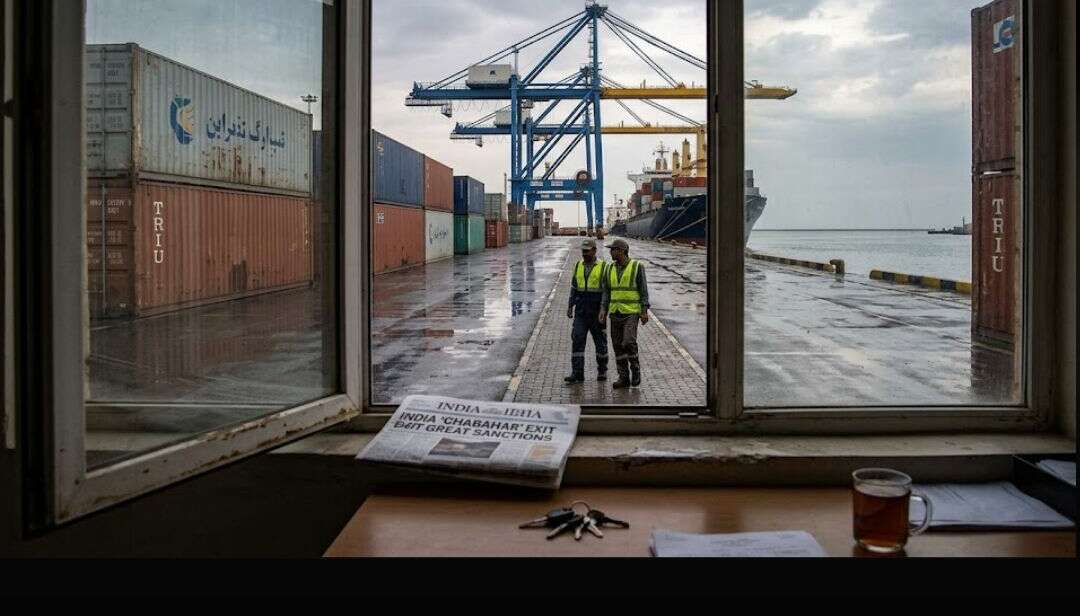
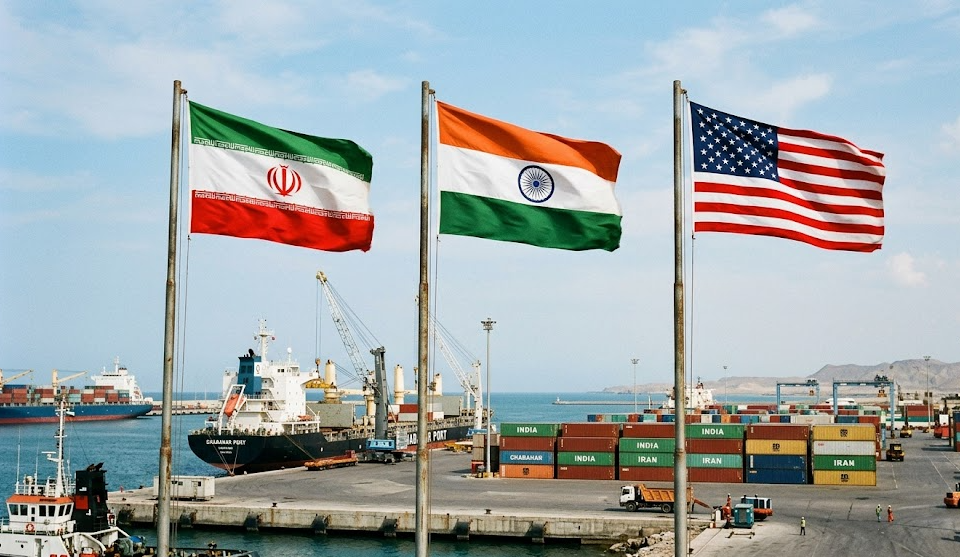
The clock is ticking on one of India’s most strategically sensitive overseas investments. With a critical us sanctions waiver set to expire on April 26, 2026, New Delhi is reportedly weighing a temporary transfer of its operational stake in iran’s chabahar port to a local Iranian entity — a carefully calibrated maneuver designed to limit
The clock is ticking on one of India’s most strategically sensitive overseas investments. With a critical us sanctions waiver set to expire on April 26, 2026, New Delhi is reportedly weighing a temporary transfer of its operational stake in iran’s chabahar port to a local Iranian entity — a carefully calibrated maneuver designed to limit exposure to U.S. penalties while keeping the door open for a future return.
The move, if confirmed, would mark the most significant shift in a two-decade Indian commitment to a port that New Delhi has long considered its gateway to landlocked Afghanistan and the resource-rich markets of Central Asia.
A Deadline Driving Hard Choices
The Chabahar port situation traces back to a six-month conditional waiver that the U.S. Treasury’s Office of Foreign Assets Control (OFAC) granted India in October 2025, shielding its operations from the sweeping us and iran sanctions regime through April 26, 2026. That window is now closing — and Washington has given no public indication it will renew.
The pressure intensified in January 2026, when President Trump issued a sweeping warning that any country conducting business with Iran would face an additional 25 percent tariff on all trade with the United States. For India, which runs a vast trade relationship with Washington, the stakes of non-compliance are existential in economic terms.
The response from New Delhi has been a quiet, methodical retreat. India Ports Global Ltd (IPGL), the state-owned company tasked with developing and operating the chabahar port india iran project, has pulled back its leadership structure: government-nominated directors resigned en masse, and the company’s website was taken offline — reportedly to shield officials from secondary sanctions exposure under U.S. penalties.
India also informed OFAC that it intends to “wind down all activities” at the port, including at the Shahid Beheshti terminal, the flagship facility that India has managed since a landmark 10-year operational agreement was signed in May 2024.
The $120 Million Calculation
India has already transferred approximately $120 million — the full extent of its financial commitment — to Iran. Officials in New Delhi described the transfer as ensuring that “work in the Shahid Beheshti terminal does not come to a stop”, framing the move as a financial handoff rather than an abandonment. India’s Ministry of External Affairs confirmed the payment, adding that there are currently no further funding obligations outstanding.
Critically, India’s Union Budget for 2026 contained zero allocation for the chabahar port project — the first time since 2017-18 that no funds were set aside. While the government offered no official explanation, the omission was widely read as a deliberate signal to Washington that New Delhi was stepping back from active investment in the project.
The Transfer Option
According to multiple reports, the option under active consideration involves a temporary transfer of chabahar port and india’s operational interest — specifically the stake held by IPGL in the Chabahar Free Zone — to a local Iranian partner entity. The arrangement would include a legally binding guarantee that operational control reverts to India once us and iran sanctions ease or a new waiver framework is negotiated.
Analysts have described this as “a tactical recalibration, not a complete withdrawal.” By placing the operational license in Iranian hands temporarily, India avoids direct sanctions exposure for its state-owned enterprise while preserving its physical infrastructure investment and its long-term claim to the port.
Iran has welcomed India’s continued engagement. Iranian officials have publicly described chabahar port iran as the “golden bridge” of Delhi-Tehran ties, and Tehran has expressed willingness to work with New Delhi to structure any transitional arrangement that prevents the port from reverting to full Iranian state control without international involvement.
What India Stands to Lose
The strategic logic behind India’s decade-long commitment to chabahar port india iran remains unchanged even as the legal and commercial mechanics shift. Located in Iran’s southeastern Sistan-Baluchestan province, the port provides India its only direct sea access to Afghanistan and Central Asia that completely bypasses Pakistan — a critical advantage given the state of India-Pakistan relations.
Chabahar port also anchors India’s role in the International North-South Transport Corridor (INSTC), a multimodal trade route linking the Indian subcontinent to Russia and Northern Europe via Iran and the Caspian Sea. Analysts estimate the INSTC reduces trade costs by up to 30 percent and transit time by 40 percent compared to traditional Suez Canal routes.
Losing operational presence at the port — even temporarily — would hand China, which has made its own infrastructure inroads in the Persian Gulf, a strategic opening in a corridor India has invested heavily to dominate.
Balancing Washington and Tehran
India’s predicament illustrates the impossible geometry of non-aligned foreign policy in an era of maximum-pressure sanctions. New Delhi cannot openly defy Washington without risking its most important bilateral economic relationship. But it cannot fully abandon iran’s chabahar port without surrendering strategic ground that took two decades and hundreds of millions of dollars to establish.
The transfer plan, if executed, attempts to split that difference — keeping the port operational, keeping Iran engaged, and keeping Indian officials off OFAC’s secondary sanctions list until the geopolitical weather changes. Whether Washington accepts that distinction, or treats it as a sanctions evasion maneuver, may ultimately determine whether chabahar port remains India’s bridge to Central Asia or becomes one of its costliest strategic retreats.
Market Analysis
A quick snapshot of market trends, customer behavior, and competitor movements.