Share This Article
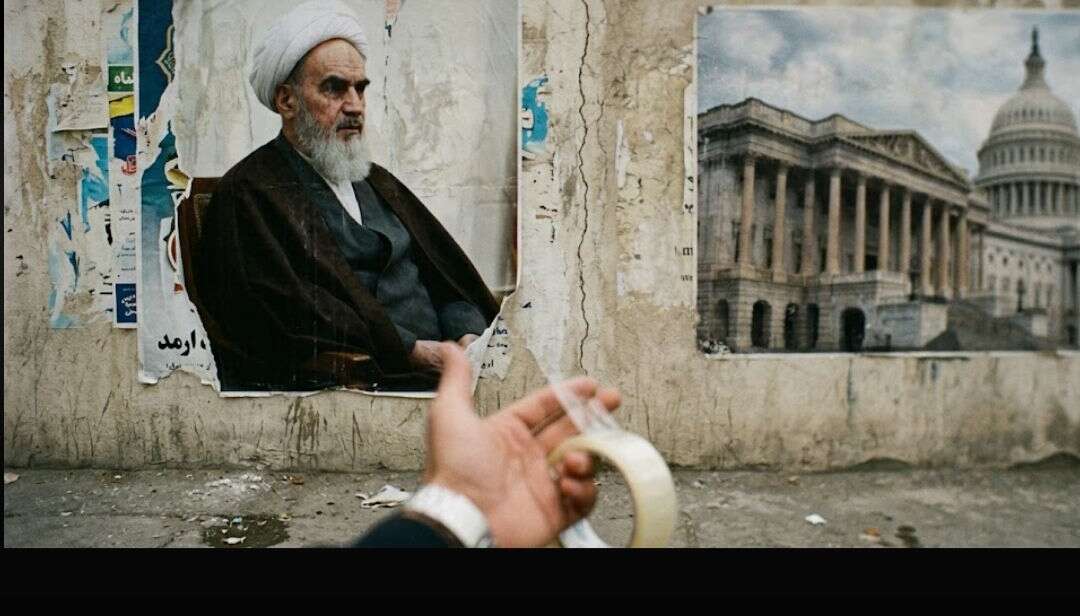
The current supreme leader of Iran has not been seen in public for over six weeks. In the middle of a war, that disappearing act may be the regime’s most calculated move yet.
In the history of modern authoritarian leadership, the face at the top has always mattered. Think of Kim Jong-un’s carefully orchestrated appearances, or the late Ayatollah Ali Khamenei’s decades of televised rulings, speeches, and timed interventions. Visibility was power. Presence was legitimacy. Which makes what is happening right now in Iran so deeply strange and, analysts suggest, so deliberately shrewd.
More than six weeks after he was announced as Iran’s new supreme leader following the assassination of his father, Iranians have still not seen or heard Mojtaba Khamenei. In the midst of a conflict seen as posing an existential threat to the regime, he has been conspicuously absent. Statements attributed to the 56-year-old cleric have been read out on national television or posted on social media. The regime has even used AI-generated videos to show Khamenei delivering messages, fueling speculation that the new supreme leader is incapacitated or abroad.
It is a stark departure from everything his father represented. Under the elder Khamenei, not a week passed without a speech, a ruling, or a carefully timed intervention. The son, by contrast, has become a ghost and Iran is betting that the ghost may be enough.
How the Current Supreme Leader of Iran Came to Power
Ali Khamenei was killed on February 28, 2026, in a joint U.S.-Israeli airstrike on his compound in Tehran. Iranian state media confirmed his death in the early hours of March 1. His son Mojtaba Khamenei was named Supreme Leader on March 8 by the Assembly of Experts, reportedly under heavy pressure from the Islamic Revolutionary Guard Corps (IRGC).
Mojtaba did not emerge from the rubble unscathed. Sources describe severe facial disfigurement and serious injuries to one or both legs, with one U.S. intelligence source suggesting he may have lost a leg. U.S. Secretary of Defense Pete Hegseth publicly stated that Mojtaba is “wounded and likely disfigured,” questioning why a leader with access to cameras refuses to use them.
His first message as Supreme Leader was not delivered in person. It was read aloud by a state television anchor while a still photograph of Khamenei was displayed on screen. Nearly two months into his rule, this pattern has not changed.
The Trump Veto That Changed Everything
The story of Israel, Iran, and the current supreme leader cannot be told without revisiting a pivotal moment in June 2025, months before the February strikes that killed the elder Khamenei. President Donald Trump rejected a plan presented by Israel to kill Iran’s Supreme Leader Ayatollah Ali Khamenei. The Israelis informed the Trump administration that they had developed a credible plan to kill Khamenei. After being briefed, the White House made clear to Israeli officials that Trump was opposed to the move.
An anonymous U.S. official told Reuters bluntly: “Have the Iranians killed an American yet? No. Until they do we’re not even talking about going after the political leadership.”
That veto, designed to prevent regional escalation, ultimately proved temporary. When Operation Epic Fury commenced in February 2026, Ali Khamenei was killed anyway and his wounded, unseen son inherited the most dangerous job on earth.
Here are Some Related Blogs to Read
- NATO chief calls US strikes on Iran “absolutely necessary”
- Will gold rally as US-Iran tensions escalate
- Oil jumped but the market stayed calm
- 5 takeaways from Tuesday’s 2026 primaries
- US tariff system reset across 60 economies
- Trump tariffs Section 122 surcharge expires
- Trump had deliberately paused Hormuz operations to force Iran into a deal.
- JD Vance claims Hegseth has been misleading Trump on the Iran war.
- Iran has been digging out hidden missile stockpiles after rejecting Trump’s peace offer.
Why Invisibility May Be a Survival Strategy
Experts suggest this “invisibility” might actually be a survival tactic. By remaining a shadow, Mojtaba avoids becoming a target while allowing a hardline military coalition to manage the war effort.
The logic is not without historical precedent. The history of authoritarian regimes is filled with moments when a figurehead leader was kept visible or made to appear visible while a deeper power structure made the real decisions. Lenin spent his final years incapacitated while the Soviet apparatus ground forward.
In Iran’s case, that deeper power structure has a name. The Council on Foreign Relations said plainly in the days after Ali Khamenei’s assassination: “Taking out Iranian Supreme Leader Ayatollah Ali Khamenei is not the same as regime change. The Islamic Revolutionary Guard Corps is the regime.”
Iran analyst Ali Vaez of the International Crisis Group has offered perhaps the most measured reading of the situation. It appears that “Mojtaba is not in a state where he can actually make critical decisions or micromanage the talks,” but “the system is using him to get final approval for key broad decisions and not the tactics for the negotiations.”
In other words: the supreme leader of Iran may be a seal of approval, not a decision-maker and that arrangement may be precisely what keeps the regime functional.
A Regime Running on Ambiguity
This unofficial wartime arrangement has left even the regime’s most loyal supporters confused over who is making decisions. When Foreign Minister Araghchi declared the Strait of Hormuz open for commercial shipping, he came under fire from the regime’s supporters who accused him of preemptively handing Trump a victory. A state-affiliated outlet said the move “requires approval from the leadership.”
Trump has boasted since the killing of the elder Khamenei that Iran has undergone regime change and described those now negotiating on behalf of Tehran as “reasonable.” Still, a second round of talks in Pakistan broke down after Iranian negotiators failed to appear. Trump attributed the collapse to Iran’s government being “seriously fractured.”
Yet fracture and functioning are not mutually exclusive. Iran’s regime has survived four decades by institutionalizing opacity. The invisible supreme leader may be less a sign of collapse than a feature of a system that has always operated best in the shadows.
In his first written message, Mojtaba Khamenei urged Iranians to remain present: “If your power does not appear on the scene, neither leadership nor any of the institutions whose true role is to serve the people will have the necessary effectiveness.”
The regime’s leader is nowhere to be seen. And yet, for now, the regime endures.

Oil & Energy Markets
A look at crude price swings, OPEC supply moves, and how energy markets react to geopolitical shocks.

Geopolitics & Conflict
Breaking down how wars, ceasefires, and diplomatic deals ripple through global trade and security.
US Foreign Policy
Coverage of Trump administration negotiations, sanctions, and strategic decisions shaping world events.
Economy & Inflation
Tracking how commodity prices, gas costs, and supply chains affect everyday consumers.