Chabahar Project on Track Despite Sanctions, Says Iran Envoy, Assuring Safety in Hormuz | Exclusive
Theo Jorden
Share This Article
Iranian Ambassador to India, Mohammad Fathali, has issued a firm reassurance that the Chabahar project remains on a long-term strategic trajectory, unshaken by the mounting pressure of US sanctions and the rapidly shifting geopolitical landscape in West Asia. In an exclusive interaction, the Iran envoy also extended a significant assurance that India-flagged vessels will be
Iranian Ambassador to India, Mohammad Fathali, has issued a firm reassurance that the Chabahar project remains on a long-term strategic trajectory, unshaken by the mounting pressure of US sanctions and the rapidly shifting geopolitical landscape in West Asia. In an exclusive interaction, the Iran envoy also extended a significant assurance that India-flagged vessels will be given safe passage through the strategically vital Strait of Hormuz, even as the waterway remains at the center of an escalating global crisis.
“Chabahar Port is not merely an economic project for Iran and India; it is a strategic and long-term initiative,” Ambassador Fathali stated, pushing back against speculation that the port’s future is in jeopardy. “Both countries have structured their cooperation around shared, long-term needs, ensuring that the project remains viable and sustainable.”
The Stakes: $120 Million and a Corridor to Central Asia
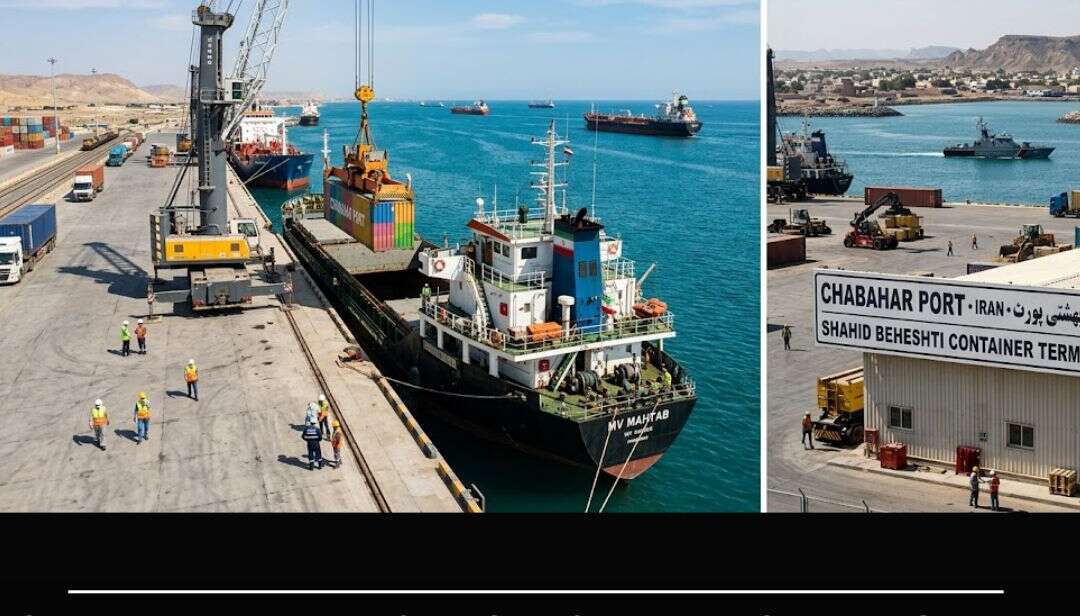
The Chabahar project specifically the Shahid Beheshti terminal, where India’s state-run India Ports Global (IPGL) has pumped in at least $120 million has long been the linchpin of New Delhi’s connectivity ambitions. The port provides India a crucial overland gateway to landlocked Afghanistan and Central Asia, bypassing Pakistan entirely. It is the only foreign-operated port in Iran and remains a rare instance of Indian strategic infrastructure investment outside its borders.
However, the project has been thrown into uncertainty after the US sanctions waiver that had shielded Indian operations at Chabahar expired on April 26, 2026, with Washington showing no signs of renewal. The waiver’s expiry followed a September 2025 announcement by the Trump administration revoking all Iran-related sanctions exemptions. India lobbied hard and secured a conditional extension, but that window has now closed.
India’s Ministry of External Affairs acknowledged the situation is under “active discussion” with both the US and Iran, while describing the ongoing West Asia conflict as “a complicating factor.”
Despite the diplomatic tension, the Iran envoy has been categorical. Ambassador Fathali framed the Chabahar project as a symbol of constructive bilateral cooperation that transcends short-term political headwinds. “Economic and developmental cooperation — especially major regional projects such as Chabahar — should not be affected by unilateral approaches and unlawful sanctions,” he said, calling for uninterrupted project implementation.
His message comes as India weighs a restructuring of its operational stake, with one option involving a temporary transfer of IPGL’s share to an Iranian entity, carrying a guarantee that the stake would revert to India once sanctions are lifted. No final decision has been announced, and official sources in New Delhi say all options remain on the table.
Hormuz Assurance: “Will Try Our Best”
Separately, the Iran envoy addressed India’s growing anxiety over shipping security in the Strait of Hormuz. Iran has intermittently restricted movement through the strait since February 28, 2026, when the US and Israel launched military operations against Tehran and assassinated Supreme Leader Ali Khamenei. The closure has disrupted global energy flows, with India — a major oil importer among the most exposed nations.
Ambassador Fathali’s response offered measured but meaningful reassurance. “Will try our best,” he said, when asked whether India-flagged ships could count on safe transit through Hormuz an assurance that diplomatic circles in New Delhi have noted carefully. Iran has separately indicated it would reopen the strait fully if the US lifts its port blockade and the war ends.
New Delhi’s Balancing Act
India finds itself in a familiar bind: preserving a cornerstone connectivity project while navigating the fierce currents of US pressure and regional instability. With no Budget 2026 allocation for the Chabahar project a signal of how uncertain the environment has become New Delhi’s room for maneuver is shrinking.
Yet the Iran envoy’s unambiguous commitment to the Chabahar project and the Hormuz passage offer a diplomatic opening. For India, walking away from a $120 million investment and a strategic corridor built over a decade is not a decision easily made. For Iran, Chabahar is equally a geopolitical asset and both sides appear determined to protect it, even if the path forward demands creative diplomacy.
As talks continue in backchannels, the Chabahar project endures as a test case for how two countries can hold a strategic partnership together when the world around them is on fire.
Oil & Energy Markets
A look at crude price swings, OPEC supply moves, and how energy markets react to geopolitical shocks.