
Economy
We Said the Canada Ban Would Hurt. A Week Later, Here’s Who’s Feeling It
WASHINGTON – One week ago, at 12:01 a.m. Eastern on September 29, the U.S. shut the door on a long list of Canadian products. The Canada import ban blocks most packaged Canadian beer, wine and spirits, along with whey products, molasses and large-engine motorcycles. Seven days in, there’s no empty-shelf panic in American liquor stores.…
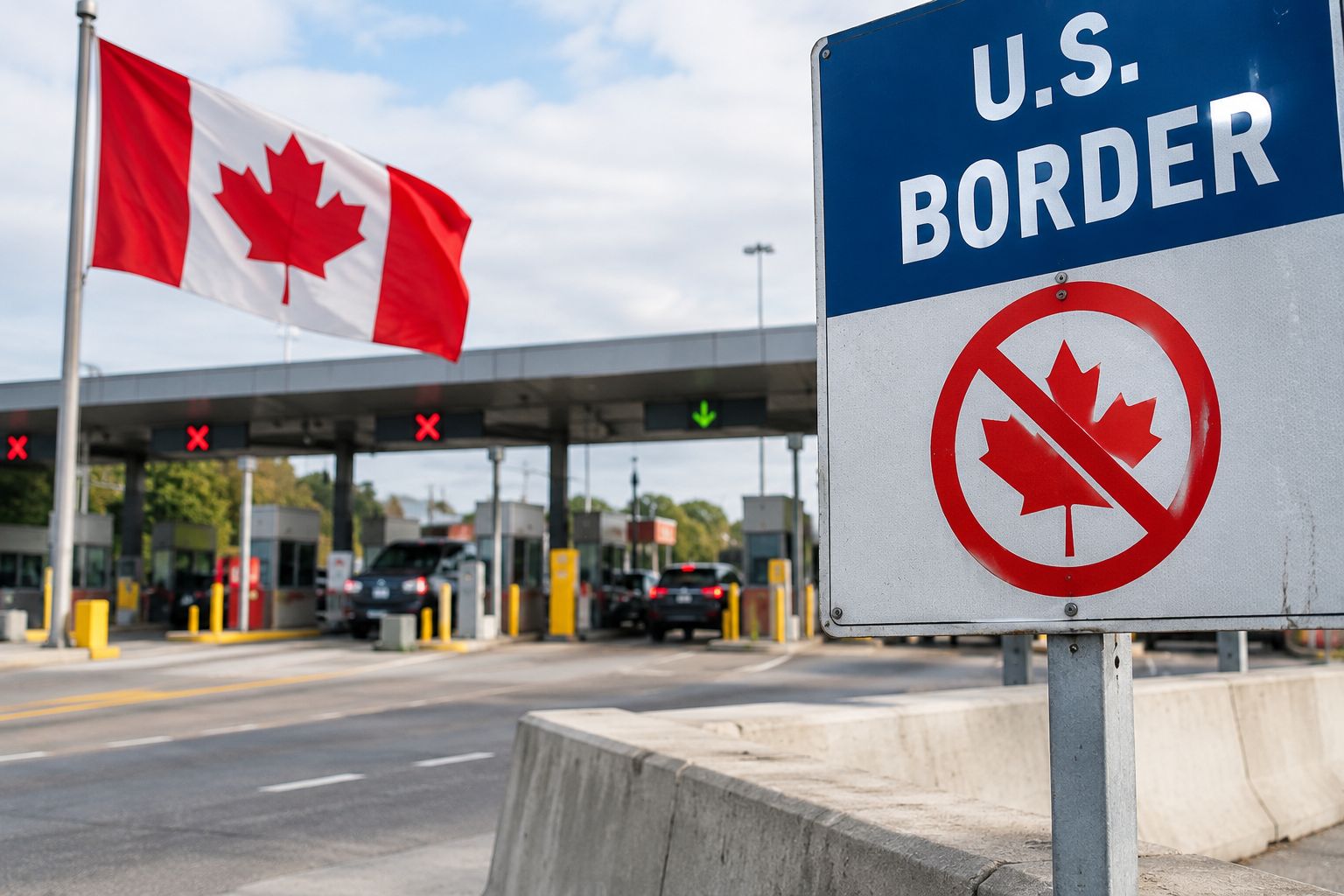
WASHINGTON – One week ago, at 12:01 a.m. Eastern on September 29, the U.S. shut the door on a long list of Canadian products. The Canada import ban blocks most packaged Canadian beer, wine and spirits, along with whey products, molasses and large-engine motorcycles.
Seven days in, there’s no empty-shelf panic in American liquor stores. But the Canada Ban is landing on specific people: American bar owners, small Canadian craft producers, U.S. winemakers who lost their best export market, and one Quebec motorcycle maker heading into a tough 2027. Here’s what actually changed.
Track the Trade War as It Develops
With a January auto-tariff deadline looming and no talks scheduled, this standoff will keep moving. Watch the numbers instead of waiting for the next announcement:
Live Trump Tariff Tracker →
Every tariff and import restriction on Canada and other trading partners, updated as policy changes.
Live Oil Price Tracker →
Canada is a major energy supplier to the U.S., so trade-war escalation and energy markets often move together.
The Canada Import Ban Update: Still in Effect
Short answer: yes, the Canadian alcohol import ban is still in effect as of this writing, and neither side has signaled it’s coming off soon.
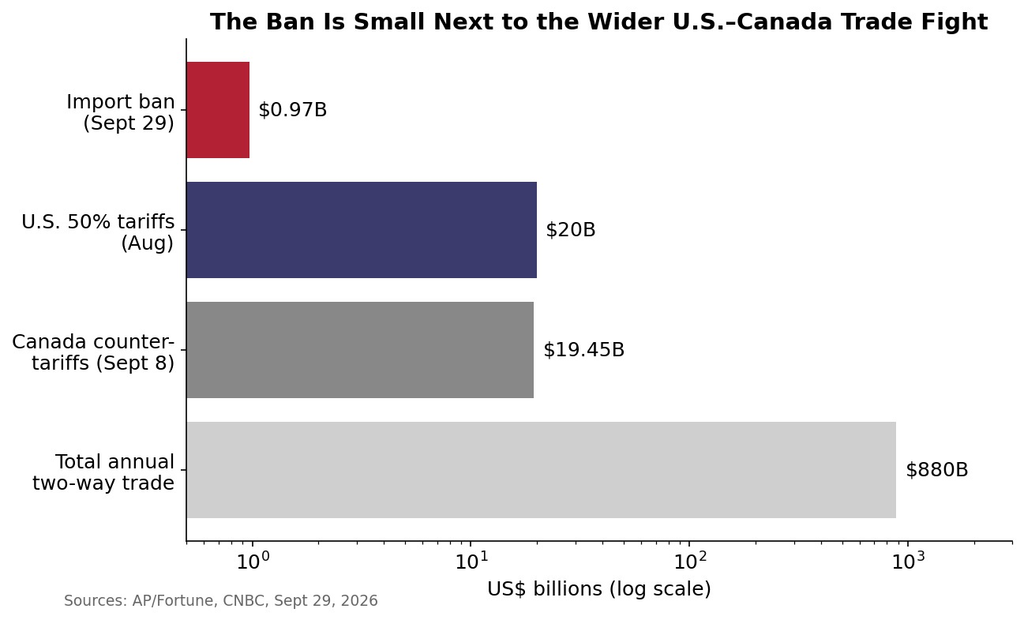
The ban was announced September 8, the same day Canada’s counter-tariffs kicked in on roughly $20 billion of American goods. President Trump used Section 338 of the Tariff Act of 1930, a Depression-era law that lets the president impose duties of up to 50% and, under certain conditions, bar goods from countries that discriminate against U.S. commerce. The move is the latest escalation in a feud that has already spilled into symbolism, including Trump’s order to rename Lake Ontario “Lake America”.
What’s covered:
- Alcohol: Packaged beer, wine, sparkling wine, cider, sake, whisky, bourbon, rum, gin, vodka, tequila, brandy, liqueurs and other spirits
- Dairy-related goods: Whey protein concentrates, modified, fluid and dried whey, plus several molasses types
- Non-alcoholic beer
- Motorcycles and mopeds: with gasoline engines above 800cc
Canadian goods that arrived before the deadline but weren’t yet cleared for consumption still face the existing 50% duty.
By the Numbers: Small Ban, Big Signal
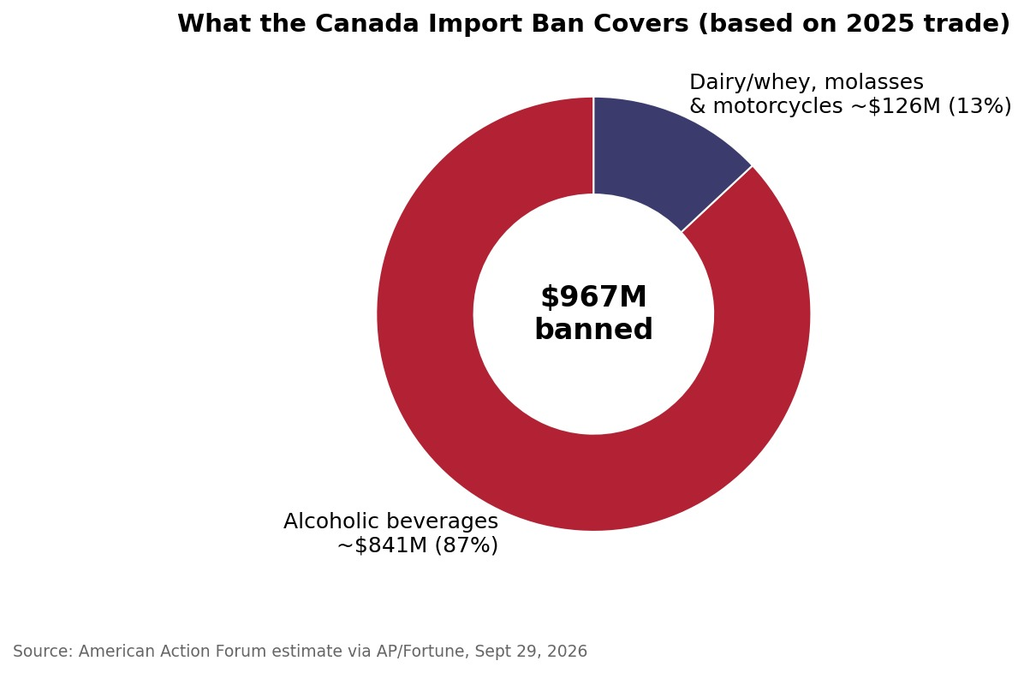
The American Action Forum’s Jacob Jensen estimates the ban covers about $967 million in Canadian imports based on 2025 data, and roughly 87% of that is alcohol.
That’s tiny next to the $880 billion in annual two-way trade. A White House official called it about 0.1% of overall U.S. consumption and argued the economics hurt Canada more than the U.S.
Trade attorney Patrick Childress of Holland & Knight, a former U.S. trade official, points out that these goods were already paying a 50% tariff, which was functioning as a de facto ban.
Who’s Feeling the Canada Ban
1. American bars, restaurants and retailers
U.S. trade groups were the loudest critics on day one. Industry representatives warned that restaurants, bars, retailers and consumers are now being dragged deeper into a dispute that’s already been costly. If your local bar carries Canadian craft beer, a specific rye, or Niagara icewine, expect gaps on the menu as existing stock runs out.
2. U.S. wine and spirits makers (who were hurting first)
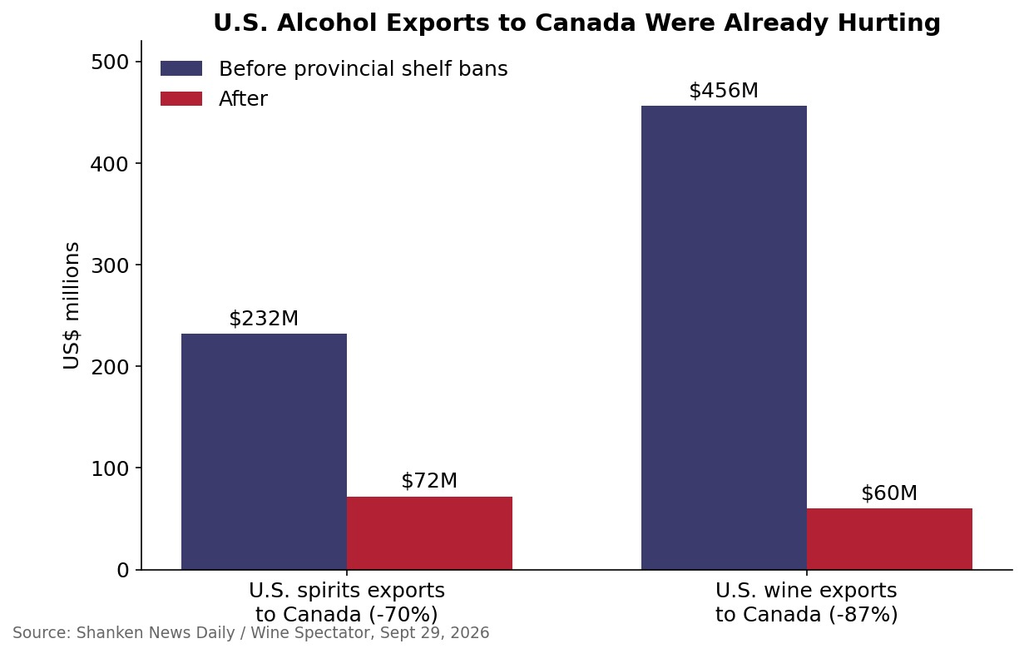
This is the part of the story many Americans miss. The ban is retaliation for most Canadian provinces pulling U.S. alcohol off government-run shelves in 2025. Since then, according to industry figures:
- U.S. spirits exports to Canada fell about 70%, from $232 million to $72 million
- U.S. wine exports to Canada fell about 87%, from $456 million to $60 million
The new ban doesn’t reopen that market. It just adds another layer to the standoff.
3. Small Canadian producers
Big brands have workarounds. Small ones don’t. Reuters reported that smaller Canadian producers are struggling to replace their American customers, while several Canadian winemakers told Wine Spectator the hit to them would be limited, partly because the move was widely expected.
4. Motorcycle buyers
Quebec-based BRP confirmed its three-wheel Can-Am Spyder and Canyon models are now excluded from the U.S. The company says the impact likely won’t show until next year, since most of this season’s production is already shipped. Shoppers eyeing a 2027 model should take note.
5. Food and supplement makers using whey
Canadian whey goes into protein shakes, snacks and baked goods. Domestic and other foreign suppliers can fill much of the gap, but some manufacturers may face sourcing changes.
The Big Loophole: Bulk Booze
Not every Canadian bottle disappears. The ban targets alcohol packaged for direct consumption. Bulk spirits shipped to the U.S. and bottled here are exempt from both the ban and tariffs.
That’s why Crown Royal, the best-known Canadian whisky in America, is largely unaffected. Its owner, Diageo, ships it in bulk and bottles it stateside. So “every Canadian brand is gone” overstates what the rule does.
Has Canada Retaliated Further?
Not yet. Ottawa has held off on fresh retaliation since its counter-tariffs took effect September 8. Those duties run from 15% to 50% on about C27.6billion(US19.45 billion) of American goods, including steel, dairy, farm equipment, appliances, paper, furniture, clothing and electronics.
Canada’s official reaction was restrained. A spokesman for Trade Minister Dominic LeBlanc said Ottawa had taken note of the measures and would stay focused on protecting Canadian workers and diversifying trade. LeBlanc has said Canada won’t sign a bad deal and isn’t sitting around waiting on Washington.
Prime Minister Mark Carney is leaning into that diversification, pursuing closer ties with the EU and aiming to wrap up trade talks with India by the G20 summit in December. India has its own tariff negotiations with Washington in flux, as we detailed in our look at what India actually got at the G20 trade talks in Milwaukee. India’s economy is also running hot even as its currency struggles, a split we explained in why India’s GDP grew 7.8% while the rupee hit a record low.
What Washington Said This Week
At the G20 trade ministers’ meeting in Milwaukee on October 1, U.S. Trade Representative Jamieson Greer said a few outstanding issues with Canada remain very hard to resolve. He added that the administration is open to a deal but isn’t inclined to drop tariffs to zero.
President Trump has predicted Canada will eventually come back and apologize. Carney’s response: Canada is ready to negotiate in good faith, but only on a deal that respects both countries’ sovereignty.
What to Watch Next
- January 1, 2027: Trump’s threat to raise tariffs on Canadian cars and trucks from 25% to 50% is still on the table.
- Federal contracts: The GSA has been directed to pull Canadian-origin products from its Multiple Award Schedules until Canada offers what the White House calls full reciprocity.
- Midterms: Democrats are using the Canada fight as an affordability argument heading into November.
- USMCA’s future: The dispute complicates any renewal of the North American trade pact.
Childress expects the standoff to last months, not weeks, since neither the bans nor the tariffs are painful enough yet to force either side back to the table. That is a real test of the pattern markets have come to rely on: the so-called TACO trade, the bet that Trump pulls back once the economic pain gets high enough. So far in this fight, the pain isn’t high enough to test it.
Bottom Line
One week into the Canada import ban, the national economic hit is small. The pain is concentrated: U.S. drinks exporters locked out of Canada, American bars losing Canadian labels, small Canadian producers losing their biggest market, and motorcycle buyers looking at next year. With no talks scheduled and a January auto deadline looming, this one isn’t over.
For more coverage of the trade fights shaping prices and politics, visit DonaldTrump.Coach.
More Top Stories From DonaldTrump.Coach
- Israel’s war economy: record tech exits and a 33-year-high shekel
- Supreme Court opens new term with major climate case
- Rupee at historic low of 96.17 vs. dollar: what’s driving it
- PM Modi’s Sweden visit yields six SITAC outcomes for India
Frequently Asked Questions
Is the Canadian alcohol import ban still in effect?
Yes. The Canada import ban took effect September 29, 2026, and remains in force as of October 6, 2026. No end date has been announced.
What products does the Canada Ban cover?
Most packaged Canadian beer, wine, cider, sake and spirits, non-alcoholic beer, whey products, several molasses types, and motorcycles and mopeds with engines over 800cc.
Has Canada retaliated further after the import ban?
Not as of publication. Canada’s 15%–50% counter-tariffs on about US$19.45 billion of American goods, in place since September 8, remain the latest response.
Can I still buy Crown Royal in the U.S.?
Generally, yes. Crown Royal is shipped in bulk and bottled in the U.S., and bulk spirits are exempt from the ban.
How much trade does the Canada import ban affect?
About $967 million, based on 2025 trade, with roughly 87% of it alcohol. That’s a small share of the $880 billion in annual U.S.–Canada trade.
Why did the U.S. ban Canadian alcohol?
Washington says it’s a response to Canadian provinces pulling U.S. alcohol from store shelves and to Canada’s retaliatory tariffs.
Will the Canada import ban raise prices for Americans?
Broad price impacts are expected to be minimal, but specific Canadian products may become scarce at bars and stores once existing inventory runs out.
References & Sources
- Fortune / Associated Press – “The U.S. just banned nearly $1 billion in Canadian imports—and 87% of it is booze” (Sept 29, 2026)
- CNBC – “America’s Canadian import restrictions come into force. Here are the products barred from entry” (Sept 29, 2026):
- Wine Spectator – “White House Ban On Canadian Alcoholic Beverages Takes Effect” (Sept 29, 2026)
- Shanken News Daily – “U.S. Ban On Canadian-Bottled Spirits And Wine Takes Effect” (Sept 29, 2026)
- Spectrum News – “Trump administration’s ban on nearly $1 billion in Canadian imports takes effect” (Sept 29, 2026)
- IANS – “Trump bans Canadian liquor, dairy goods as trade war escalates” (Sept 9, 2026)
- FOX 32 Chicago – “US bans Canadian motorcycle, dairy, alcohol imports amid trade war” (Sept 9, 2026)
- BNN Bloomberg / Canadian Press – “U.S. trade rep Greer says there are difficult issues to resolve with Canada” (Oct 1, 2026)
- International News & Views – “Canadian Alcohol and Motorcycles Face U.S. Import Ban—What Buyers Need to Know” (Oct 1, 2026)