The Islamabad talks have been suspended, extended, violated, and resumed three times in two weeks. But strip away the tactical noise — the ship seizures, the fast boat encounters, the Truth Social posts — and what remains is this: the US and Iran history has been building toward this moment for 73 years. And for
The Islamabad talks have been suspended, extended, violated, and resumed three times in two weeks. But strip away the tactical noise — the ship seizures, the fast boat encounters, the Truth Social posts — and what remains is this: the US and Iran history has been building toward this moment for 73 years. And for the first time, both sides have run out of road to kick the can down.
ISLAMABAD / WASHINGTON / TEHRAN — History does not announce itself. It arrives disguised as a diplomatic scheduling dispute, a suspended negotiation, a ceasefire extension that nobody fully trusts.
But the US and Iran confrontation playing out across the Persian Gulf, the Islamabad conference rooms, and the Truth Social feed of the 47th President of the United States is not a scheduling dispute. It is the culmination of 73 years of entangled US and Iran history — a relationship defined by a CIA coup, a revolution, a hostage crisis, proxy wars, nuclear standoffs, maximum pressure campaigns, and now 38 days of the most concentrated military strikes the Middle East has seen since 2003.
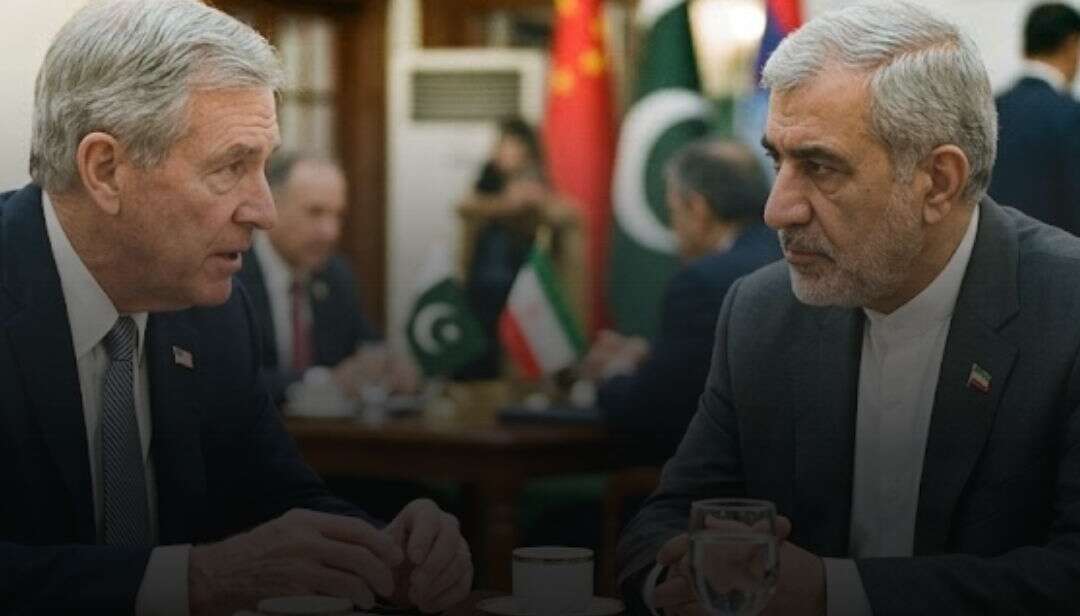
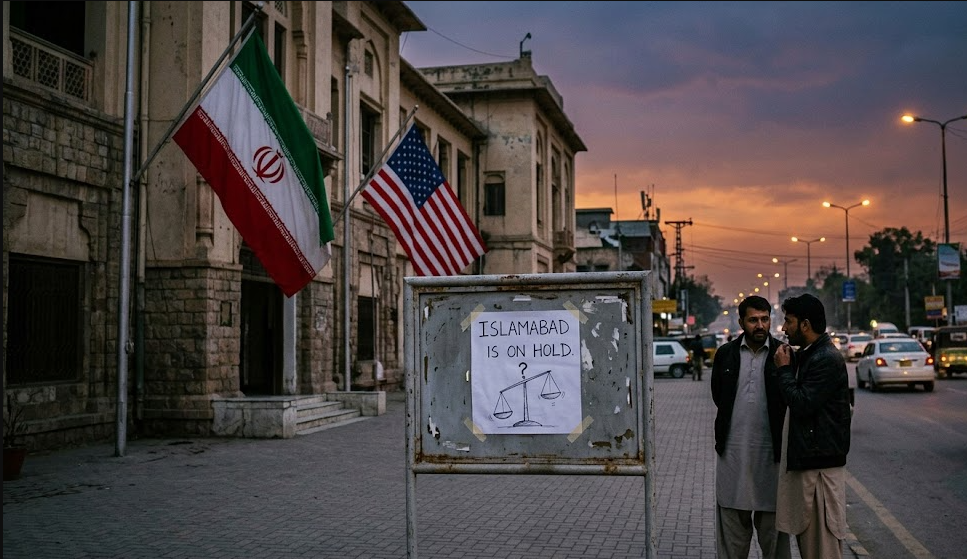
The Islamabad talks are on hold. They are on hold because us and iran have arrived, simultaneously and inescapably, at the one moment their entire shared history has been building toward: a point at which the cost of permanent confrontation has exceeded the cost of permanent settlement — for both sides — and neither side has yet found the formula to cross from one to the other.
The 73-Year Arc
US and Iran history does not begin in 2018 with the JCPOA withdrawal, or in 2015 with the nuclear deal, or in 2002 with the “Axis of Evil” speech. It begins in 1953.
On August 19, 1953, CIA Operation Ajax overthrew Iran’s democratically elected Prime Minister Mohammad Mosaddegh — who had nationalized Iranian oil — and restored Shah Mohammad Reza Pahlavi to absolute power. The operation, conducted jointly with British intelligence, established the foundational grievance that has shaped every subsequent interaction between Washington and Tehran. When Iranians chant “Death to America,” they are not chanting about nuclear enrichment. They are chanting about 1953.
The 1979 Islamic Revolution — which expelled the Shah, established the Islamic Republic, and seized 52 American diplomats for 444 days in the Tehran hostage crisis — was the direct political consequence of 26 years of US-backed autocracy. The hostage crisis poisoned the bilateral relationship at its root, establishing the mutual demonization framework that successive administrations on both sides have exploited domestically while occasionally attempting to dismantle diplomatically.
The us and iran history since 1979 is a catalog of near-misses and missed opportunities:
The Iran-Contra affair (1986) — when the Reagan administration secretly sold weapons to Iran while publicly supporting Iraq
The USS Vincennes shooting down Iran Air Flight 655 (1988) — killing 290 civilians, an incident America never formally apologized for
The Clinton-era “dual containment” that isolated Iran from every economic relationship
The George W. Bush “Axis of Evil” designation that ended a brief post-9/11 cooperation window
The Obama JCPOA (2015) — the closest us and iran came to structural resolution before Trump’s 2018 withdrawal
The maximum pressure campaign (2018–2026) — eight years of escalating economic warfare
The Twelve-Day War (June 2025) and Operation Epic Fury (February 2026)
Every one of those episodes produced the same result: a crisis managed, a confrontation deferred, a resolution postponed. The us and iran history is the history of a relationship that has been too costly to normalize and too dangerous to permanently rupture.
Why This Moment Is Different
The Islamabad talks — currently on hold after ship targeting incidents in the Strait of Hormuz — represent something genuinely unprecedented in us and iran relations: a negotiation in which both sides have exhausted their conventional alternatives simultaneously.
Iran entered 2026 with its nuclear program intact but its supreme leader dead, its military infrastructure heavily damaged, its economy running at 43% inflation, its currency above 1 million rials to the dollar, its food prices up 70%, and its population having survived a security force massacre of protesters in January. The JCPOA is gone. The enrichment facilities are damaged. The 460-kilogram stockpile of 60%-enriched uranium — enough for approximately 11 nuclear devices — is Iran’s last remaining strategic leverage, and it is being held over a negotiating table in Islamabad rather than deployed.
Iran cannot afford to resume the war it was losing. It cannot afford to surrender the nuclear program that is its only deterrent against the adversary that just killed its supreme leader. And it cannot afford to walk away from the us and iran negotiating process that offers, however imperfectly, the sanctions relief its broken economy requires.
The United States entered this negotiation with its own exhaustion. The military campaign that killed Khamenei and degraded Iran’s nuclear infrastructure did not eliminate the program. Iran’s 60% enrichment and 460-kilogram stockpile survived the strikes — damaged, not destroyed. The naval blockade of 15 warships is sustainable for weeks, not years. The domestic economy — gas at $4.10 per gallon, consumer confidence at its lowest since 2022, Trump’s approval at 37% — cannot absorb an indefinite Persian Gulf war. The 2026 midterms arrive in six months.
Us and iran have both run out of the strategic space that allowed prior generations to defer resolution. That is what makes the Islamabad talks historic — not their diplomatic format, but the structural reality that produced them.
The Two Paths at the Tipping Point
The us and iran history of the past 73 years has produced two kinds of resolution: temporary and deferred. Never permanent.
The Islamabad process offers, for the first time, the possibility of a third kind: structural. A framework that addresses enrichment rights, sanctions architecture, verification mechanisms, and regional proxy relationships in enough depth that the next administration — American or Iranian — cannot simply unwind it with an executive order.
The obstacle is the same obstacle that has blocked every prior us and iran settlement attempt: the enrichment question. Iran’s sovereignty claim over domestic uranium enrichment is not a negotiating position. It is a post-colonial identity statement rooted in the 1953 memory of a foreign power controlling Iranian resources. The US demand for complete dismantlement is not merely a nonproliferation position. It is a statement that Iranian sovereignty is conditional on American security requirements.
Neither position is irrational. Neither position is bridgeable through conventional diplomatic language. And yet the Islamabad talks — on hold today, resuming April 25, expiring with the extended ceasefire on May 1 — represent the best-resourced, highest-stakes, most urgently motivated attempt to bridge it that us and iran history has ever produced.
What the Historians Are Saying
Dr. Vali Nasr of Johns Hopkins SAIS, one of the foremost scholars of us and iran relations, framed the moment precisely: “Every prior negotiation happened when one side had more to lose from a deal than from continued confrontation. For the first time in 73 years, both sides simultaneously have more to lose from continued confrontation. That structural alignment has never existed before. It may not exist again.”
Trita Parsi of the Quincy Institute — whose research on us and iran history spans three decades — was characteristically measured: “The tipping point framing is accurate but incomplete. Tipping points tip in both directions. The same conditions that make a historic deal possible make a historic collapse equally possible. What determines the direction is not strategy. It is whether the negotiators in Islamabad can find language that lets both sides declare victory on enrichment without either side actually winning.”
The Clock and the History
The ceasefire extension expires May 1. The talks resume April 25. Nine days remain to produce the framework that 73 years of us and iran history have never produced.
That is not enough time to resolve 73 years of grievance, ideology, and strategic competition. It may be enough time to build the scaffolding of a framework that subsequent negotiations can inhabit — a phased enrichment freeze, a graduated sanctions relief mechanism, a verification architecture robust enough to survive the next American administration’s political incentives to dismantle it.
The Islamabad talks are on hold because ships are being targeted in the Strait of Hormuz. The ships are being targeted because the IRGC has not signed what the Foreign Ministry agreed to. The Foreign Ministry agreed to a ceasefire because Iran is broken. Iran is broken because of 73 years of us and iran history that have produced this precise moment of mutual exhaustion.
History does not announce itself. It arrives disguised as a suspended negotiation and a ceasefire extension. But it arrives. And on April 25 in Islamabad, it will be in the room.
Market Analysis
A quick snapshot of market trends, customer behavior, and competitor movements.