Iran wrote the peace proposal. Trump called it “workable.” Both sides shook hands in Islamabad. Then Israel bombed Lebanon. A tanker was seized. The IRGC halted Hormuz shipping. And the ceasefire that was supposed to end 38 days of war is now being pulled apart from every direction simultaneously — with 72 hours left on
Iran wrote the peace proposal. Trump called it “workable.” Both sides shook hands in Islamabad. Then Israel bombed Lebanon. A tanker was seized. The IRGC halted Hormuz shipping. And the ceasefire that was supposed to end 38 days of war is now being pulled apart from every direction simultaneously — with 72 hours left on the clock.
ISLAMABAD / TEHRAN / WASHINGTON — Eleven days ago, Iran’s 10-point peace framework was hailed as a diplomatic breakthrough.
Today it is being tested by threats and tensions its architects never fully neutralized — and the gap between what the April 7 ceasefire announced and what it actually resolved is widening by the hour.
The ceasefire expires April 21. The Islamabad talks are suspended. A Marshall Islands-flagged tanker sits impounded at Bandar Abbas. Iran is vowing revenge. The IRGC has twice halted Hormuz shipping since the ceasefire was announced. Israeli operations continue in Lebanon — a theater explicitly excluded from ceasefire terms. Oil markets are pricing the breakdown before it officially happens. And the one structural question that made this conflict possible in the first place — Iran’s right to enrich uranium — remains as unresolved as it was the day the bombs began falling on February 28.
This is what a ceasefire looks like when it was built on ambiguity rather than agreement.
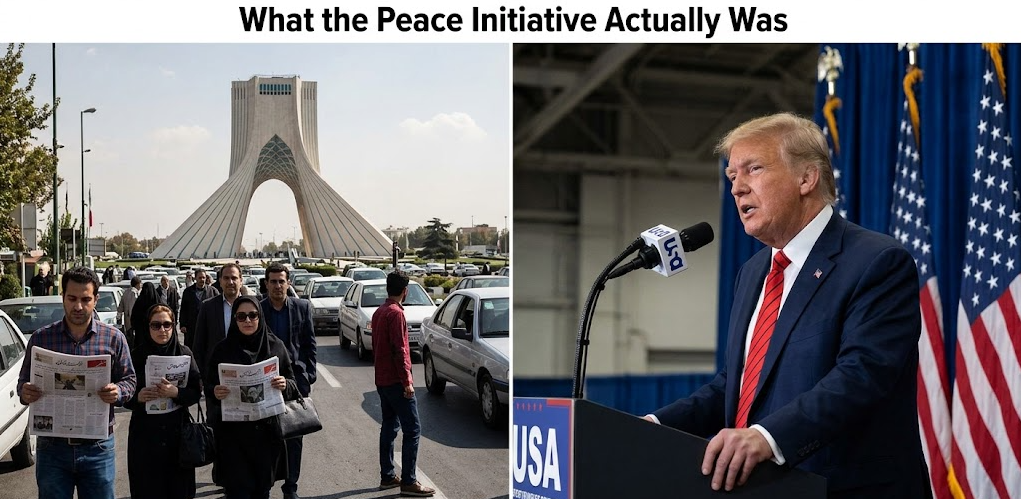
What the Peace Initiative Actually Was
Iran’s 10-point framework — submitted to Washington via Pakistani intermediaries and described by Trump as “a workable basis on which to negotiate” — was never a peace agreement. It was a negotiating document, maximalist by design, structured to establish Tehran’s red lines before formal talks began.
Its core demands remain intact and unmet: full removal of all US, UN, and IAEA sanctions; return of all frozen Iranian assets; complete war reconstruction compensation; the right to domestic uranium enrichment with no facility dismantlement; and UN Security Council ratification of any final agreement — giving Russia and China veto power over future US enforcement.
The United States entered Islamabad with a 15-point counter-proposal demanding the opposite on every critical axis. Special Envoy Steve Witkoff acknowledged Iran’s stockpile of 460 kilograms of 60%-enriched uranium — enough for approximately 11 nuclear devices — and insisted it must be transferred to a third country. Iran has called this non-negotiable in the opposite direction.
Eleven days of talks have not moved either position measurably. The Islamabad process was functioning less as genuine negotiation and more as a structured delay — buying time past April 21 without either side having to publicly acknowledge the gap was unbridgeable.
That delay is now collapsing under the weight of simultaneous escalations.
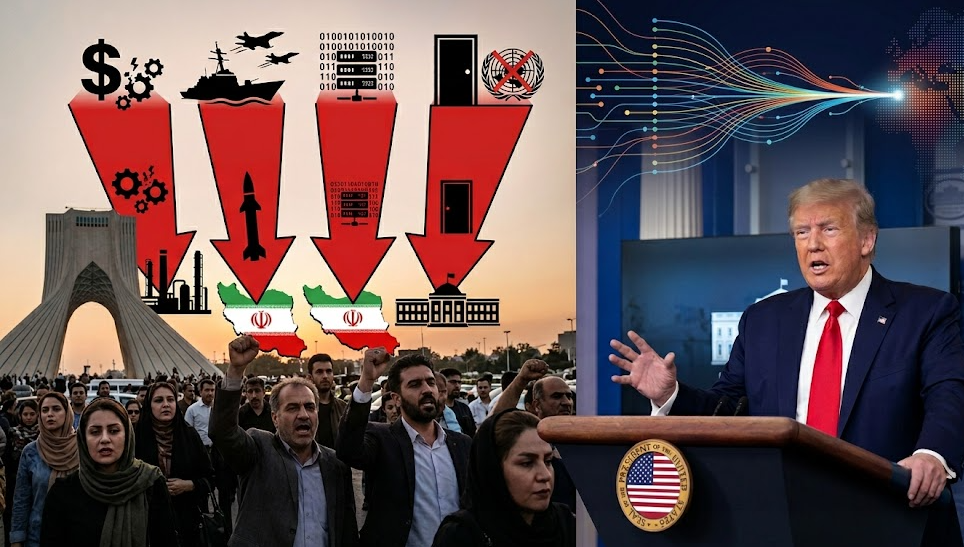
Four Simultaneous Pressure Points
1. The Ship Seizure
Thursday’s IRGC detention of a commercial tanker — enforcing the $2 million per-vessel transit fee Iran’s parliament approved in March — crystallized the central ambiguity the April 7 ceasefire never resolved. Iran insists the fee is a legitimate sovereign exercise of maritime authority within its ceasefire framework. Washington calls it piracy and a direct violation of the “COMPLETE, IMMEDIATE, and SAFE OPENING” of Hormuz that Trump’s post demanded. No mediation mechanism exists to resolve this dispute. The vessel remains impounded. Iran is threatening revenge if force is used to recover it.
2. Lebanon — The Excluded Theater
Israel’s “Operation Eternal Darkness” — launched within hours of the April 7 ceasefire announcement — exposed the most dangerous gap in the ceasefire architecture: Lebanon was simply left out. Iran has consistently characterized Israeli strikes on Hezbollah as US-enabled ceasefire violations. Washington has consistently refused that framing, noting Lebanon was never included in ceasefire terms. The gap has not narrowed. Every Lebanese airstrike generates fresh Iranian accusations of bad faith that complicate the Islamabad environment and strengthen hardliners in Tehran who argue the talks are a trap.
3. The Naval Blockade
Fifteen US warships maintaining a blockade formation around Iranian ports since April 14 were sold publicly as an “enforcement mechanism” — ensuring Iran could not reconstitute Hormuz interdiction capability. In practice, the blockade has created a maritime pressure cooker in which incidents like Thursday’s tanker detention were structurally inevitable. Two heavily armed naval forces operating in overlapping jurisdictions with contradictory legal frameworks for vessel boarding and inspection will eventually produce confrontation. The question was always when, not whether.
4. Iran’s Internal Fractures
Perhaps the least-covered but most consequential pressure point is inside Iran itself. The new leadership navigating the post-Khamenei transition — managing a country with 43% inflation, a rial above 1 million to the dollar, 70% food price inflation, mass protests suppressed by security force massacres in January 2026, and 38 days of devastating war damage — faces competing demands that the peace initiative cannot simultaneously satisfy.
Hardliners within the IRGC and the new Supreme Leadership Council see the Islamabad talks as capitulation. They point to the ship seizure as proof that Iran retains leverage and should use it. Pragmatists around FM Araghchi argue that a negotiated settlement — even an imperfect one — is existentially preferable to resumed war with a US naval blockade already in place. The tanker detention may reflect the hardliners winning an internal argument that the pragmatists are losing ground to daily.
What the Experts Are Now Saying
The analytical community has not been surprised by the ceasefire’s fragility — only by how quickly the fractures appeared.
BCA Research’s Matt Gertken, who predicted hostilities would “ignite later this year, if not later this month” on the day the ceasefire was announced, told Bloomberg the tanker seizure was “a textbook IRGC probe — testing American resolve at the lowest possible cost before the deadline expires.”
Morgan Stanley’s latest Gulf note acknowledged that “Dated Brent holding above $90 throughout the ceasefire period reflects the market’s persistent view that this was a pause, not a resolution.” WTI’s $6.40 per barrel surge on Thursday’s seizure news confirmed the assessment.
Tim Waterer of KCM Trade observed: “The ceasefire was announced as if the hard part was over. The hard part hadn’t started.”
Ed Yardeni — who had cautiously validated the ceasefire as a market bottom signal — warned that “every day without a framework agreement now works against rather than for stability.”
The 72-Hour Window
The April 21 deadline lands in a Persian Gulf defined by a seized tanker, a suspended negotiation, a naval blockade, Israeli strikes on Lebanon, IRGC threats of revenge, and oil markets actively repricing conflict probability upward.
VP Vance’s delegation has signaled willingness to return to the table if Iran releases the vessel or provides a credible commitment to do so. Iran’s FM Araghchi has offered neither — instead issuing statements that simultaneously condemn the US for “sabotaging” the peace process while maintaining that the vessel detention is “non-negotiable sovereign enforcement.”
The structure of the moment is familiar to anyone who has watched Persian Gulf diplomacy for the past four decades: a crisis created by an ambiguous agreement being stress-tested by actors on both sides who have political reasons to want it to fail.
Iran’s peace initiative — its 10-point plan, its Islamabad delegation, its stated commitment to negotiated resolution — was always in tension with the IRGC’s institutional interest in maintaining Hormuz leverage, with Israeli operations in Lebanon, with American naval posture in the Gulf, and with the domestic political pressures of a country that has been at war for 38 days and occupied by economic catastrophe for years longer.
Those tensions are not new. What is new is that 72 hours remain to resolve them before the ceasefire framework expires — and the architecture designed to contain them dissolves.
Market Analysis
A quick snapshot of market trends, customer behavior, and competitor movements.