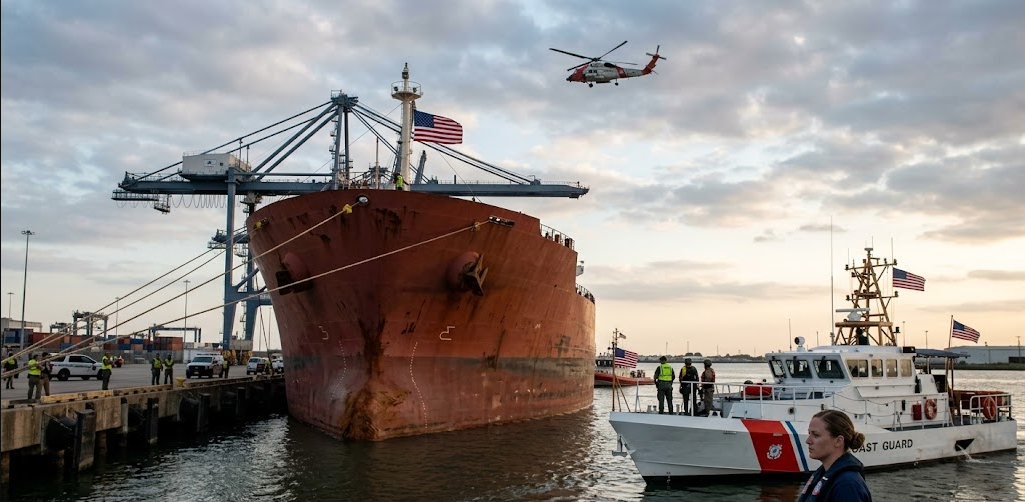
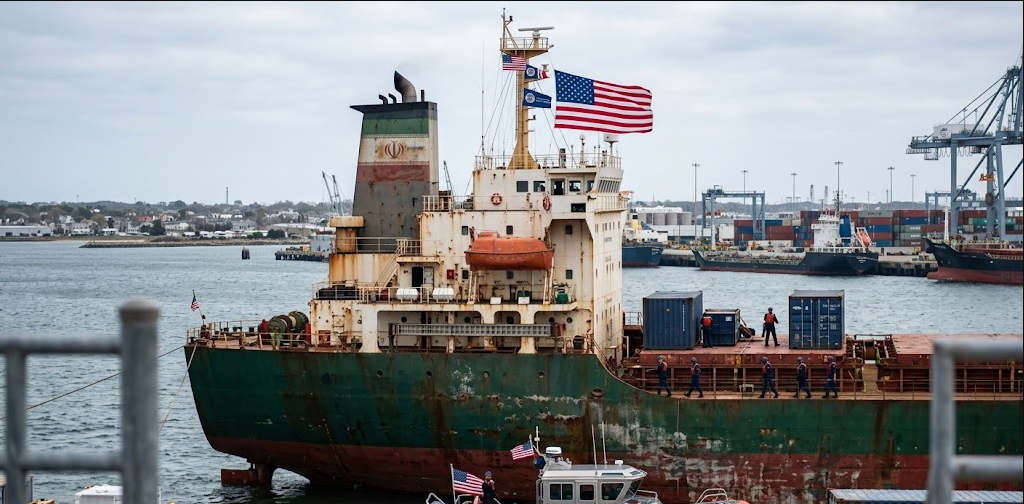
The USS Spruance fired. The Marines boarded. The Touska went quiet in the Gulf of Oman. And now, a nearly 900-foot Iranian cargo ship sits in U.S. military custody — raising a legal question that American courts have not been asked to answer since the Civil War: can the United States keep it? The answer,
The USS Spruance fired. The Marines boarded. The Touska went quiet in the Gulf of Oman. And now, a nearly 900-foot Iranian cargo ship sits in U.S. military custody — raising a legal question that American courts have not been asked to answer since the Civil War: can the United States keep it?
The answer, legal experts say, is complicated. And the implications stretch far beyond a single vessel.
What Prize Law Actually Says
In naval warfare, a captured ship is not simply loot. It is a “prize” — a term with a precise and centuries-old legal architecture built around something called prize law and adjudicated through prize courts. The framework dates to the Age of Sail and the Napoleonic Wars, when capturing enemy shipping was not an act of piracy but a regulated legal process governed by The Law of Nations.
Under that framework, a vessel seized during lawful Naval Blockade warfare can be condemned as a prize and its assets transferred to the capturing nation — or distributed among the capturing crew, a tradition that once made naval service financially lucrative. The United States last formally used prize courts during the Civil War, when both the Union and Confederacy established them to adjudicate the legality of captures at sea.
The statutes have sat largely dormant since the 1950s. Congress has updated them at least three times since — most recently in 2021, when a provision was added to include the U.S. Space Force — but no U.S. court has heard a prize case in the modern era.
The Touska may be about to change that.
“If the U.S. chooses to keep it for the long term,” one maritime law expert told CNN, “it would need to go through a prize court, which would need to be established.“
A Ship With a History
The Touska was not an innocent vessel caught in the wrong place. Under U.S. Treasury sanctions since 2018, it is owned by Islamic Republic of Iran Shipping Lines — Iran’s national maritime carrier — whose owner companies and technical managers have been sanctioned since 2012.
“The Touska is under U.S. Treasury Sanctions due to its prior history of illegal activity,” Trump stated flatly on Truth Social after the seizure, a framing designed to pre-empt any sympathy for the vessel’s fate.
But the ship’s recent movements add a more diplomatically sensitive dimension. Tracking data shows the Touska made multiple trips to Chinese ports in the weeks before the seizure, most recently departing Iranian waters in late February, transiting the Strait of Malacca in early March, and calling at Zhuhai port in southern China on March 9 — a port the Washington Post has previously identified as a key location where Iran secures precursors for ballistic missile rocket fuel. The Touska then remained in Chinese waters off Shanghai for at least 11 days before heading back toward Iran.
It departed Port Klang, Malaysia around April 12 — declaring Chabahar, Iran as its destination — before being intercepted by the Spruance.
What it was carrying when the Marines boarded remains publicly unconfirmed. Suspected cargo, per multiple analysts, includes sanctions-busting oil, weapons for Iranian proxy groups, or dual-use goods from Port Klang. U.S. Marines are still conducting their inspection.
The Legal Fog
The “spoils of war” designation is not automatic — and its application here is genuinely contested.
The United States has not formally declared war on Iran. The conflict has been conducted under executive military authority, not a congressional declaration. Prize law, historically, has operated within the framework of formally declared hostilities. Whether the current legal posture qualifies is a question that, as one expert noted plainly, “I have not yet heard discussed” in official channels.
The options before the administration are essentially three: seize the vessel and its cargo permanently as a prize, impound it until hostilities cease and then release it, or use it as a diplomatic bargaining chip in negotiations — a concrete asset to be exchanged for concessions at whatever peace table eventually reconvenes.
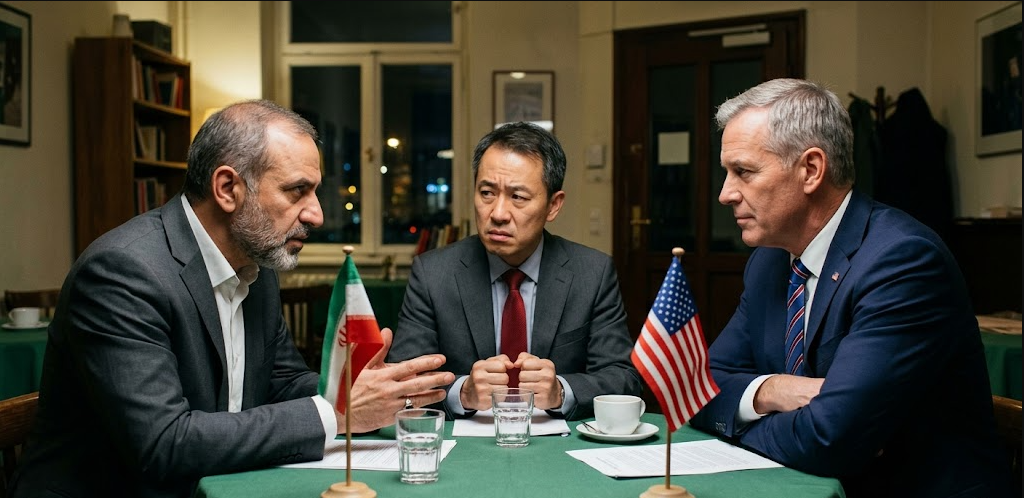
Iran has already foreclosed one of those paths rhetorically. Tehran’s military called the seizure “maritime highway robbery” and a “direct violation of the ceasefire.” Its foreign ministry announced it would not send negotiators to the planned Islamabad talks. Using the Touska as a bargaining chip requires a negotiating partner willing to sit across the table.
China’s Uncomfortable Position
Beijing’s response added a new layer of complexity. China — Iran’s primary oil customer and a country with documented commercial links to the Touska itself — publicly “expressed concern” over the “forcible interception” and called for a resumption of peace talks.
The statement was carefully worded, stopping well short of a direct condemnation of the United States. But the subtext was clear: China had economic and diplomatic interests aboard that vessel, and Washington had just fired a 5-inch naval gun into its engine room.
Newsweek’s reporting on the Touska’s China links made the diplomatic geometry explicit: the U.S. seizure of an Iranian ship that had recently docked at a Chinese port, suspected of carrying Chinese-sourced materials destined for Iranian military programs, placed Beijing in the uncomfortable position of either defending the ship’s cargo or remaining silent about a vessel it had recently hosted.
A Precedent With No Modern Blueprint
The deeper issue is what comes next. The U.S. has seized Iranian oil cargoes before — typically through civil forfeiture proceedings in federal court — but the physical boarding and capture of a vessel under active naval blockade is a different order of legal action entirely.
“Do you seize the vessel and/or the oil for your own as spoils of war? Impound it until hostilities have ceased and then let it on its way? Or something else?” one maritime law scholar asked publicly, adding that these were “questions I have not yet heard discussed.”
The last time the United States established a prize court, Abraham Lincoln was president and the conflict was domestic. Whatever legal machinery gets built around the Touska will be built largely without modern precedent — in the middle of a war, two days before a ceasefire expires, with Iran’s military already vowing retaliation and peace talks hanging by a thread.
Market Analysis
A quick snapshot of market trends, customer behavior, and competitor movements.