Share This Article
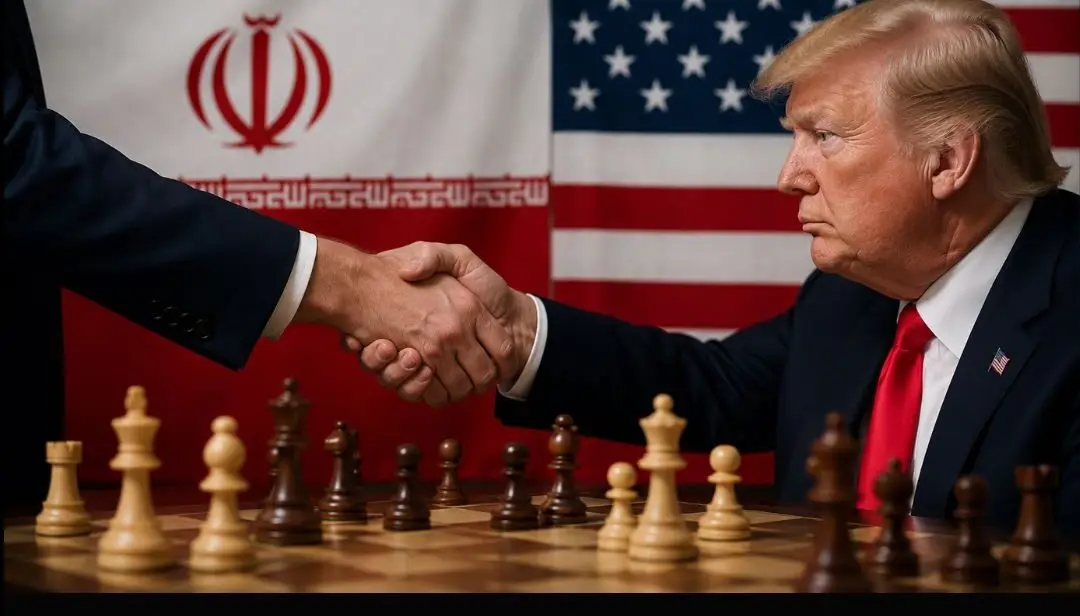
After more than 100 days of war that convulsed global energy markets and reshaped the security map of the Gulf, the United States and Iran have reached a peace deal. President Trump declared it complete in a Sunday Truth Social post, authorizing the “toll free opening of the Strait of Hormuz” and the immediate removal of the U.S. naval blockade on Iranian ports. The formal signing ceremony took place in Geneva, mediated by Pakistan and Qatar.
For Washington, the deal is being framed as a triumph proof that overwhelming military pressure, paired with diplomacy, forced Tehran to the table. But a closer look at how the war unfolded, and at the terms of the US-Iran agreement itself, tells a more complicated story: one in which America’s ability to singlehandedly dictate outcomes in the region looks considerably diminished.
What the Deal Actually Says
The memorandum of understanding declares an immediate and permanent end to hostilities on all fronts, including Lebanon. Iran’s Supreme National Security Council confirmed the war and the naval blockade would end the same night the agreement was reached. But the fine print matters. Iranian deputy foreign minister Kazem Gharibabadi said final negotiations would continue for 60 days, and Iranian state media reported that the draft includes the release of $24 billion in frozen Iranian assets during that window though only half would be released before formal talks even begin.
U.S. Vice President JD Vance was quick to temper expectations, saying frozen funds would not be released automatically and that economic relief would remain tied to Iranian compliance. That tension Tehran declaring victory on state television over having “forced” Washington into an agreement, while the U.S. insists it dictated the terms is itself a signal of how contested the narrative around U.S. leverage has become.
A War That Exposed the Limits of US Leverage
According to analysis from the Tufts University Fletcher School, the war directly contradicted the Trump administration’s own November 2025 national security strategy, which had explicitly stated that the Middle East’s strategic importance “will recede” in favor of the Western Hemisphere and Indo-Pacific. Instead, the U.S. found itself drawn into a prolonged, costly conflict that strained military resources and tested alliances precisely in the region it had planned to de-prioritize.
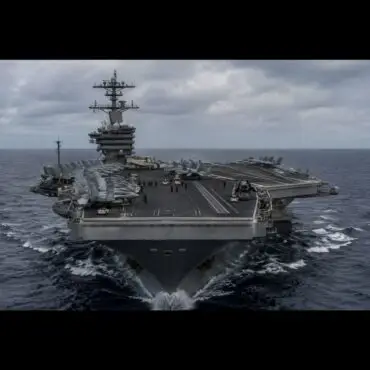
The Strait of Hormuz crisis that followed the initial strikes became the clearest illustration of US influence being tested in real time. Despite controlling a naval blockade and launching “Project Freedom” a military operation to physically escort stranded ships through the strait the U.S. could not unilaterally restore normal shipping traffic. Iran’s mining of the waterway, its attacks on commercial vessels, and its imposition of transit tolls demonstrated that a determined regional actor could disrupt one-fifth of the world’s oil trade despite facing the most powerful navy on Earth.
As one Gulf-focused analysis from the London School of Economics put it, the conflict raised fundamental questions about whether traditional power dynamics in the region still hold, even as it noted that Russia and China’s own passivity during the crisis limited to diplomatic statements rather than concrete support for Tehran revealed their own constraints.
Gulf States Are Already Hedging
Perhaps the most consequential long-term effect of the war is how it has accelerated a trend already underway: Gulf states diversifying their security and economic relationships beyond Washington. The Tufts analysis notes that Trump’s own May 2025 tour of Saudi Arabia, the UAE, Qatar, and Bahrain was explicitly aimed at countering China’s growing economic footprint in the region an effort that the optics of a drawn-out war with Iran may have undercut rather than reinforced.
With Washington increasingly perceived as an unpredictable security guarantor capable of launching major operations one week and pausing them the next, as it did with Project Freedom Gulf capitals have strong incentives to keep deepening ties with Beijing and Moscow as a hedge, even if neither is positioned to replace the US security umbrella outright.
China’s stake in the outcome is particularly significant. China purchased more than 80% of Iran’s shipped oil in 2025, according to Kpler data cited by Reuters, making Beijing not merely a customer of the regime but a direct financier of it. That dependency gives China a vested interest in Gulf stability that has nothing to do with ideology and everything to do with energy security a dynamic likely to deepen, not fade, now that the strait of Hormuz is reopening.
What Comes Next
The 60-day negotiating window built into the US-Iran agreement means the deal reached this week is closer to a ceasefire-with-conditions than a comprehensive settlement. Outstanding issues include the final disposition of frozen assets, verification of Iran’s nuclear commitments, and the durability of the reopened strait amid lingering distrust on both sides.
For the broader region, the test will be whether this Iran peace deal restores confidence in U.S. security guarantees or simply confirms what many Gulf strategists have quietly concluded over the past several years: that American power in West Asia, while still formidable, is no longer uncontested. As the Atlantic Council’s experts noted in their early reaction to the deal, the coming weeks of implementation talks not Sunday’s announcement will determine whether this becomes a durable peace or another fragile pause in a far longer contest for influence.
For a detailed breakdown of the memorandum’s terms and the questions still unresolved, see Al Jazeera’s full explainer on the agreement.

Oil & Energy Markets
A look at crude price swings, OPEC supply moves, and how energy markets react to geopolitical shocks.

Geopolitics & Conflict
Breaking down how wars, ceasefires, and diplomatic deals ripple through global trade and security.
US Foreign Policy
Coverage of Trump administration negotiations, sanctions, and strategic decisions shaping world events.
Economy & Inflation
Tracking how commodity prices, gas costs, and supply chains affect everyday consumers.