Share This Article
Israeli strikes killed at least four people in southern Lebanon’s Nabatieh governorate on Tuesday, Lebanese authorities confirmed, in an attack that lands just days after Washington and Tehran announced a landmark US-Iran agreement meant to end hostilities “on all fronts.” The strikes are raising fresh doubts about how durable the broader ceasefire truly is, even as toll-free shipping resumes through the Strait of Hormuz for the first time in nearly four months.
What Happened in Lebanon
According to Lebanon’s National News Agency (NNA), separate drone attacks targeted two vehicles in the town of Mayfadoun, while a third vehicle was struck in the nearby village of Shoukin. The killings occurred despite an official ceasefire and what Pakistani mediators had described as an understanding between the US and Iran to halt military operations “on all fronts, including Lebanon.”
The timing could not be more consequential. Just one day earlier, U.S. and Iranian officials had virtually signed a memorandum of understanding ending the broader Iran war yet Israeli operations in southern Lebanon have continued largely uninterrupted, underscoring a critical gap between the deal’s stated terms and events on the ground.
Since fighting resumed on March 2, Israeli strikes have killed at least 3,826 people in Lebanon and wounded 11,851, according to the country’s health ministry a toll that continues to climb even as diplomats in Washington and Tehran celebrate progress elsewhere.
Iran Says the War Isn’t Over Until Israel Withdraws
Iranian Foreign Minister Abbas Araghchi responded sharply on Tuesday, declaring that Israel’s continued military presence in southern Lebanon would constitute a violation of the new US-Iran deal. “Without the withdrawal of Israeli forces from the territories they occupied during this war, the war has not fully come to an end,” Araghchi said.
Iran’s Top Joint Military Command, the Khatam al-Anbiya Central Headquarters, went further, warning that Israel should expect “a hard response from the Iranian armed forces” if the attacks on southern Lebanon did not stop. Iran’s lead negotiator, Mohammad Bagher Ghalibaf, reportedly called Lebanese Parliament Speaker Nabih Berri to press the case that Washington must compel Israel to end its campaign, halt home demolitions, and withdraw from occupied territory.
Hezbollah, for its part, told Reuters it had received assurances from Tehran that Iran would demand a full Israeli troop withdrawal from Lebanon during the next phase of US-Iran talks.
Israeli Prime Minister Benjamin Netanyahu has already pushed back. Speaking shortly after the US-Iran agreement was announced, Netanyahu said Israel “will not leave occupied land” in southern Lebanon a position that puts Jerusalem at direct odds with both Tehran and the broader spirit of the new accord.
How We Got Here: The US-Iran Agreement
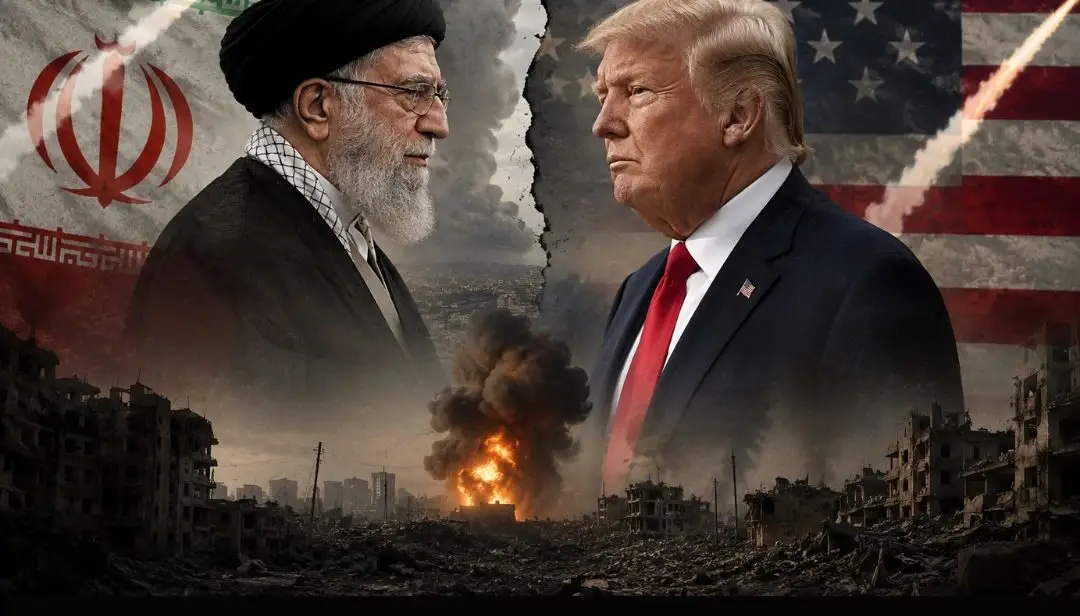
The strikes come at a pivotal moment for the wider Israeli strike on Iran conflict, which began February 28, 2026, when the United States and Israel launched a joint air campaign that killed Iran’s then-Supreme Leader Ali Khamenei. In retaliation, Iran shut down the Strait of Hormuz a chokepoint carrying roughly a quarter of the world’s seaborne oil trade triggering a global energy crisis that pushed gas prices and fuel shortages across multiple continents.
After months of failed talks, military escalation, and a short-lived “Project Freedom” naval escort mission in May, Trump announced on June 14 that “the Deal with the Islamic Republic of Iran is now complete.” In a Truth Social post, he wrote that he was authorizing the “toll free opening of the Strait of Hormuz” and the immediate removal of the US naval blockade of Iranian ports, declaring, “Ships of the World, start your engines.”
A day later, Trump and Vice President JD Vance virtually signed the formal memorandum of understanding, with Iranian Parliament Speaker Ghalibaf signing on Tehran’s behalf. The agreement reportedly commits both sides to 60 days of further nuclear negotiations, alongside the reopening of Hormuz and the end of the US blockade. A formal signing ceremony was scheduled for Friday in Switzerland, according to Pakistan, which has mediated the talks throughout.
Markets responded immediately. Oil prices fell more than $4 a barrel on news of the deal, and global stock indexes rallied. Iranian Deputy Foreign Minister Kazem Gharibabadi called the agreement a “victory” for Iran.
But Netanyahu’s own reaction signaled the cracks to come, telling reporters that he and Trump “do not always see eye to eye” a rare public acknowledgment of daylight between Washington and its closest regional ally just as the Israeli strikes on Lebanon continued.
Shipping Returns to Hormuz, Cautiously
Trump’s announcement that the Strait of Hormuz had reopened was followed by a more measured timeline: he later said the strait wouldn’t actually reopen to traffic until Friday. Even so, vessels have begun repositioning near the waterway, visible off Musandam, Oman, as the shipping industry weighs whether the ceasefire will hold.
Confidence remains thin. Months of mines, drone attacks, and missile strikes have left shipowners wary, and crew fatigue after weeks of uncertainty is adding a new operational risk. Angad Banga, CEO of Hong Kong-based Caravel Group, said his company still has roughly a dozen vessels anchored in the Gulf, ready to move but holding position until the reopening proves durable.
For more on how the agreement’s mechanics are expected to unfold this week, the original CNN live coverage offers a detailed minute-by-minute account of the signing process and regional reactions: CNN — Trump and Vance virtually sign US-Iran agreement.
What Comes Next
The contradiction at the heart of today’s news is unmistakable: a historic US-Iran agreement was just signed to end a war that has reshaped global energy markets, yet Israeli strikes in Lebanon continue to kill civilians on the same day. Whether the deal’s “all fronts” language extends meaningfully to Lebanon and whether Washington will press Israel to act on it may determine whether this ceasefire holds longer than the ones that came before it.
As Nabatieh resident Mohammed Nasser told reporters while returning to check on his shattered property: “This is a decades-old conflict with Israel… an enemy that can’t be trusted… and we can never feel safe.”

Oil & Energy Markets
A look at crude price swings, OPEC supply moves, and how energy markets react to geopolitical shocks.

Geopolitics & Conflict
Breaking down how wars, ceasefires, and diplomatic deals ripple through global trade and security.
US Foreign Policy
Coverage of Trump administration negotiations, sanctions, and strategic decisions shaping world events.
Economy & Inflation
Tracking how commodity prices, gas costs, and supply chains affect everyday consumers.