Share This Article
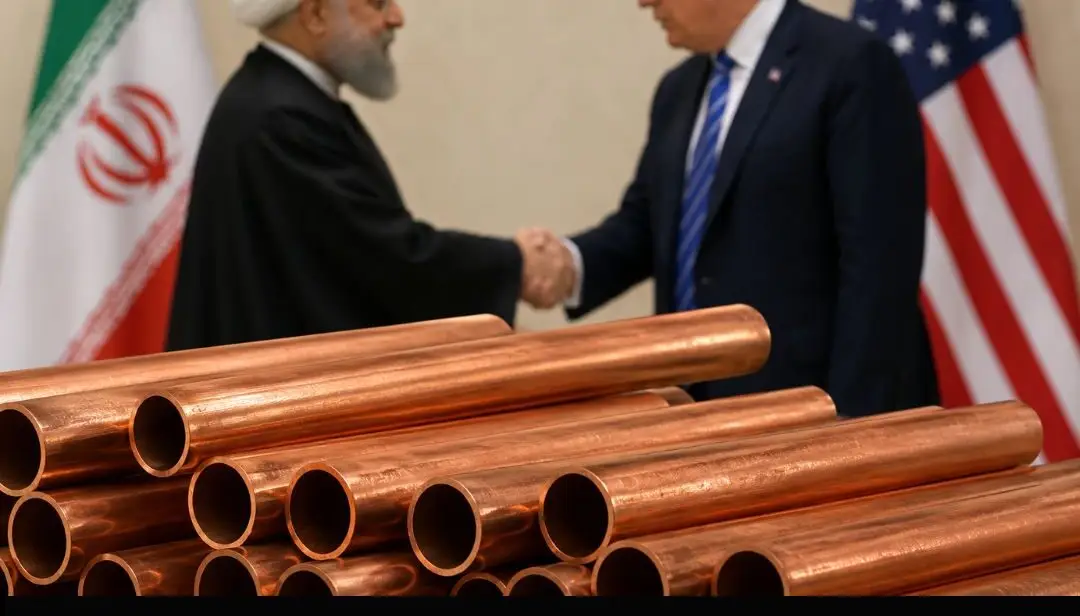
When the US and Iran announced their landmark peace deal on June 14, 2026, oil markets grabbed the headlines with a dramatic 4% price drop. But in the commodities trading floors of London and New York, another market was quietly signaling something equally significant: copper surged.
Three-month copper on the London Metal Exchange (LME) climbed 1.2% to approximately $13,650 per metric tonne within hours of the announcement. On COMEX in New York, copper futures rallied 1.8% to around $6.39 per pound. Mining giant Freeport-McMoRan (FCX) often used as a proxy for copper market sentiment traded between $66.83 and $68.91, while BHP, Southern Copper, and Rio Tinto all advanced in parallel.
The move was not a coincidence. It was copper’s verdict on the end of the Strait of Hormuz Crisis.
Why Copper Moves When Hormuz Opens
Copper is often called “Dr. Copper” by traders the one commodity with a PhD in economics. Its price tracks global industrial activity more reliably than almost any other asset. When geopolitical risks ease, copper rises first because it prices in the entire chain of recovered global demand: manufacturing, construction, grid investment, and consumer electronics.
But the connection between the Strait of Hormuz and copper runs deeper than macro sentiment alone.
Approximately 50% of the world’s seaborne sulfur transits the Strait. That sulfur is converted into sulfuric acid the chemical backbone of hydrometallurgical copper processing, particularly the heap-leach method used to extract copper from lower-grade ores. Up to 60% of copper production in the Democratic Republic of Congo, the world’s fastest-growing copper source, depends entirely on sulfur imports flowing through Hormuz. When the strait closed in late 2025, DRC copper exports fell 14.6% in Q1 2026 compared to the same period a year earlier a direct casualty of the bottleneck nobody was reporting.
The US-Iran Peace Deal reopening Hormuz does not just restore oil flows. It unlocks the sulfur supply chain that keeps copper mines running.
The Supply Squeeze Nobody Reported
Chile the world’s largest copper producer saw national output fall 9% year-on-year in March 2026, with state giant Codelco’s production dropping 10% in the same month. These declines are partly structural: Chilean ore grades are declining, and extraction costs are rising. But energy price exposure made the situation worse. Open-pit copper facilities consume 15–20 litres of diesel per tonne of ore processed, and electricity accounts for up to 40% of smelting costs. With Brent crude elevated throughout the Hormuz Crisis, mining margins were squeezed from both ends.
According to Jefferies, copper markets face “a significant average annual supply deficit of 491,000 tonnes through 2030” even before factoring in the crisis-era disruptions. Goldman Sachs, while trimming its near-term 2026 forecast to $12,650 per tonne citing a projected annual surplus, raised its year-end target to $13,735 per tonne more than 10% above its prior estimate on the strength of the peace deal optimism and structural supply tightness.
China Demand: The Deal’s Hidden Multiplier
China consumes roughly 55% of global copper. What happens in Beijing’s factories matters more to the LME copper price than almost any other single variable. The US-Iran deal matters for China through two simultaneous channels.
First, reopening Hormuz lowers LNG import costs for Chinese industry directly reducing the energy burden on copper smelters and factories. Second, easing global geopolitical risk improves Chinese business confidence and manufacturing activity, with a direct read-through to copper demand. China’s central bank moved in late May 2026 to boost bank lending a signal that Beijing was actively supporting an industrial recovery. The peace deal and the stimulus together form a dual copper demand catalyst.
ING commodities strategist Ewa Manthey noted that “copper prices are finding support from tariff-driven trade flows, as material is increasingly redirected into the U.S. ahead of potential policy changes” adding another demand-side pillar.
US-India Relations and the Critical Minerals Dimension
For India, the copper price move intersects with a landmark strategic development. On May 26, 2026, the US and India signed a Strategic Critical Minerals Cooperation Framework a bilateral agreement covering the mining, processing, recycling, and financing of critical minerals including copper. The deal is part of a broader Quad initiative mobilizing up to $20 billion in loans, guarantees, and long-term purchase agreements for critical mineral supply chains.
India imported $10.33 billion worth of copper in 2024, with $264.54 million sourced specifically from the US. The Hormuz Crisis had disrupted Gulf-adjacent supply routes that feed India’s copper import corridors, adding cost pressure to US-India Relations already strained by reciprocal tariff negotiations. The peace deal eases that pressure precisely as the two countries are deepening their critical minerals partnership.
The Green Energy Bull Case Underpins It All
Beyond the geopolitical relief rally, copper’s structural demand story remains intact and powerful. An electric vehicle requires 53 kilograms of copper, approximately 2.4 times more than a conventional combustion engine vehicle. Solar and wind installations require 2.5 to 7 times more copper per unit of power than fossil fuel plants. EV-sector copper demand has grown from 27,500 tonnes in 2015 to 1.28 million tonnes in 2025, with Benchmark Minerals projecting a 177% increase by 2030.
Goldman Sachs has forecast copper prices reaching $15,000 per tonne by 2035 as electrification, AI data center buildout, and defense infrastructure spending collide with a structurally constrained supply base.
The Iran-US War Latest chapter of the Strait of Hormuz Crisis disrupted that supply base at precisely the wrong moment. Its resolution does not change the long-term copper story but it removes a significant near-term headwind, and markets priced that in immediately.

Oil & Energy Markets
A look at crude price swings, OPEC supply moves, and how energy markets react to geopolitical shocks.

Geopolitics & Conflict
Breaking down how wars, ceasefires, and diplomatic deals ripple through global trade and security.
US Foreign Policy
Coverage of Trump administration negotiations, sanctions, and strategic decisions shaping world events.
Economy & Inflation
Tracking how commodity prices, gas costs, and supply chains affect everyday consumers.