Share This Article
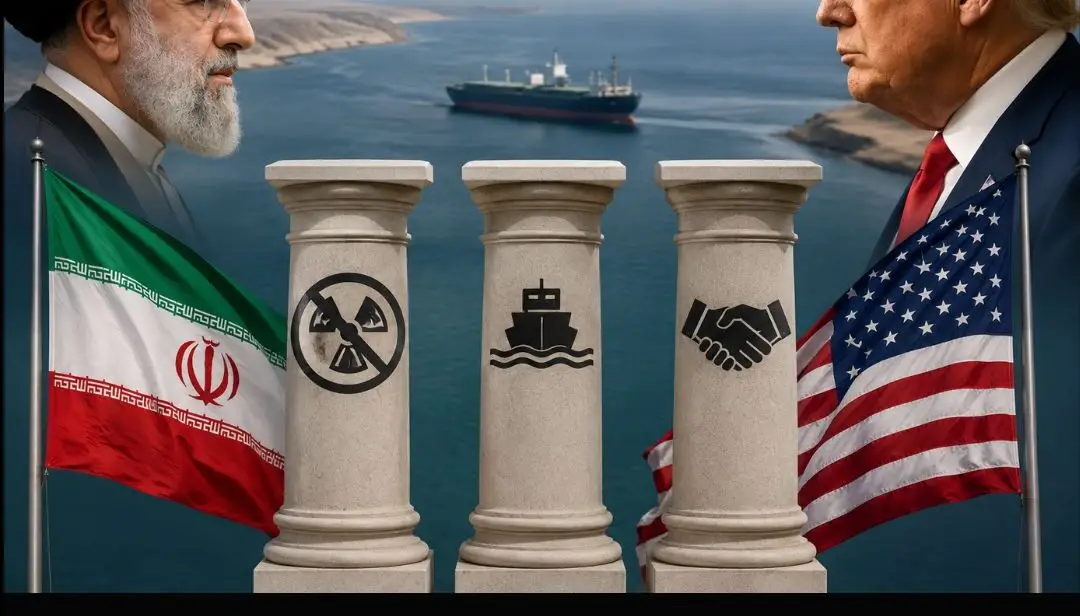
As the United States and Iran prepare to formally sign their long-anticipated peace agreement in Switzerland on Friday, Vice President JD Vance has stepped forward to explain, in his own words, exactly what the deal does and doesn’t promise. In an interview with Fox News, Vance distilled the entire US-Iran agreement into three plain pillars a framing designed to cut through what he called confusion and “misreporting” surrounding the deal’s terms.
“The agreement is actually very simple,” Vance said. “One, Iran can’t have a nuclear weapon. Two, the Straits of Hormuz are open. And number three, there are all of these benefits contemplated that the Iranians can get if they behave.”
Here’s a breakdown of each pillar, what it means in practice, and how it fits into the broader US-Iran deal set to be signed this week at Burgenstock in the Swiss canton of Nidwalden.
Pillar One: No Nuclear Weapon
The first and most non-negotiable condition of the US-Iran agreement is the permanent renunciation of nuclear weapons development by Tehran. According to Vance, this condition sits above all others and unlike some other elements of the deal, it carries no room for compromise.
This pillar arrives after a brutal three-and-a-half-month war that began on February 28, 2026, when the U.S. and Israel launched joint strikes on Iran, reportedly destroying significant portions of its nuclear infrastructure, naval fleet, and missile production capacity. Vance has pointed to this military outcome as leverage baked directly into the agreement: Iran’s nuclear program, he says, remains “destroyed” regardless of how Tehran behaves going forward.
Critics, however, have noted that a no-nuclear-weapons commitment from Iran is not new. The New Republic pointed out that the commitment to no nukes was already part of the original 2015 nuclear deal an agreement Trump withdrew the U.S. from in 2018, raising questions about how much this pillar actually advances beyond previous diplomatic frameworks.
Pillar Two: An Open Strait of Hormuz
The second pillar directly addresses the conflict’s most economically destructive consequence: the closure of the Strait of Hormuz, the narrow waterway through which roughly one-fifth of the world’s oil and natural gas trade normally flows. Iran effectively sealed the strait shortly after the war began, triggering months of soaring energy prices, stranded tankers, and global supply chain disruption.
Under the framework, the Strait of Hormuz will reopen once the deal is formally signed. Trump confirmed via Truth Social that the strait would not reopen until after Friday’s signing ceremony, while Iran’s deputy foreign minister Kazem Gharibabadi said Tehran would not begin implementing any terms including reopening the strait until the document is officially signed.
Vance has indicated that the reopening won’t be temporary or symbolic. He told CNBC that the strait of Hormuz is already seeing increased traffic and is expected to remain open toll-free over the long term, not just temporarily a direct rebuttal to earlier reports that Iran intended to charge transit tolls of over $1 million per ship.
Notably, mine clearance is also part of this pillar. Trump has said the strait will be opened for mine removal operations once the agreement takes effect, addressing reports that Iran lost track of some mines it laid earlier in the conflict.
Pillar Three: Conditional Relief
The third and most politically delicate pillar is what Vance describes as a system of earned benefits economic relief contingent entirely on Iranian behavior. “If they stop developing terrorism, if they stop funding terrorism, if they stop supporting the rebuilding of the nuclear arms program, they actually can get some real benefits,” Vance said.
He pushed back directly against Iranian officials who he claims are misrepresenting this pillar to their domestic audience. “Iranian propagandists out there [are] saying well we get all these things,” Vance said, “and they leave out the fact that they only get those things if they fundamentally transform themselves as a country.”
In a separate interview with Glenn Beck, Vance elaborated on the enforcement mechanism: “If they perform the things that they say they’re going to perform, then they get a lot of relief, and if they don’t perform any of those things, then they get nothing.”
According to reporting from Bloomberg, the underlying memorandum of understanding is a 14-point document expected to trigger a two-month ceasefire extension and the start of separate, more complex negotiations over Iran’s long-term nuclear posture. A senior U.S. diplomat indicated the U.S. is expected to lift restrictions on Iranian oil and petrochemical sales immediately following the signing.
“The United States Wins Either Way”
Vance has repeatedly framed the structure of the US-Iran deal as a win-win proposition for Washington regardless of Tehran’s choices. “The United States wins either way, as the President said,” Vance told Fox News. “Either they get nothing, we destroy their nuclear program and the Straits of Hormuz are open, or they fundamentally transform themselves and that’s a big win too. It’s really up to them.”
That framing has not been universally well received. Social media reaction across South Asia and the Gulf has questioned whether “transform themselves” is diplomatic language for genuine reform or simply a euphemism for submission to U.S. terms. As one online commentator put it, the structure resembles classic carrot-and-stick diplomacy, with skepticism remaining over whether it represents balanced peace or unilateral dominance.
What Comes Next
The formal signing is scheduled for Friday, June 19, with Vance confirmed to lead the U.S. delegation; Trump has said his own attendance remains undecided. Iran’s delegation is expected to be headed by Parliament Speaker Mohammad Bagher Ghalibaf, who according to senior U.S. officials has already signed the framework electronically on Tehran’s behalf.
For now, the world’s tankers, energy markets, and Gulf economies remain in a holding pattern waiting to see whether Vance’s three pillars translate into the lasting peace the administration has promised, or simply mark the next chapter in a fragile and combustible standoff.
For the Swiss government’s official statement on hosting the signing ceremony, see the Swiss Federal Department of Foreign Affairs press release.

Oil & Energy Markets
A look at crude price swings, OPEC supply moves, and how energy markets react to geopolitical shocks.

Geopolitics & Conflict
Breaking down how wars, ceasefires, and diplomatic deals ripple through global trade and security.
US Foreign Policy
Coverage of Trump administration negotiations, sanctions, and strategic decisions shaping world events.
Economy & Inflation
Tracking how commodity prices, gas costs, and supply chains affect everyday consumers.