Share This Article
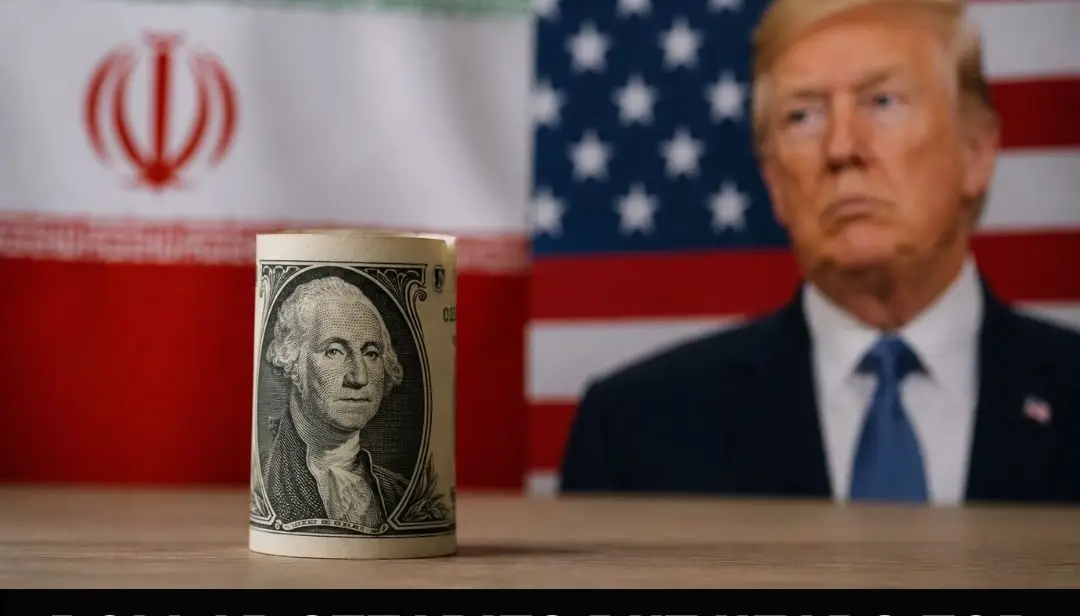
The US dollar steadied on Friday but remained on course for its worst weekly performance in months a direct consequence of a market recalibration that began the moment Pakistan’s Prime Minister confirmed a US-Iran war-ending agreement was within reach. With geopolitical risk unwinding, oil prices collapsing, and safe-haven demand evaporating, the greenback that surged during the darkest days of the Iran-US War is now pricing in the possibility of peace.
The Dollar Index (DXY) slipped to 99.8007 on June 12 down from a ten-week high near 100.4 reached just the day before before steadying into Friday’s session. The week-long arc told the story of a currency caught between two gravitational forces: sticky US inflation pulling rates and the dollar higher, and Iran deal optimism pulling geopolitical risk premium and the dollar lower.
Why Peace Weakens the Dollar
The mechanism is counterintuitive to casual observers but textbook to currency traders. The US dollar is the world’s premier safe-haven asset. When geopolitical risk spikes as it did on February 28 when Operation Epic Fury began, with nearly 900 US-Israeli strikes in 12 hours killing Iranian Supreme Leader Khamenei capital floods into dollars. DXY surged nearly 2.4% in a single week, recording its strongest weekly gain since 2022.
The reverse is equally powerful. When peace becomes credible, investors rotate out of safe-haven positions into risk assets emerging market currencies, equities, commodities. Bloomberg confirmed that on June 2, as Iran-US deal optimism built, the South African Rand led EM currency gains, followed by the Hungarian Forint, Mexican Peso, Turkish Lira, and Australian Dollar. Risk-on had returned.
The oil channel deepens the dollar’s retreat. When Brent crude fell 4.5% to $86.31 and WTI dropped 3.4% to $84.76 on June 12 in direct response to Pakistan’s PM Shehbaz Sharif confirming a “final, agreed upon text” of the peace deal the petrodollar framework kicked in. Oil is priced in dollars. When oil prices fall sharply, global demand for dollars to purchase that oil declines. Less energy inflation means reduced pressure on the Fed to keep rates elevated. Lower rates mean a softer dollar.
“A sustained DXY move above 100 likely needs the ceasefire to collapse or inflation to climb further,” analysts at Cambridge Currencies noted a framing that captures exactly the bind the dollar finds itself in this week.
The Inflation Counterweight
The dollar’s weekly decline would have been steeper had US inflation data not provided a floor. The Bureau of Labor Statistics confirmed on June 10 that the May 2026 CPI came in at 4.2% year-over-year a three-year high driven by energy prices that jumped 3.9% month-on-month and fuel oil surging 58.9% year-on-year. Core CPI held at 2.9%. The Strait of Hormuz crisis, in other words, has baked itself into the price level in ways that one peace announcement cannot immediately undo.
Federal Reserve Chair Powell who held rates steady at 3.50%–3.75% in March 2026 and left them unchanged since stated explicitly that the Fed would “not cut rates without clear evidence inflation is falling.” New Chair Kevin Warsh, confirmed in a party-line vote in May following Powell’s departure, faces his first major policy test: does a credible Iran deal, lower oil prices, and decelerating inflation give the Fed room to cut in Q3?
The 10-year Treasury yield held at 4.477% on June 12 elevated but dipping from recent highs as traders priced in lower future inflation if the US-Iran nuclear deal removes the energy price shock from the system. A sustained move lower in yields would remove one of the dollar’s key structural supports.
The Euro, Yen, and Pound: Taking Ground
As the dollar retreated mid-week, the beneficiaries were predictable. EUR/USD climbed to 1.1580 on June 12 up from 1.1578 the previous session continuing a trend that analysts project could extend toward 1.15–1.20 if the Iran deal is formally signed. The euro has recovered from its war-outbreak lows as European economies, though exposed to energy cost pass-through, benefit from reduced geopolitical risk premium.
USD/JPY settled at 160.04 the yen remaining broadly weak against the dollar despite risk-off episodes with forecasts suggesting a correction toward 155 by year-end if the Fed begins cutting. The pound held near 1.34 against the dollar, supported by the Bank of England’s more hawkish posture relative to a potential Fed pivot.
CNBC noted that when US-Iran sanctions deal reports first emerged in May, the dollar index dipped 0.15% to 99.13 in a single session — a template for what a formal signing could produce in June.
Gold: The Dollar’s Mirror
If the dollar’s weekly decline has a mirror image, it is gold. The precious metal rose more than 1% on May 25 as Iran deal optimism first weakened the dollar, and has broadly held near $4,318 per ounce through the June volatility down from its all-time high of $5,595.75 reached on January 29, 2026 at peak war-driven safe-haven demand.
CNBC confirmed that gold and dollar have moved in clear inverse correlation throughout the peace process. The World Gold Council reported 244 tonnes of net central bank gold purchases in Q1 2026 a structural bid that limits gold’s downside even as geopolitical premium unwinds. Bank of America maintains a 12-month gold target of $6,000 per ounce a forecast that implies either deal collapse, persistent inflation, or continued dollar weakness.
Strait of Hormuz: The Dollar’s Most Important Reopening
For currency traders, the Strait of Hormuz reopening is not just an energy story it is a monetary policy story. Every barrel of oil that flows freely through the strait is a barrel that reduces inflation, loosens the Fed’s grip on rates, and softens the dollar’s interest rate advantage over peers.
Brent crude has now fallen from $120 per barrel at the March crisis peak to $87 a 27.5% decline that has already begun filtering into US pump prices, which dropped from $4.56 per gallon on May 21 to $4.12 by June 11. Goldman Sachs has stated dollar strength “will fade if the Iran war hits growth” a forecast that now runs in reverse: if Iran peace restores growth, dollar strength fades with it.
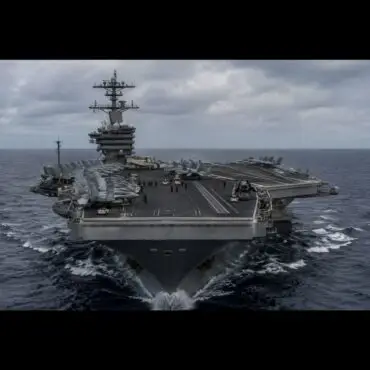
The strait remains physically closed US Navy ships USS Frank E. Peterson and USS Michael Murphy continue mine-clearing operations, and the British Royal Navy stands ready. Iran deployed an estimated 5,000–6,000 mines beginning March 10. Full clearance and commercial resumption could take weeks to months after any formal signing.
What Happens If the Deal Collapses
Currency traders are not pricing certainty they are pricing probability. Iran has not formally signed the MOU. Supreme Leader Mojtaba Khamenei’s approval remains unconfirmed via official channels. Netanyahu has declared Israel “not a party” to the agreement. The 60-day technical negotiations on the Iran-US nuclear deal enrichment duration, uranium disposal, verification have not even begun.
If the deal collapses, CNBC’s market desk noted the reversal would be rapid: oil spikes, safe-haven demand surges, DXY breaks above 100 sustainably, EM currencies retreat, and the Fed’s path to any cut in 2026 narrows sharply.
For now, the dollar steadies not because the deal is done, but because the market believes it will be. That belief, like the ceasefire it reflects, remains provisional.

Oil & Energy Markets
A look at crude price swings, OPEC supply moves, and how energy markets react to geopolitical shocks.

Geopolitics & Conflict
Breaking down how wars, ceasefires, and diplomatic deals ripple through global trade and security.
US Foreign Policy
Coverage of Trump administration negotiations, sanctions, and strategic decisions shaping world events.
Economy & Inflation
Tracking how commodity prices, gas costs, and supply chains affect everyday consumers.