Share This Article
Crude oil markets found a fragile floor this week after suffering their most severe two-week decline since the conflict began a historic selloff triggered by rapidly advancing US-Iran peace negotiations and growing expectations that the Strait of Hormuz will reopen within days.
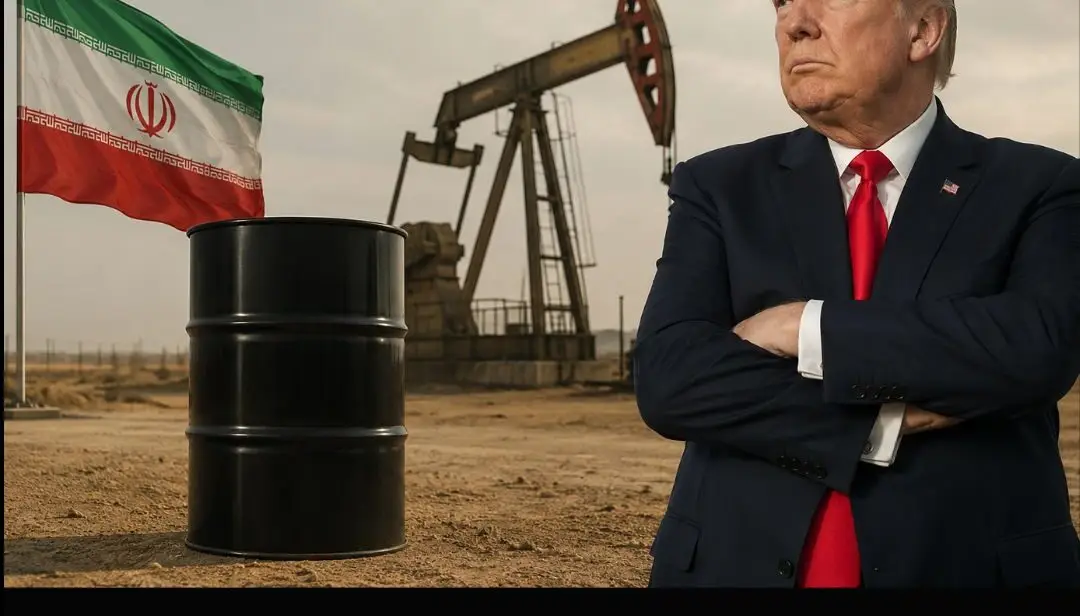
Brent crude, the international benchmark, plunged over 4% to around $83 per barrel on Monday touching a two-month low after President Donald Trump declared that a deal with Iran was effectively complete and that “oil will flow” through the Strait of Hormuz once the agreement is formally signed. Iranian Deputy Foreign Minister Kazem Gharibabadi confirmed that the text of a memorandum of understanding had been finalized and that a formal signing ceremony would take place in Switzerland. By Tuesday, prices had stabilized in a narrow range as traders weighed what the deal would mean in practice and how fast a damaged, mine-littered waterway can realistically reopen.
The Selloff in Numbers
The scale of the collapse in crude prices over the past two weeks is striking. Brent crude has fallen almost 19% in the month of May its worst monthly performance since the Covid-19 pandemic and is now approximately 20% off its 2026 peak. WTI, the US benchmark, fell 3.2% to close at $84.88 per barrel, while Brent settled at $87.33 on Friday, down about 6% for the week though both benchmarks are still more than 20% higher than before the US and Israel launched attacks on Iran on February 28.
The retreat stands in stark contrast to the crisis-driven surge that preceded it. Brent surged over 60% in March alone, its biggest monthly gain since records began in 1988, driven by supply disruptions and damage to infrastructure across key OPEC producers. The US Iran war had effectively sealed one of the world’s most critical energy arteries for over three months.
Morgan Stanley Pulls the Lever on Forecasts
The most significant institutional signal came from Morgan Stanley, whose commodities team issued a sharp downward revision to its oil price outlook in response to the emerging US-Iran Agreement.
Morgan Stanley now sees Brent crude averaging $80 per barrel in Q4 2026 and $90 per barrel in Q3, compared to prior forecasts of $100 for Q3 a $10-per-barrel cut while the Q4 forecast was revised down as well. The bank’s analysts were measured in their optimism, noting: “Much is still to be negotiated, and key risks remain, but for now, this is a key step towards a de-escalation of the conflict and higher oil exports via the Strait of Hormuz,” expecting a speedy recovery in tanker flows once the strait is reopened.
Morgan Stanley’s base case is no outlier. Longer-term trends suggest oil prices may settle between $80 and $90 per barrel a significant downward adjustment from expectations that had factored in prolonged conflict near $100 and above.
Crucially, however, analysts are not pricing in an overnight recovery. Morgan Stanley said it expected oil supply chains to take months to normalise even if a reopening of the Strait of Hormuz is achieved, with its base-case scenario projecting exports through the strait to stay at low levels in April, recover about 70% of lost volumes between May and July, and return to steady-state levels only by October.
What the Deal Actually Says and What It Doesn’t
The US-Iran Agreement taking shape is a one-page Memorandum of Understanding brokered via Pakistan, negotiated by Trump envoys Steve Witkoff and Jared Kushner. The MOU would declare an end to the war and trigger a 30-day period of negotiations on a detailed agreement covering the Strait of Hormuz, limits on Iran’s nuclear program, and the lifting of US sanctions. Iran’s shipping restrictions and the US naval blockade would be gradually lifted during that 30-day window.
Under the proposed terms, Iran would commit to a moratorium on uranium enrichment lasting at least 12 years with some sources suggesting 15 years as a likely compromise between the US demand of 20 years and Iran’s initial offer of five. Tehran would also pledge never to seek a nuclear weapon and would submit to an enhanced inspections regime including snap inspections by UN monitors. In exchange, the United States would agree to gradually lift sanctions and release billions of dollars in frozen Iranian funds.
For oil markets, the single most important provision is the Hormuz reopening. The strait carries roughly one-fifth of the world’s daily oil and gas supply, and its near-total closure since late February has cost the global economy dearly.
The Recovery Won’t Be Instant
Despite the deal optimism, market participants are warning against expecting a supply surge overnight. Infrastructure damage across the Persian Gulf is extensive. Saudi Arabia has said its oil production capacity has been reduced by roughly 600,000 barrels per day following attacks on energy facilities, while a major pipeline designed to bypass the Strait of Hormuz was also struck during the conflict.
The US Energy Information Administration, assuming the Strait of Hormuz will remain effectively closed in the near term, projects oil shipments through the strait to resume in Q3 2026 but expects it to take several months to ramp up to pre-conflict traffic levels, which it does not anticipate occurring until early 2027.
Senior market analyst Bob Parker of the International Capital Markets Association echoed that caution: “Even if the Strait of Hormuz is opened, I think it’s fair to say that opening will only be partial,” citing significant damage to infrastructure, refineries and pipelines across the Gulf, ongoing security challenges for tanker traffic, and depleted inventories.
Prices at the Pump Still Elevated
For ordinary consumers, the drop in Brent has not yet translated into meaningful relief at the pump. As of June 12, 2026, Brent crude was trading at $89.94 per barrel down $5.21 from the prior day, though still more than $19 higher than a year ago. US gasoline prices, which peaked above $4.48 per gallon during the height of the Hormuz crisis, have begun to ease but remain historically elevated.
The oil market is now navigating a narrow path: deal optimism has clearly broken the price ceiling set by the conflict, but the physical reality of reopening a mined, damaged, and militarily contested waterway means supply recovery will lag behind the diplomatic timeline.
For the latest on the US-Iran peace agreement and its impact on global energy markets, the EIA’s Short-Term Energy Outlook provides the most current official projections on Strait of Hormuz traffic recovery and crude price forecasts.

Oil & Energy Markets
A look at crude price swings, OPEC supply moves, and how energy markets react to geopolitical shocks.

Geopolitics & Conflict
Breaking down how wars, ceasefires, and diplomatic deals ripple through global trade and security.
US Foreign Policy
Coverage of Trump administration negotiations, sanctions, and strategic decisions shaping world events.
Economy & Inflation
Tracking how commodity prices, gas costs, and supply chains affect everyday consumers.