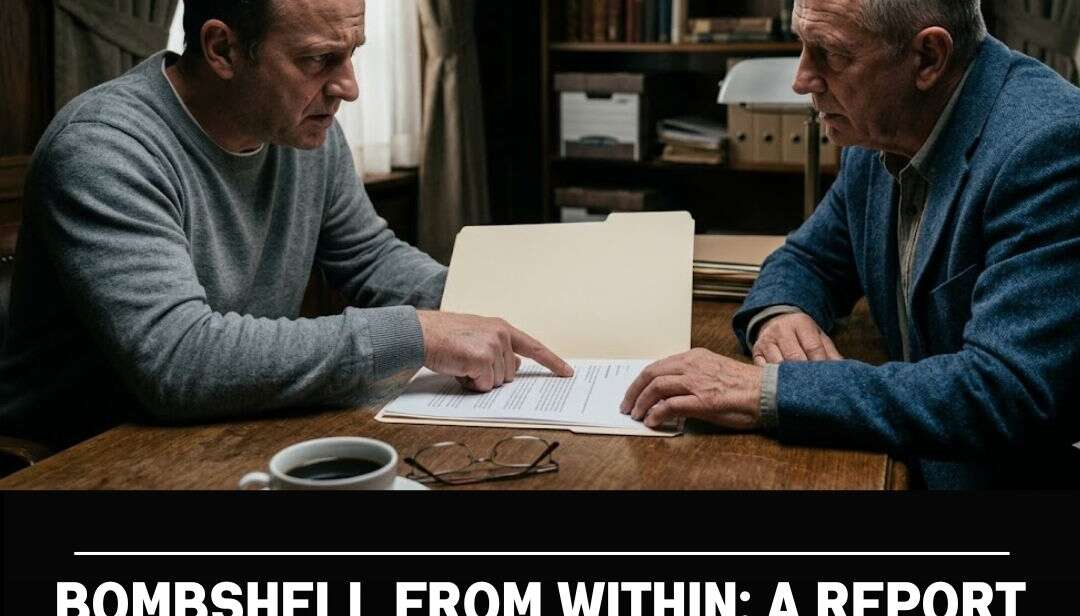
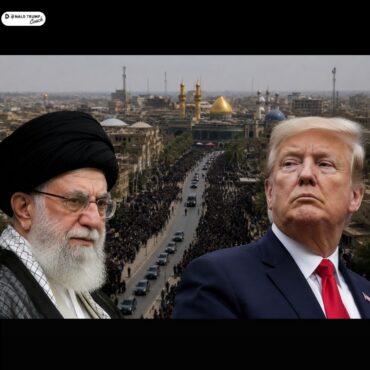
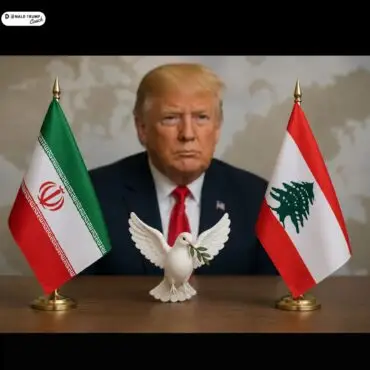
Washington / Tel Aviv / Tehran, May 20, 2026 — In the canon of modern geopolitical miscalculations, this one may rank among the most audacious and the most revealing. A bombshell report published this week, drawing on US officials and first detailed by The New York Times, has disclosed that Israel developed and the United States endorsed a plan to install Mahmoud Ahmadinejad the Holocaust-denying, anti-Western former Iranian president as the post-war leader of Iran following the assassination of Supreme Leader Ayatollah Ali Khamenei on February 28.
The plan failed. Ahmadinejad survived an Israeli strike on his home, was injured, and disappeared from public view. Iran did not collapse. The IRGC consolidated power under a new supreme leader. And the iran crisis, now in its 80th day, has sent global oil prices to $111 a barrel, closed the Strait of Hormuz, and reshaped the global market in ways that no regime change blueprint anticipated.
The Plan: What Was Actually Proposed
According to the Times of Israel’s account of the New York Times reporting, the Israeli-developed operation was a multi-phase architecture. Phase one: synchronized US and Israel airstrikes targeting Iranian military infrastructure, leadership, and nuclear facilities executed on February 28 with the assassination of Khamenei. Phase two: activation of Kurdish forces as a secondary front to stretch Iran’s military capacity. Phase three: the installation of Ahmadinejad in Iran as a transitional leader an “insider” with nationalist credentials but a recent track record of criticising Khamenei’s government and, in a 2019 interview, describing Trump as a “pragmatic businessman” and calling for improved US-Tehran relations.
A separate Israeli strike on the same night reportedly targeted Ahmadinejad’s home in Tehran’s Narmak district not to kill him, but to eliminate Revolutionary Guard members who had been holding him under house arrest since the 2025 Iranian protests.
It did not go as planned. Ahmadinejad survived but was injured. He became, according to sources cited in the reporting, “increasingly distrustful” of the regime change effort. He withdrew from public view. The western calculation that an external military decapitation strike would trigger internal political collapse and that a ready-made nationalist figure could step into the vacuum proved to be precisely the kind of assumption that looks coherent on a whiteboard and disintegrates on contact with reality.
As Haaretz reported, US intelligence officials were sceptical from the beginning about whether Ahmadinejad could gain domestic legitimacy a scepticism that, in retrospect, was entirely justified.
The Paradox at the Heart of the Bombshell
The revelations are bombshell precisely because of who Ahmadinejad is. Between 2005 and 2013, he denied the Holocaust on international platforms, claimed homosexuality did not exist in Iran, spoke repeatedly of removing Israel from the map, defended Iran’s nuclear programme against international inspectors, and presided over the brutal suppression of the 2009 Green Movement protests.
That US and Israel the two nations whose stated justification for launching the war was Iran’s nuclear threat and regional destabilisation secretly planned to hand Iran’s leadership to this same man requires explanation. The explanation, as Al Jazeera’s analysis of Israel’s war aims laid out, is that the objective was never ideological purity. It was pragmatic control. An Ahmadinejad willing to negotiate, shorn of Khamenei’s theological authority structure, was calculated as more manageable than either the IRGC’s hardline military council or the MEK exile opposition which the US State Department itself had previously described as “not viable democratic opposition” with “serious concerns” about abuse of its own members.
The alternative option Reza Pahlavi, the Shah’s son, backed by Western monarchist networks was undermined when Trump himself reportedly described him as “rather unpopular” with ordinary Iranians, despite Pahlavi’s 2023 visit to Israel and meetings with Trump’s Middle East adviser Steve Witkoff in early 2025.
What Actually Happened: The IRGC Fills the Vacuum
What the US-Israel regime change architecture did not adequately model was the Revolutionary Guard’s institutional resilience. With Khamenei dead and Ahmadinejad incapacitated, the IRGC did not fracture it consolidated. As NPR reported, Iran installed Mojtaba Khamenei the Supreme Leader’s son, age 56 as successor. Severely injured in the opening strikes and communicating only through IRGC intermediaries, Mojtaba is, by most assessments, a figurehead for a military council that now controls the actual levers of Iranian state power.
The Soufan Center’s intelligence brief captured the outcome precisely: “The US struggles with exit strategy as Iran selects new Supreme Leader.” Leaked intelligence had shown Mossad predicted six to twelve months for an internal insurrection to materialise. The White House, acting on CIA intelligence about a “decapitation opportunity,” pushed for an earlier strike. The insurrection never came. The IRGC hardened instead.
The Global Market and Iran Crisis Cost of the Failed Gamble
The disclosure arrives as the iran crisis enters its most dangerous diplomatic phase. The ceasefire brokered by Pakistan in April is on life support. Trump has scheduled a Situation Room meeting to discuss renewed military options. Iranian strikes hit the UAE’s Barakah nuclear plant on May 17. The Strait of Hormuz remains closed. Brent crude sits at $111. The global market is pricing in both escalation risk and the possibility — now publicly documented that neither Washington nor Tel Aviv had a coherent post-war political plan for the country they went to war with.
As Brookings has assessed, “the Iran conflict’s energy shocks are not yet fully realized.” The bombshell of the Ahmadinejad plot explains, in part, why. A war launched with a specific political end-state in mind an amenable transitional leader, a collapsing theocracy, a manageable successor has instead produced an IRGC military council with no incentive to negotiate, a supreme leader who cannot be publicly photographed, and a global oil disruption that the world’s financial system is still absorbing.
The plan was audacious. The execution was flawed. The consequences are still accumulating.