Share This Article
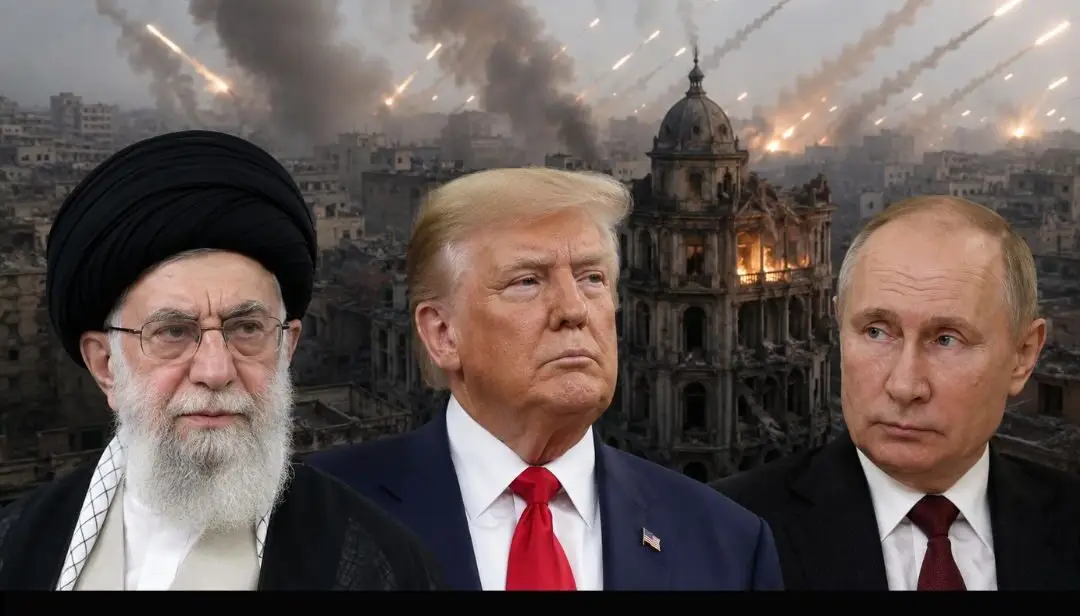
In one of the largest single aerial assaults of the entire war, Russia launched 681 missiles and drones at Ukraine overnight on June 14–15, 2026 killing at least 11 people, injuring 53, knocking out power to 140,000 homes, and setting the roof of the thousand-year-old Kyiv-Pechersk Lavra ablaze in an attack that drew worldwide condemnation.
The assault arrived as world leaders gathered in France for the G7 summit and just hours after the United States and Iran announced a landmark peace agreement to end their four-month conflict and reopen the Strait of Hormuz. With Western attention split between celebrating a Middle East breakthrough and confronting a crisis in Eastern Europe, President Zelensky flew directly to the G7 to make one demand: more air defenses, now.
The Scale of the Barrage
Russia launched 70 missiles and 611 drones across the overnight window, striking targets in Kyiv, Kharkiv, Dnipro, Zaporizhzhia, Odesa, Sumy, and Kherson regions impacting 42 confirmed strike locations nationwide. The missile complement included six Zircon hypersonic cruise missiles, 34 Iskander-M ballistic missiles, and 30 Kh-101 cruise missiles. The drone swarm consisted primarily of Shahed-type strike drones the same Iranian-designed weapon that featured heavily in the US-Iran war alongside Gerbera, Italmas, and Banderol loitering munitions and Parodiya decoy drones.
Ukraine’s air defenses intercepted 632 of the 681 weapons a 92.8% interception rate using Patriot systems, IRIS-T batteries, and F-16s. But 20 ballistic missiles and 27 drones broke through, hitting residential apartment towers in Kyiv’s Shevchenkivskyi and Obolonskyi districts, a market and grocery store set ablaze, and defence-industrial facilities across the capital.
In Kyiv, five people were killed and 35 injured. In Kharkiv, five rescue workers responding to earlier strikes were killed when a second wave of missiles struck the city.
A UNESCO Heritage Site Burns
The image that travelled furthest around the world was not of a destroyed apartment block. It was smoke billowing around the gold domes of the Kyiv-Pechersk Lavra the Monastery of the Caves founded in 1051 and one of Eastern Orthodox Christianity’s most sacred pilgrimage sites, inscribed on the UNESCO World Heritage List as part of the property “Kyiv: Saint-Sophia Cathedral and Related Monastic Buildings, Kyiv-Pechersk Lavra.”
A Russian strike ignited the roof of the Dormition Cathedral, the spiritual centrepiece of the complex. Monks and rescue workers formed human chains to carry icons and centuries-old liturgical relics out of the burning structure. Firefighters eventually brought the blaze under control, but not before footage of the burning domes broadcast globally.
UNESCO formally condemned the strike: “UNESCO condemns the reported strike on 15 June that hit the Kyiv-Pechersk Lavra, within the World Heritage property one of Ukraine’s most significant spiritual and cultural landmarks.” Ukraine’s Foreign Ministry responded by calling UNESCO’s statement “absurd” for failing to explicitly name Russia as the perpetrator. Ukrainian Prime Minister Yulia Svyrydenko wrote: “A brutal assault on our people and our heritage. This is the true face of Russia’s Orthodox values.”
Ukraine’s Security Service retrieved Shahed drone fragments from the Lavra grounds directly contradicting Russia’s claim that a misfired US-made Patriot interceptor caused the fire. Russia called Ukraine’s account a “crude fake.”
Zelensky described the strike as “one of Russia’s most serious crimes against Christian culture to date” and called the overall attack “terrorism.”
The Iran War’s Shadow Over Ukraine
The timing of this attack is not coincidental. Throughout the four months of the US-Iran war that consumed Western military and political attention from February to June 2026, Ukraine had been warning in increasingly urgent terms about the consequences for its own defence posture.
Zelensky explicitly cautioned that the risk of “delays in delivering certain weapons or reductions in the volume of critical defensive supplies” was “very high” because of munitions consumption in US strikes on Iran — specifically warning that a prolonged US-Iran conflict threatened the supply of vital Patriot interceptor missiles that Ukraine depends on to stop Russian ballistic strikes. The US had effectively halted direct military aid to Ukraine during the height of the Iran conflict, and Kyiv expressed fear of “losing the Americans” as attention and resources shifted to the Middle East.
Russia, watching Ukraine’s Patriot stocks strain under that diversion, appears to have calculated that this was precisely the moment to test the limits of Kyiv’s air defences at maximum scale.
Zelensky at the G7: A Plea for Air Defences
Arriving at the G7 summit in France on June 16, Zelensky delivered his message directly to the assembled leaders: “There must be a response from the G7 countries, and that response must be decisive and substantive more pressure on the aggressor and more support for Ukraine’s air defence.”
Trump, fresh from his US-Iran Agreement diplomatic triumph, said cautiously that “maybe we can do something” on Ukraine but did not specifically condemn the attack. The Trump administration has previously blocked or diluted G7 statements condemning Russian strikes and opposed language committing the West to continued support for Kyiv a stance that European allies have watched with growing alarm.
Russia has now launched more than 60 massive attacks on Ukraine’s energy sector across four-plus years of full-scale war. UNESCO has verified 536 damaged cultural sites in Ukraine since 2022, including 154 religious sites and 41 museums. The Kyiv-Pechersk Lavra, which has survived Mongol invasions, Ottoman wars, Soviet anti-religious campaigns, and Nazi occupation, now bears the scorch marks of a Shahed drone strike on its 975-year-old Dormition Cathedral.
For US-India Relations and the broader multipolar world watching both conflicts simultaneously, the message from Moscow on the night of June 14 was clear: while Washington celebrated a peace deal in one hemisphere, Russia was ensuring the other remained at war.

Oil & Energy Markets
A look at crude price swings, OPEC supply moves, and how energy markets react to geopolitical shocks.

Geopolitics & Conflict
Breaking down how wars, ceasefires, and diplomatic deals ripple through global trade and security.
US Foreign Policy
Coverage of Trump administration negotiations, sanctions, and strategic decisions shaping world events.
Economy & Inflation
Tracking how commodity prices, gas costs, and supply chains affect everyday consumers.