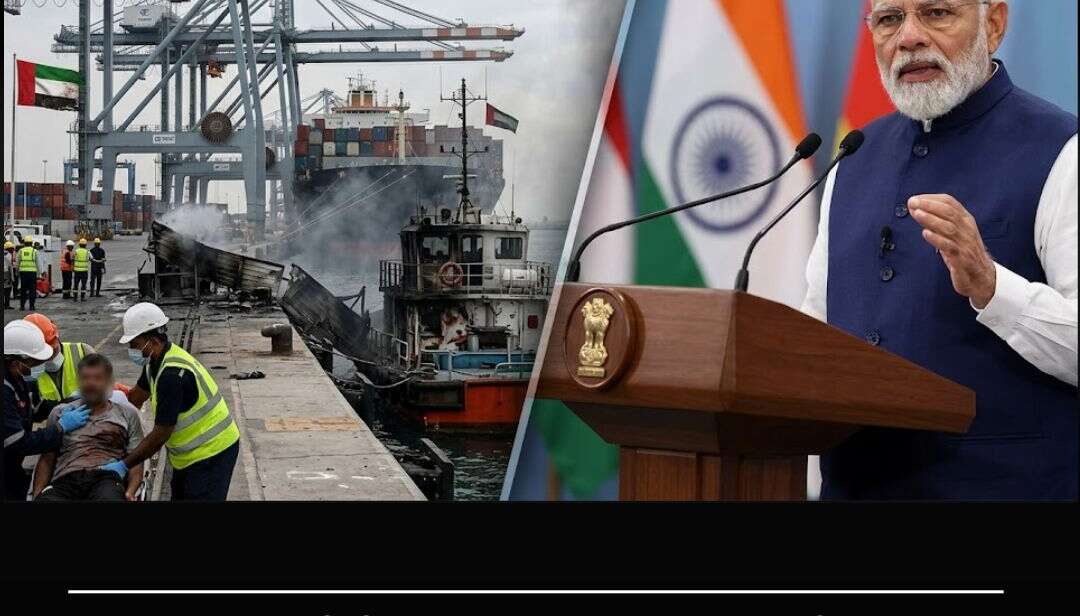
By Staff Reporter | May 5, 2026 Prime Minister Narendra Modi on Monday issued a sharp condemnation of Iran’s drone and missile assault on the United Arab Emirates’ key port city of Fujairah, calling the targeting of civilians and infrastructure “unacceptable” after three Indian nationals were moderately injured in the attack. The statement marks one
Prime Minister Narendra Modi on Monday issued a sharp condemnation of Iran’s drone and missile assault on the United Arab Emirates’ key port city of Fujairah, calling the targeting of civilians and infrastructure “unacceptable” after three Indian nationals were moderately injured in the attack.
The statement marks one of India’s strongest public responses to the escalating Iran-U.S. war and signals New Delhi’s deepening concern over the safety of its large diaspora community in the Gulf — and over the broader threat to regional stability.
The Attack: Drones, Missiles and a Major Fire
In the early hours of Monday, May 4, Iran launched a coordinated barrage of missiles and drones at the UAE — the first such strike since a fragile ceasefire between Iran and the United States took hold on April 8.
The UAE Ministry of Defence confirmed that its air defences engaged 15 Iranian missiles and four drones. Three missiles were successfully intercepted over the country’s territorial waters; a fourth fell into the sea. However, one drone penetrated the defence cordon and struck the Fujairah Petroleum Industries Zone (FOIZ), triggering a large fire at the facility.
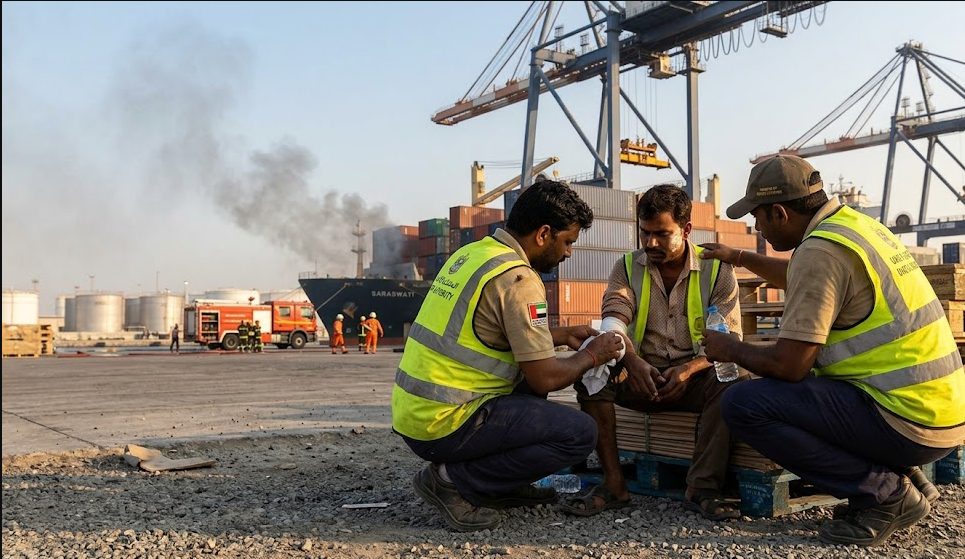
Three Indian nationals working at the site sustained moderate injuries in the blaze. Civil defence teams were immediately deployed to contain the fire at the strategically critical oil industrial zone.
Fujairah is no ordinary port. It sits at the terminus of the Abu Dhabi Crude Oil Pipeline, a critical artery designed specifically to carry crude oil from inland fields to the Gulf of Oman — bypassing the now-contested Strait of Hormuz entirely. An attack on Fujairah, in effect, strikes at one of the UAE’s last open oil export routes amid the ongoing maritime standoff.
Modi’s Response: “Targeting Civilians Is Unacceptable”
Prime Minister Modi took to social media and issued a formal statement within hours of the attack becoming public.
“Targeting civilians and infrastructure is unacceptable,” Modi said, offering firm solidarity with the UAE and calling for a peaceful resolution to all regional disputes through dialogue and diplomacy.
Modi also specifically flagged the strategic importance of the Strait of Hormuz, describing unimpeded navigation through the waterway as “vital for regional peace, stability, and energy security” — a pointed message given the current U.S.-led effort to forcibly reopen the strait to commercial shipping.
The Indian Embassy in Abu Dhabi confirmed it was in contact with UAE authorities to ensure those injured received proper medical care, and said it was monitoring the welfare of the Indian community across the UAE closely.
Why This Matters for India
India has an estimated 3.5 million nationals living and working in the UAE, making it the single largest foreign community in the country. Any escalation involving UAE ports news is of immediate humanitarian and economic consequence for New Delhi.
Beyond its diaspora, India is among the UAE’s top trading partners, with bilateral trade exceeding $85 billion annually. The UAE port network — including the world-class Jebel Ali in Dubai and Fujairah’s oil terminals — forms a key artery for Indian energy imports and exports. A sustained Iranian campaign against UAE port infrastructure would directly disrupt Indian supply chains.
India also imports a significant share of its crude oil through Gulf shipping lanes, making any threat to Hormuz or UAE port operations a direct energy security concern.
Broader Context: Project Freedom and the Strait of Hormuz
The Fujairah attack came on the same day the United States launched “Project Freedom“ — a military-backed initiative to escort civilian and commercial vessels through the Strait of Hormuz, which Iran has effectively blockaded since the war began.
Two American-flagged merchant ships successfully transited the strait on Monday under U.S. Navy escort. The U.S. military simultaneously reported sinking six small Iranian fast-attack boats that targeted civilian vessels during the operation.
Iran has labelled the U.S. escort initiative a ceasefire violation. A senior Iranian military officer warned that “U.S. military adventurism” was responsible for the renewed hostilities, and indicated further escalation was possible.
The attack on UAE port infrastructure appears designed to signal that Iran is prepared to widen the theatre of its response beyond the strait itself hitting the very bypass routes that regional partners like the UAE have built to survive the blockade.
India-UAE: A Partnership Under Pressure
India and the UAE have cultivated one of the Gulf region’s closest bilateral relationships in recent years, built on trade, energy, investment, and deep people-to-people ties. Modi’s immediate and unambiguous condemnation reflects that bond.
It also sends a broader diplomatic signal: that India, while maintaining its traditional posture of non-alignment in the Iran-U.S. conflict, will not stay silent when its citizens are caught in the crossfire or when the stability of UAE ports, a backbone of Indian commerce and energy supply, comes under direct threat from the Iran attack on U.S.-aligned regional infrastructure.
Market Analysis
A quick snapshot of market trends, customer behavior, and competitor movements.