Trump Administration Attempts to Block a Minnesota Climate Change Lawsuit Against Oil Giants
Theo Jorden
Share This Article
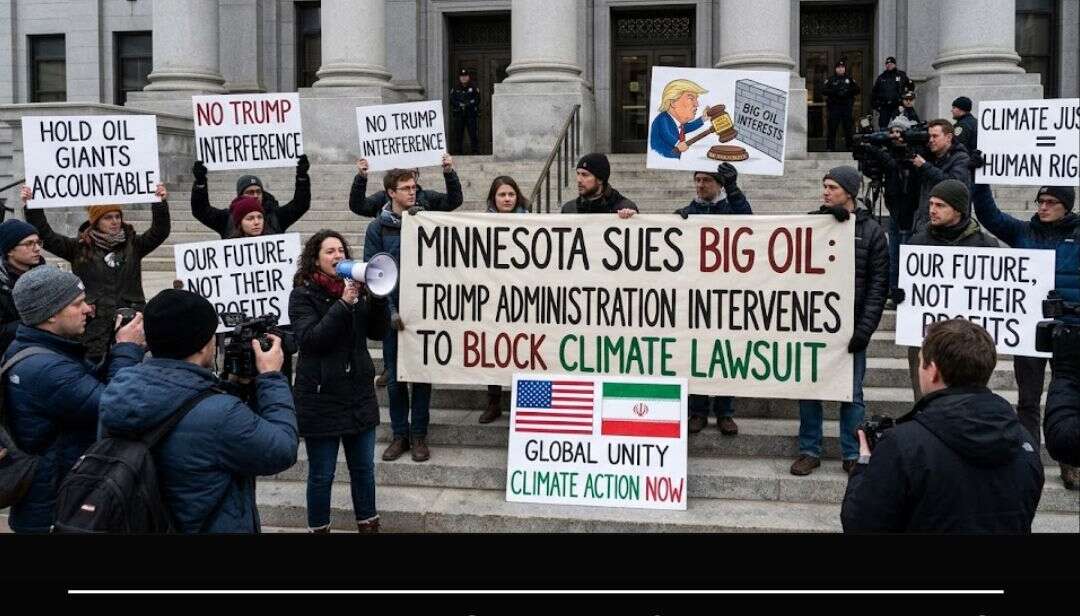
The Trump administration has moved aggressively to shield some of America’s biggest oil companies from legal accountability, filing a federal lawsuit against the state of Minnesota to kill a six-year-old climate deception case just weeks after the state’s own Supreme Court cleared it to move forward. On May 4, 2026, the US Department of Justice
The Trump administration has moved aggressively to shield some of America’s biggest oil companies from legal accountability, filing a federal lawsuit against the state of Minnesota to kill a six-year-old climate deception case just weeks after the state’s own Supreme Court cleared it to move forward.
On May 4, 2026, the US Department of Justice filed suit in federal court in Minneapolis, seeking to block Minnesota from proceeding with its landmark climate fraud case against ExxonMobil, Koch Industries, Koch subsidiary Flint Hills Resources, and the American Petroleum Institute (API). The move drew immediate condemnation from legal experts and state officials, with critics calling it one of the most direct examples yet of the Trump administration acting as a legal arm for giant oil interests.
A Six-Year Legal Battle Reaches a Turning Point
Minnesota Attorney General Keith Ellison originally filed the state’s case in 2020, alleging that the defendants had spent decades orchestrating a deliberate “campaign of deception” misleading Minnesota residents about the fossil fuel industry’s true contributions to climate change and concealing the devastating costs that would result. The lawsuit relies on state consumer fraud and failure-to-warn statutes, arguing the misconduct was rooted in deceptive marketing rather than emissions regulation.
The case survived years of oil industry attempts to derail it. In January 2024, the US Supreme Court declined to hear the defendants’ appeal, allowing the case to remain in state court. Then, on April 17, 2026, the Minnesota Supreme Court dismissed the industry’s latest bid for further delays — clearing the lawsuit to advance into discovery, the phase where internal documents, communications, and corporate records are compelled for examination.
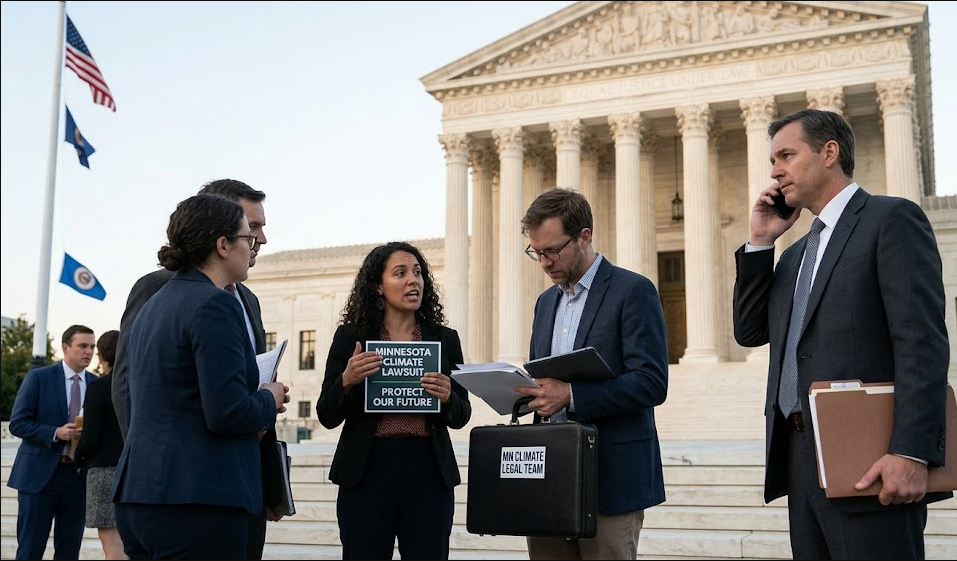
It was precisely at that moment three weeks later that the Trump administration Supreme Court-adjacent intervention arrived.
The DOJ’s Legal Argument: Federal Supremacy Over Climate Policy
The Justice Department’s core argument is one of federal preemption. The DOJ contends that Minnesota is attempting to regulate global greenhouse gas emissions through state law — an authority it argues belongs exclusively to the federal government under the Clean Air Act and the US Constitution. By pursuing this lawsuit, Washington argues, Minnesota is effectively trying to set national energy and climate policy from a state courthouse in St. Paul.
That argument has already been rejected by courts in other jurisdictions. Both the Hawaii and Colorado Supreme Courts have previously dismissed similar preemption claims, ruling that climate deception lawsuits target fraudulent marketing conduct — not emissions policy — and therefore fall squarely within state consumer protection law.
A Ramsey County District Court reached the same conclusion in February 2025, denying motions to dismiss and finding the state’s claims arose from deceptive business practices, not from any attempt to regulate greenhouse gases.
“Selling Us Out to Big Oil”
Attorney General Ellison responded to the federal intervention with undisguised contempt.
“The American people deserve a Department of Justice that fights for us, and it’s a tremendous shame that Trump’s DOJ would rather sell us out to Big Oil,” Ellison said, signalling he has no intention of standing down.
Environmental law groups called the timing of the DOJ’s filing targeting a case on the cusp of discovery strategically significant. Discovery would have forced ExxonMobil, Koch, and the API to hand over decades of internal research, lobbying records, and communications about what they knew about climate science and when. The Trump administration’s lawsuit, critics argue, is designed to prevent exactly that reckoning.
A Broader War Over Climate Accountability
Minnesota’s case is not an isolated target. At least 15 other states including Massachusetts, New York, and Rhode Island have filed similar climate deception lawsuits against giant oil companies. Across all jurisdictions, nearly 60 state and local governments are pursuing billions of dollars in climate-related damages.
The Trump administration Supreme Court strategy extends beyond Minnesota. In February 2026, the US Supreme Court agreed to hear the Boulder County v. Suncor Energy case, a Colorado climate lawsuit in which ExxonMobil and Suncor are again arguing federal preemption. A decision is expected no later than mid-2027 — and whatever the court rules will likely reshape the legal landscape for every state climate case currently in the pipeline.
Meanwhile, the American Petroleum Institute has made defeating climate litigation its top legislative priority for 2026, and at least one member of Congress has pledged to introduce legislation granting a sweeping “liability shield” that would effectively place oil giants above state law entirely.
For Minnesota, the fight is now on two fronts: defending its case from a hostile DOJ in federal court, while simultaneously preparing for the discovery phase that could, for the first time, put Big Oil’s internal climate knowledge on public record.
Oil & Energy Markets
A look at crude price swings, OPEC supply moves, and how energy markets react to geopolitical shocks.