Share This Article
TEHRAN / WASHINGTON / PERSIAN GULF – The last thread holding the ceasefire together snapped on Saturday night.
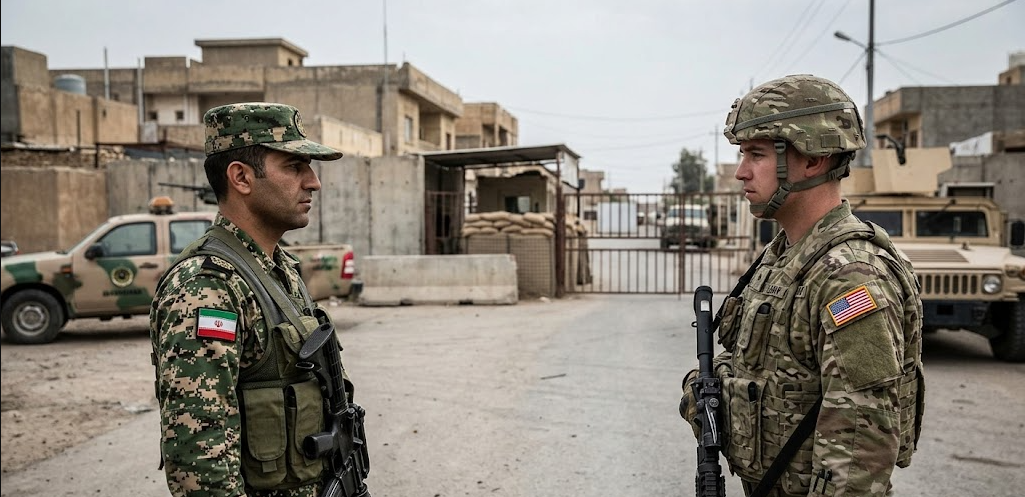
In a sequence of events that compressed 38 days of war into a single overnight escalation, US naval forces engaged an Iranian Revolutionary Guard Corps fast boat attempting to interdict commercial vessels near the USS Gravely the same destroyer that seized the MV Sorena 48 hours earlier. The engagement, confirmed by CENTCOM at 11:34 p.m. EDT Friday, involved warning shots followed by direct fire after the IRGC vessel failed to respond to radio contact and continued its approach toward commercial shipping. No US attacks casualties were reported. The IRGC boat was disabled and its crew of six taken into custody.
By 2:00 a.m. EDT Saturday, Iran’s Supreme National Security Council had issued its formal response: a pledge of “certain, proportional, and devastating” military retaliation against US attacks forces in the Persian Gulf region. By 6:15 a.m., Iranian FM Abbas Araghchi confirmed to state media what markets had already priced in overnight: there are no plans for fresh peace talks.
The ceasefire that survived 13 days has not survived 14.
“We Will Not Negotiate Under Fire”- Araghchi’s statement was unambiguous, carefully worded, and clearly designed for both domestic and international consumption:
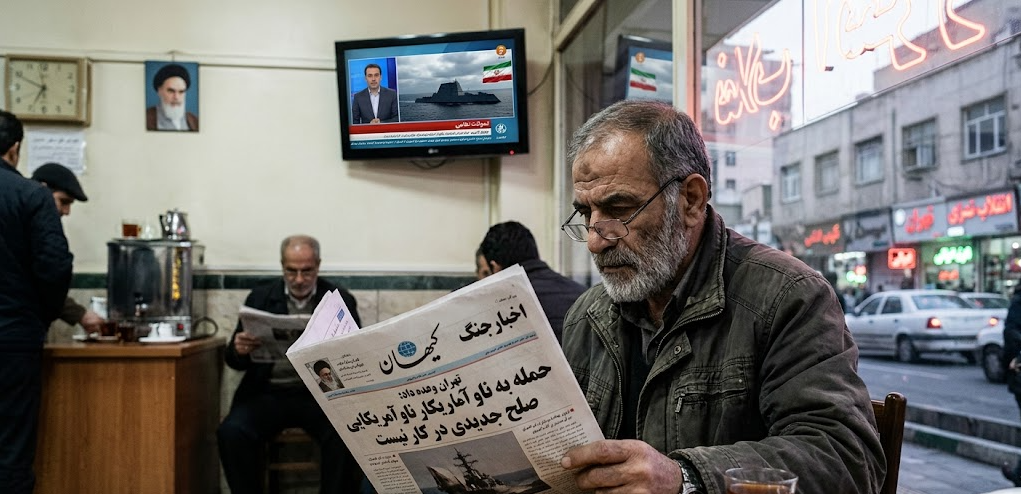
“The Islamic Republic of Iran entered the Islamabad process in good faith, offering a comprehensive 10-point framework for lasting peace. The United States responded by seizing our vessels, attacking our naval personnel, and killing our sailors. We will not negotiate under fire. There are no plans for fresh peace talks until American forces withdraw from the Persian Gulf and our detained personnel are returned.”
The statement added three conditions Iran now requires before any negotiating process resumes: the release of the MV Sorena and its cargo, the release of all detained Iranian crew members, and a formal US attacks acknowledgment that the naval engagement constituted a ceasefire violation.
The White House will not meet any of those conditions. The State Department has already described the engagement as “defensive action under established rules of engagement” legally separate from the ceasefire framework. Defense Secretary Hegseth, in a statement posted to X at 7:45 a.m., was characteristically direct: “American sailors acted to protect American assets and commercial shipping from IRGC aggression. Iran chose escalation. We are prepared for whatever comes next.”
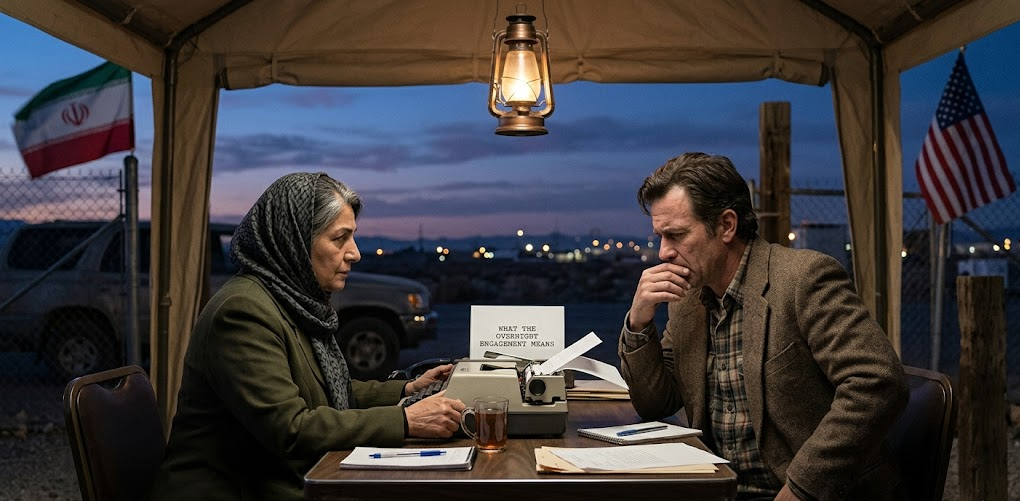
What the Overnight Engagement Means
The Friday night naval engagement however tactically limited crosses a threshold that the previous week’s ship seizure had not.
The MV Sorena seizure was an enforcement action. It was aggressive, it violated Iran’s understanding of the ceasefire spirit, and it triggered Tehran’s walkout from Islamabad. But it was not kinetic combat between US and Iranian military forces. No shots were fired. No one died.
Friday night’s engagement involved direct fire on Iranian military personnel. IRGC sources confirmed to Reuters that two Iranian sailors were killed and four were wounded when the IRGC fast boat was disabled. Those deaths change the political calculus inside Tehran in ways that the MV Sorena detention did not.
The IRGC does not absorb the deaths of its personnel without response. Institutionally, politically, and culturally, the organization’s identity is built around the principle that American military action against Iranian forces demands Iranian military response. The Supreme National Security Council’s overnight pledge of retaliation was not a bargaining position. It was a statement of institutional necessity.
BCA Research’s Matt Gertken who had predicted hostilities would “ignite later this month” on the day the ceasefire was announced told Bloomberg Saturday morning: “This is the incident. Two IRGC sailors killed by US naval fire during an active ceasefire is the trigger that makes Iranian retaliation not just likely but politically mandatory for the new Iranian leadership.”
The Ceasefire Architecture Has Collapsed
To understand why this escalation was structurally inevitable, return to the fundamental flaw in the April 7 ceasefire: it was 126 words written in the heat of a diplomatic emergency, posted on Truth Social before either side had negotiated what it actually meant.
The text required Iran to agree to the “COMPLETE, IMMEDIATE, and SAFE OPENING” of the Strait of Hormuz. It said nothing about pausing US sanctions enforcement, suspending the naval blockade, addressing the $2 million per-tanker transit fee Iran’s parliament had approved, or defining the rules of engagement for the 15 American warships already in the Persian Gulf.
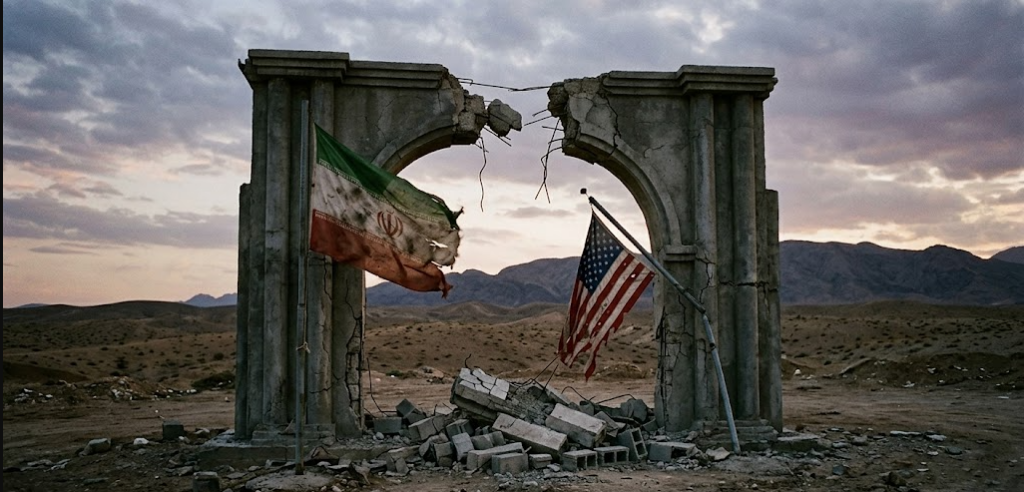
Every one of those omissions has now generated a specific crisis:
- The transit fee dispute produced the MV Sorena detention
- The naval blockade produced the Friday night IRGC fast boat engagement
- The absence of rules of engagement produced the deaths that have now made Iranian retaliation politically mandatory
The absence of Lebanon from the ceasefire text kept Israeli strikes active throughout generating daily Iranian accusations of American bad faith that weakened the pragmatists inside Tehran and strengthened the hardliners
The Islamabad talks were never resolving these gaps. They were papering over them with diplomatic language and Pakistani optimism, hoping the April 21 deadline would somehow produce a framework that would retroactively legitimize a ceasefire whose foundations had never been properly laid.
Markets Price the Reckoning
Oil markets have been pricing this outcome since before the ceasefire was announced and on Saturday morning they confirmed their verdict.
Brent crude surged to $112 per barrel in early Asian trading its highest level since the peak of the Hormuz closure in late March. WTI crossed $108. Goldman Sachs’s overnight note to clients, sent at 3:00 a.m. EDT, revised its near-term price target to $130–$145 in the event of confirmed Iranian military retaliation, noting that “the physical market has never reflected the optimism of the futures ceasefire trade Dated Brent held above $90 throughout, and the market was right.”
American gas prices which had only marginally receded from their $4.10 per gallon peak are now being modeled at $4.80–$5.20 by the end of the week if Iranian retaliation targets Gulf infrastructure. Shipping insurance premiums for Persian Gulf routes have tripled since Friday evening. The Dow futures are down 890 points in pre-market trading.
The economic relief that the April 7 ceasefire was supposed to deliver the justification Trump needed to declare total victory and claim credit for cheaper gas heading into the 2026 midterms is now fully unwinding.
Where the Lines Are Drawn
VP Vance’s Islamabad delegation is still in Pakistan technically, formally, pointlessly. There is no Iranian delegation to meet. There is no framework to negotiate. There is a ceasefire that expires in hours and a war that never truly stopped.
The administration’s internal divide Vance’s pragmatic engagement versus Rubio’s structural skepticism has been resolved by events rather than strategy. Rubio’s “I’m not sure you can reach a deal with these guys” now reads less like hawkish posturing and more like a prediction that came true on a specific timeline.
Trump has not posted on Truth Social since Friday afternoon. The silence that follows his threats is usually where the deal emerges. This time, the silence follows deaths and deals do not emerge from IRGC funerals.
What Comes Next
Three scenarios have collapsed into one.
There will be no emergency agreement before April 21. There will be no ceasefire extension. The Islamabad process is over. What remains is the question of what Iranian retaliation looks like targeted and calibrated, designed to demonstrate capability without triggering Phase 2 escalation, or broad and structural, designed to demonstrate that Iran is not a party that absorbs the deaths of its sailors without consequence.
The 15 US warships in the Persian Gulf are now on full combat alert. CENTCOM confirmed Saturday morning that carrier-based aircraft have been moved to strike readiness posture. The naval blockade that was designed as a pressure tool is now the opening formation of what may become Phase 2 of the Iran war.
The ceasefire lasted 13 days. The peace initiative lasted 10. The April 21 deadline will pass not with a deal, but with two sides already counting their dead and calculating their next moves.

Oil & Energy Markets
A look at crude price swings, OPEC supply moves, and how energy markets react to geopolitical shocks.

Geopolitics & Conflict
Breaking down how wars, ceasefires, and diplomatic deals ripple through global trade and security.
US Foreign Policy
Coverage of Trump administration negotiations, sanctions, and strategic decisions shaping world events.
Economy & Inflation
Tracking how commodity prices, gas costs, and supply chains affect everyday consumers.