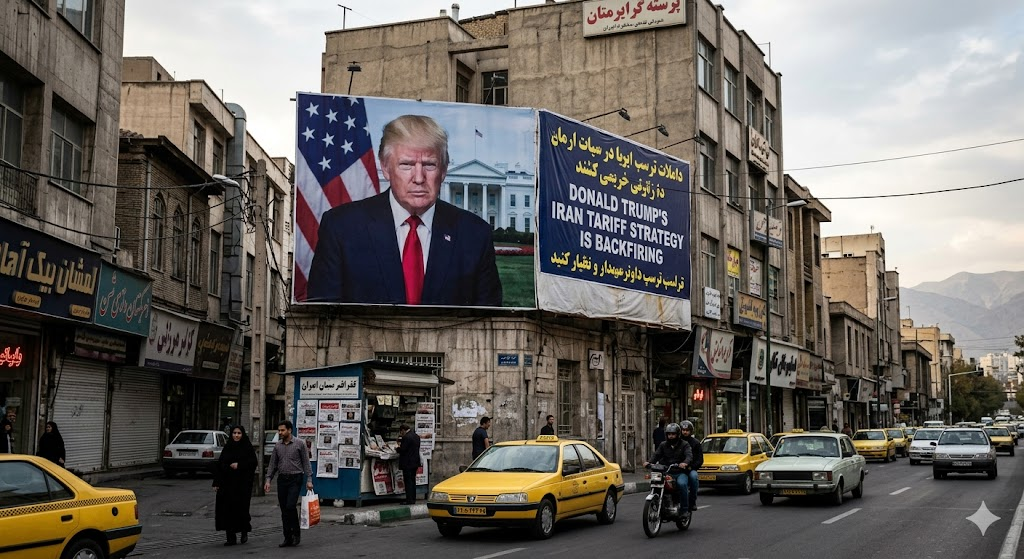
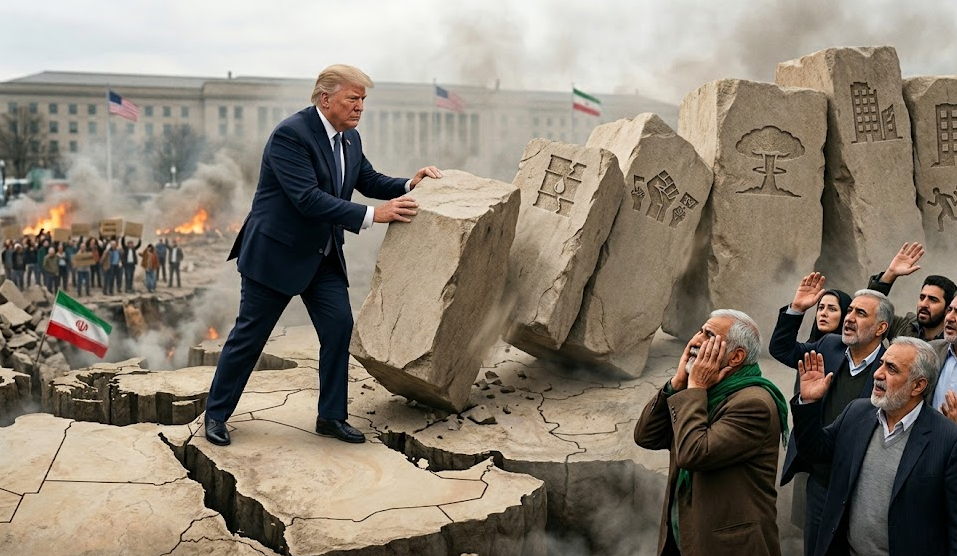
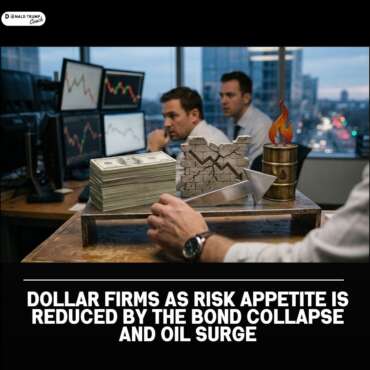
The plan was elegant in theory: maximum economic pressure, crippling sanctions, and targeted tariffs would force Iran to the negotiating table on American terms. Instead, oil hit $144, gas prices broke records, inflation surged, and Iran submitted its own 10-point peace proposal — which Trump called “workable.” Someone’s strategy is backfiring. It isn’t Tehran’s. WASHINGTON
The plan was elegant in theory: maximum economic pressure, crippling sanctions, and targeted tariffs would force Iran to the negotiating table on American terms. Instead, oil hit $144, gas prices broke records, inflation surged, and Iran submitted its own 10-point peace proposal — which Trump called “workable.” Someone’s strategy is backfiring. It isn’t Tehran’s.
WASHINGTON — The theory of maximum pressure on Iran was always straightforward.
Strangle the Iranian economy through layered sanctions. Cut off oil revenues. Collapse the rial. Starve the regime of the hard currency it needs to fund its nuclear program, its proxy networks, and its military. Make the cost of defiance so unbearable that Tehran eventually accepts Washington’s terms — complete nuclear dismantlement, end to regional interference, a deal on American conditions.
The strategy has been running, in various forms, since 2018. And in April 2026 — after 38 days of active war, oil at $144 a barrel, American gas prices at record highs, a closed Strait of Hormuz, and a ceasefire framework built around Iran’s own 10-point proposal — it is worth asking a direct question: who is this strategy actually hurting?
The Oil Price Boomerang
The most immediate and visible way Trump’s Iran strategy is backfiring is at the gas pump — and it is hitting the constituency that elected him hardest.
When Trump launched “Operation Epic Fury” on February 28, oil was trading at approximately $73 per barrel. By the time Iran closed the Strait of Hormuz, Dated Brent crude had surged to a physical peak of $144.42 — a 97% price spike in five weeks. The Dallas Federal Reserve called it “the greatest global energy supply shock in history.”
American consumers felt it immediately. National average gasoline prices crossed $5.50 per gallon — a level not seen since the 2022 post-Ukraine invasion spike — hitting rural and suburban Trump voters, trucking networks, and small businesses with disproportionate force. The very economic base Trump built his political identity around protecting absorbed the direct cost of a military strategy sold as a path to cheaper energy through Middle East stability.
Andy Lipow of Lipow Oil Associates confirmed: “It is likely to be months before the average price is back to the pre-war level of less than $3 a gallon” — regardless of how the ceasefire resolves.
China and India Kept Buying
Here is the fundamental structural flaw in maximum pressure as an Iran strategy: it only works if the entire world complies.
It does not.
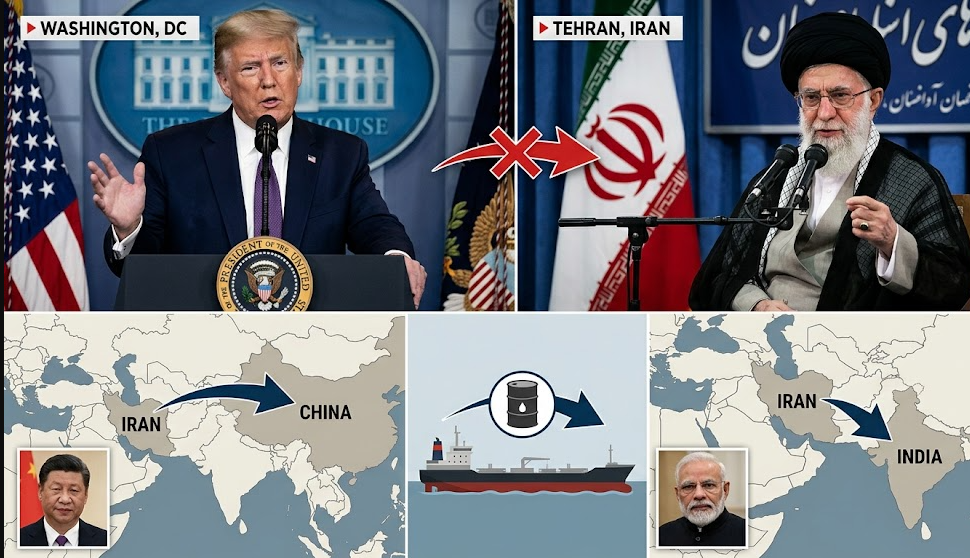
Despite eight packages of new Trump sanctions imposed on Iran in April 2025 alone — targeting tanker networks, oil trading infrastructure, and financial intermediaries — China and India continued purchasing Iranian crude throughout 2025 and into 2026, absorbing discounted barrels through shadow fleet tankers and alternative payment mechanisms that sanctions enforcement could not fully close. Iran’s oil export revenues, while severely reduced, never reached zero. The nuclear program, funded in part by those revenues, continued enriching uranium to 60% purity with a 460-kilogram stockpile — enough for approximately 11 weapons — by the time war began.
Maximum pressure maximally pressured the Iranian people. Iran’s 43% inflation rate, 70% food price inflation, and rial trading above 1 million to the dollar represent genuine civilian suffering. But the regime’s nuclear program and military infrastructure — the actual targets of the pressure strategy — remained operational until bombs, not tariffs, degraded them.
The lesson: economic pressure without universal enforcement leaks. And in a multipolar world where China and India represent Iran’s largest energy customers, universal enforcement is a fiction.
The Unintended Consequences Cascade
The Iran pressure strategy did not operate in isolation. It collided with Trump’s simultaneous global tariff war — and the collision produced consequences neither strategy anticipated.
When Trump imposed sweeping “Liberation Day” tariffs in early 2025, global supply chains absorbed one shock. When the Iran war added an oil price shock on top of it, the combined effect pushed inflation in multiple economies back toward levels that eroded consumer confidence, complicated Federal Reserve policy, and — critically — undermined the economic argument Trump needed to sustain domestic support for the military campaign.
The interest rate cut probability, which had been falling under inflationary pressure from tariffs, jumped from 14% to 43% overnight on the April 7 ceasefire announcement — not because the economy improved, but because traders were pricing in the end of a war-induced oil shock that the administration’s own strategy had created.
In other words: the ceasefire was celebrated as economic relief from a crisis the Iran strategy itself generated.
The Negotiating Table Tells the Story
Perhaps the clearest evidence that the Iran strategy is backfiring is what happened at the negotiating table — or rather, who wrote what happened there.
After eight packages of sanctions, the Twelve-Day War in June 2025, the killing of Khamenei, 38 days of sustained military strikes, and a naval blockade of Iranian ports — Iran submitted its own 10-point peace proposal. Not a capitulation. Not an acceptance of US terms. A comprehensive Iranian framework demanding sanctions removal, asset returns, enrichment rights, war compensation, and UN Security Council ratification.
Trump called it “a workable basis on which to negotiate.”
That is not the language of a strategy that achieved its objectives. That is the language of two sides that fought to exhaustion and are now looking for a face-saving exit. Special Envoy Steve Witkoff admitted before the war that Iran’s stockpile suggested it was “weeks, not months” from nuclear capability. The stockpile still exists. The facilities were damaged, not destroyed. And Iran is negotiating from its own document.
The Political Arithmetic
The domestic political math is becoming uncomfortable for an administration that sold maximum pressure as the path to both security and prosperity.
A March 2026 survey found American consumer confidence at its lowest point since the 2022 inflation peak. Gas prices remain elevated. Shipping costs — disrupted by Hormuz closure — have rippled into consumer goods prices. The Federal Reserve, which had been on a cutting trajectory, paused amid war-driven inflation.
Morgan Stanley’s April note described the situation plainly: “The administration faces a scenario where the military campaign degraded Iran’s nuclear program without eliminating it, while generating an oil shock that damaged the domestic economy the policy was meant to protect.”
Pressure strategies work when they produce capitulation on the pressuring party’s terms. Iran is at the table. It brought its own terms. And the ceasefire clock expires April 21.
That is not a strategy backfiring loudly. It is one backfiring quietly — one gas receipt, one inflation report, and one Iranian negotiating demand at a time.
Market Analysis
A quick snapshot of market trends, customer behavior, and competitor movements.