From 50% tariff threats on China to a full naval blockade, Trump has deployed every economic weapon in his arsenal against Tehran. Iran is still at the table — on its own terms. Donald Trump built his second-term political identity on the power of economic coercion. Tariffs brought China back to the table. Tariffs extracted
From 50% tariff threats on China to a full naval blockade, Trump has deployed every economic weapon in his arsenal against Tehran. Iran is still at the table — on its own terms.
Donald Trump built his second-term political identity on the power of economic coercion. Tariffs brought China back to the table. Tariffs extracted concessions from Canada and Mexico. Tariffs, in Trump’s telling, were the universal solvent of geopolitical resistance — apply enough economic pressure and the other side blinks.
Iran is not blinking.
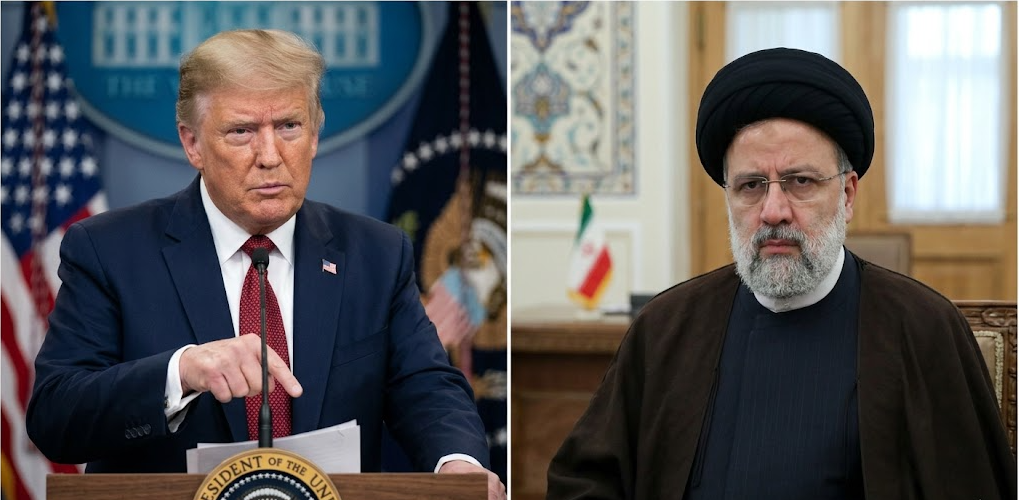
CNN Business framed the emerging reality in a headline that has circulated widely across financial and foreign policy circles: “Trump is using his tariff playbook against Iran. It’s not working.”
The Playbook, Deployed in Full
Trump has applied every economic tool available to him simultaneously against Tehran — a pressure campaign of extraordinary breadth and speed.
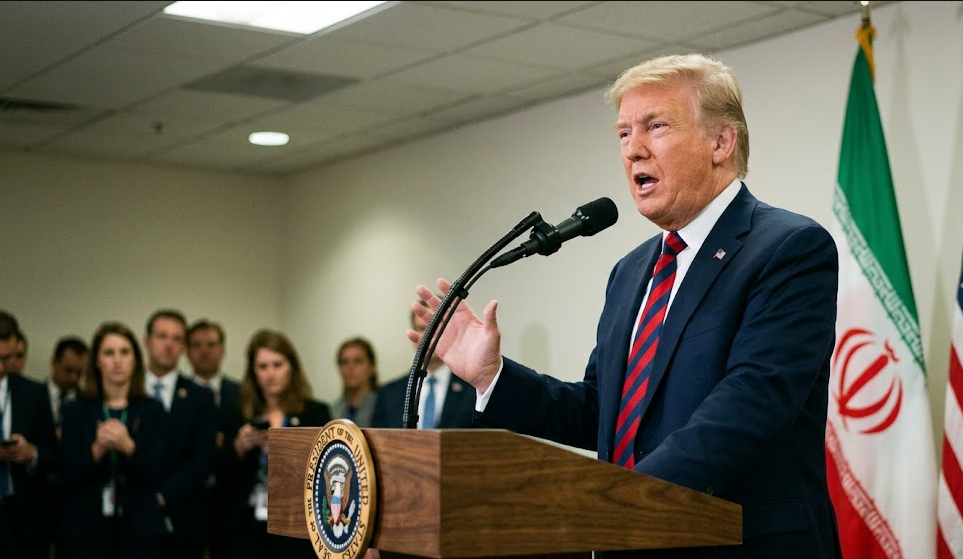
On April 8, as the ceasefire took hold, Trump announced that the United States would impose 50% tariffs on all goods imported from any nation supplying military weapons to Iran — a sweeping trade threat aimed at cutting off Tehran’s arms pipeline. When reports emerged that China might be preparing to deliver air defense systems to Iran, Trump sharpened the warning personally, telling Fox Business that Beijing would face sweeping trade penalties if confirmed to be arming Tehran.
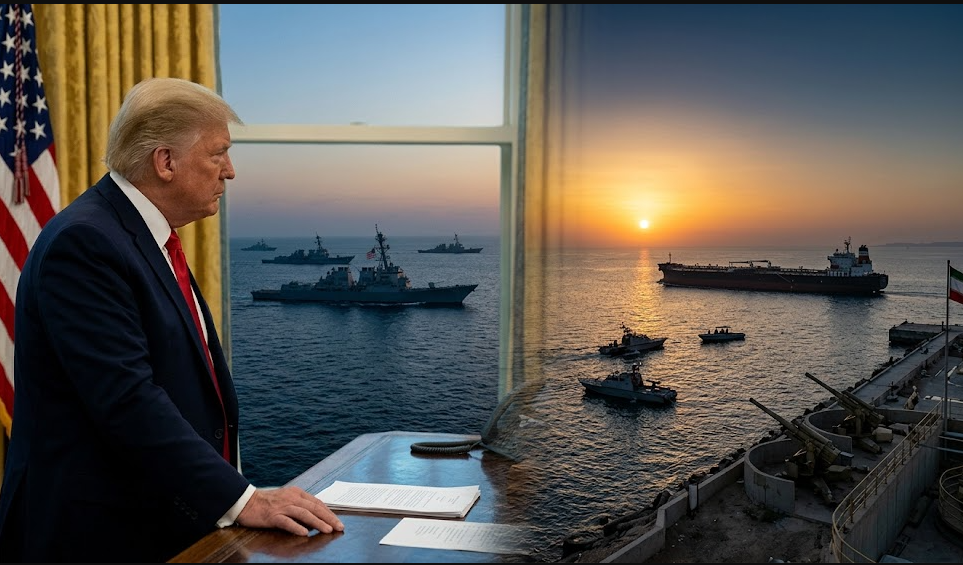
The naval blockade, activated April 14, extended the economic siege to Iran’s oil revenues — the country’s primary source of hard currency, estimated at $30 billion annually before the war. US Central Command declared the cordon fully operational, aimed at cutting off all maritime traffic entering or exiting Iranian ports. Trump simultaneously threatened that Iranian ships approaching the blockade line would be “immediately eliminated.”
On the diplomatic track, Vice President Vance proposed a 20-year suspension of Iranian uranium enrichment during the Islamabad talks — a demand framed not as a negotiating position but as a floor. The Washington Post reported that Trump himself is “not pleased” with even that offer, viewing it as too soft, while simultaneously declaring the war “very close to over.”
The sum of these moves represents the most compressed and aggressive economic pressure campaign the United States has run against any single country in modern history — compressed into less than six weeks of active conflict.
Why Iran Still Holds the Line
The fundamental problem with applying the tariff playbook to Iran is structural: Iran has almost no direct trade with the United States to hold hostage.
When Trump threatened China with tariffs, the threat had immediate teeth — China’s export economy is deeply intertwined with US consumer markets. When Trump threatened Canada, Ottawa felt the pain within weeks. Iran and the United States have had near-zero bilateral trade for decades. There is no export market to threaten, no supply chain to disrupt, no corporate boardroom in Tehran calculating the cost of compliance.
What Iran does have is the Strait of Hormuz — and that asset has proven more durable than anyone in Washington predicted.
CNN’s analysis was precise: “Iran views control over the Strait as the one piece of leverage it wields over the United States as a tool to stop an existential war and bring America to the negotiating table.” Its military infrastructure has been devastated by Operation Epic Fury. Its nuclear facilities were struck. Its economy is running at 44 percent inflation with a collapsing currency. And yet Tehran has not surrendered the Hormuz card — because surrendering it without a binding deal would leave Iran with nothing.
Iran’s official response to the US nuclear proposal was categorical. A senior Iranian official told Press TV: “Iran will end the war when it decides to do so and when its own conditions are met.” Tehran’s counter-proposal demanded not just a nuclear framework but US nonaggression guarantees, war reparations, and formal international recognition of Iranian sovereignty over the Strait — a list that reads less like negotiating positions than a statement of strategic intent.
The China Variable That Neutralizes the Weapon
Trump’s 50% tariff threat on weapons suppliers was designed primarily to isolate China from Iran. The effect has been limited. Chinese tankers transited the Strait on the first day of the US blockade. Beijing called the blockade “dangerous and irresponsible” and explicitly stated it would “respect and abide by” its energy agreements with Tehran. Xi Jinping warned against a return to the “law of the jungle” — diplomatic language Beijing deploys specifically against unilateral US economic coercion.
If China continues routing oil around the blockade — and the shadow fleet data suggests it is — then the economic siege against Iran has a structural leak that no tariff threat can fully close. China was buying 95 percent of Iran’s crude before the war. That commercial relationship predates the conflict, survived years of US sanctions, and is not going to be severed by a 50% tariff threat on weapons shipments that Washington itself has described as unverified.
The Compounding Cost to America
There is a further irony embedded in the tariff strategy: the same tariff architecture that Trump deployed against China and other trading partners has already dealt an economic blow to all 50 US states, according to a Fortune analysis published this week. Adding an Iran-related layer of trade threats on top of an already strained trade war environment compounds the domestic economic pain without proportionally increasing pressure on Tehran.
CNN’s political analysts put the broader conclusion starkly: “An increasingly chaotic international situation suggests that the president’s methodology of escalation and coercion has limits — and that it may be leading him into damaging political corners.”
Iran knows this. The ceasefire expires April 21. The blockade is leaking. The tariff threats have not moved Tehran’s nuclear position by a single centrifuge. And Trump, who declared the war “very close to over” on Wednesday, is now managing a conflict where the economic weapons he is most comfortable wielding are losing their edge precisely when he needs them most.
Market Analysis
A quick snapshot of market trends, customer behavior, and competitor movements.