Twenty thousand sailors. Eight weeks at sea. Rockets overhead, mines below, and supplies running out — the Iran war has created a maritime humanitarian emergency the United Nations says has no parallel in the post-Second World War era. Breaking news from Iran continues to redefine what a modern conflict looks like for civilians caught in
Twenty thousand sailors. Eight weeks at sea. Rockets overhead, mines below, and supplies running out — the Iran war has created a maritime humanitarian emergency the United Nations says has no parallel in the post-Second World War era.
Breaking news from Iran continues to redefine what a modern conflict looks like for civilians caught in its wake — and few stories are more overlooked, or more urgent, than the crisis unfolding aboard thousands of commercial vessels now trapped inside the Persian Gulf with no clear path to safety.
The UN’s International Maritime Organization (IMO) has issued its starkest warning yet. IMO Secretary-General Arsenio Dominguez said plainly on April 24: “The situation is not improving. I reiterate: there is no safe transit anywhere in the Strait of Hormuz.” His appeal to member states was equally direct: “My call is to release the seafarers because they are not at fault.”
How 20,000 Sailors Became Trapped
The Iran Israel war that began on February 28, 2026 — when US and Israeli forces launched coordinated strikes against Iran, killing Supreme Leader Ali Khamenei — set off a chain of retaliatory events that effectively sealed the Strait of Hormuz to commercial traffic. Iran mined key shipping lanes, launched missile and drone attacks on vessels and Gulf state infrastructure, and declared the strait closed to ships associated with the US, Israel, and their allies.
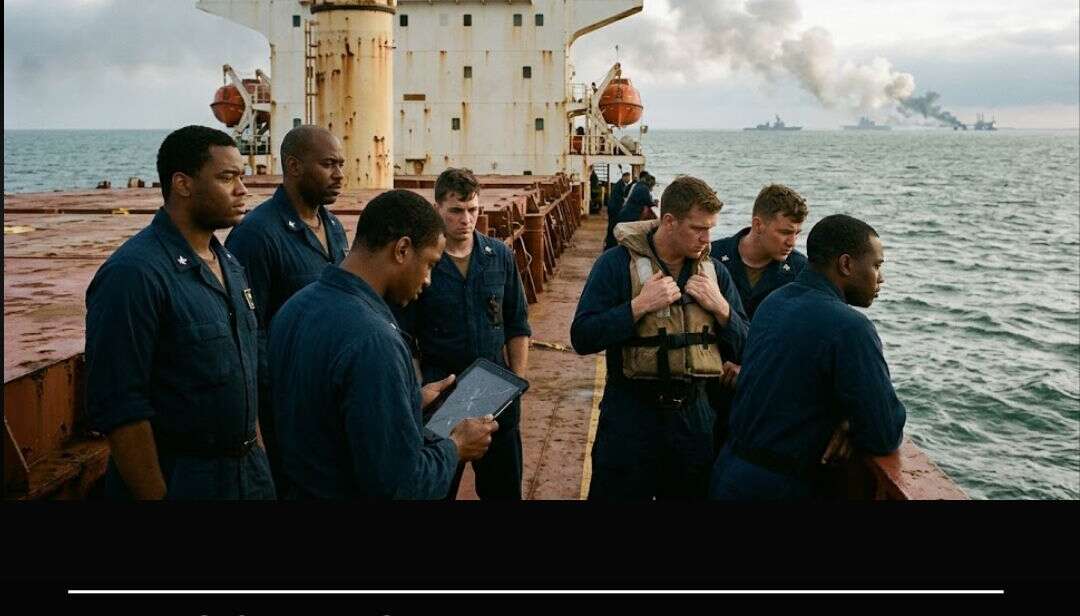
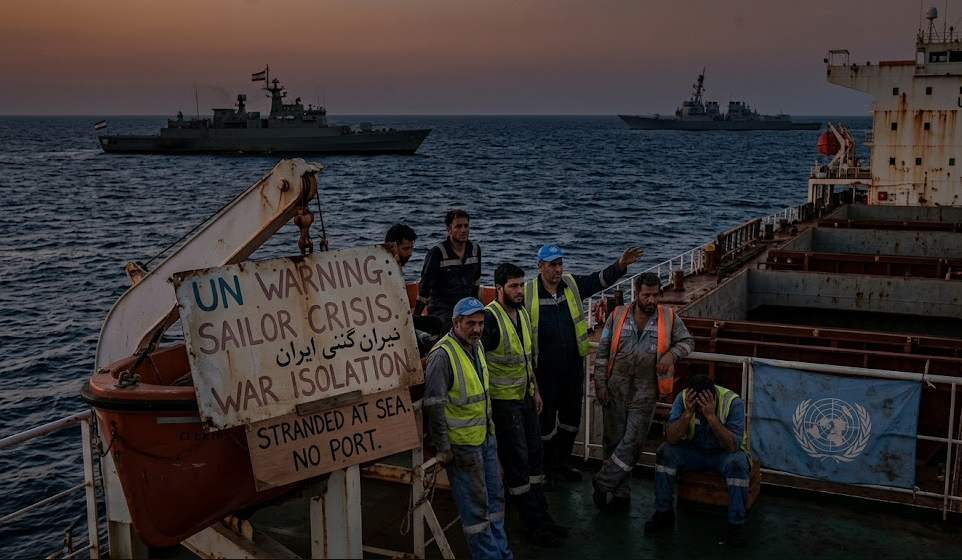
The result: approximately 800 to 1,000 vessels carrying 20,000 civilian seafarers became trapped inside the Persian Gulf, unable to exit through Hormuz, unable to safely dock in Iranian ports, and facing visa restrictions and logistical barriers along the southern Arab coastline.
Since the conflict began, the IMO has confirmed 29 attacks on commercial vessels in the Persian Gulf and around the strait — leaving at least 10 seafarers dead and many more injured. Human Rights Watch has described Iran’s deliberate targeting of civilian ships as apparent war crimes.
Life Aboard a Stranded Vessel
The human toll aboard these ships defies easy description. Crews — many from India, the Philippines, and other developing nations working their first or second contracts at sea — have been living under conditions of sustained fear, deprivation, and psychological strain.
“We don’t sleep at night. We stay up on deck because you never know what might happen next,” one sailor told NBC News, describing rockets arcing overhead as routine. Others have reported being forced to reuse water drained from air-conditioning systems to wash clothing and, in some cases, to prepare food. Supplies of food and fresh water have dwindled to critical levels on multiple vessels, with no resupply possible while the strait remains effectively closed.
The psychological dimension is severe. Crew welfare organisations have reported acute mental health distress across dozens of ships — men and women isolated from their families, uncertain whether they will ever leave, watching the waters around them for mines and incoming drones.
“Many of them were on board a ship for the first time, and you can imagine what mental state they have gone through,” one maritime welfare worker told reporters.
The UN’s Unprecedented Warning
Damien Chevallier, Director of the Maritime Safety Division at the IMO, described the situation as unlike anything the organisation has encountered in the modern era. “There is no precedent for seafarers caught in a war zone in the post-WWII era,” he said — a declaration that places the Iran war’s impact on maritime workers in a category of its own.
The IMO is now participating in a UN-led dedicated Task Force on the Strait of Hormuz, coordinating with member states and regional authorities to find corridors through which stranded vessels can safely exit. The Task Force has urged the international community to treat the seafarer crisis as a humanitarian emergency demanding immediate diplomatic intervention — not merely a logistics problem awaiting a military solution.
Project Freedom and Its Limits
The US Navy’s “Project Freedom” initiative, launched on May 4 under President Trump’s direction, has offered a partial response — providing commercial vessels with navigational guidance and information on mine-free corridors, while deploying guided-missile destroyers, 100-plus aircraft, and 15,000 service members in a show of protective force.
But the operation’s limits are real. US warships are not providing close physical escorts through the strait, and Iran has warned that any American interference will be met with military retaliation. The IMO notes that uncertainty over the safety of transit routes continues — Project Freedom has not yet delivered the clear passage its name promises.
For the 20,000 men and women aboard those vessels, the gap between a US announcement and an actual safe exit remains vast. They are not combatants. They carry no weapons. They chose to work the world’s most important shipping lane in peacetime — and now find themselves prisoners of a war they had no part in starting.
The UN’s message to the world is unambiguous: this is a crisis, it is unprecedented, and it is getting worse.
Market Analysis
A quick snapshot of market trends, customer behavior, and competitor movements.