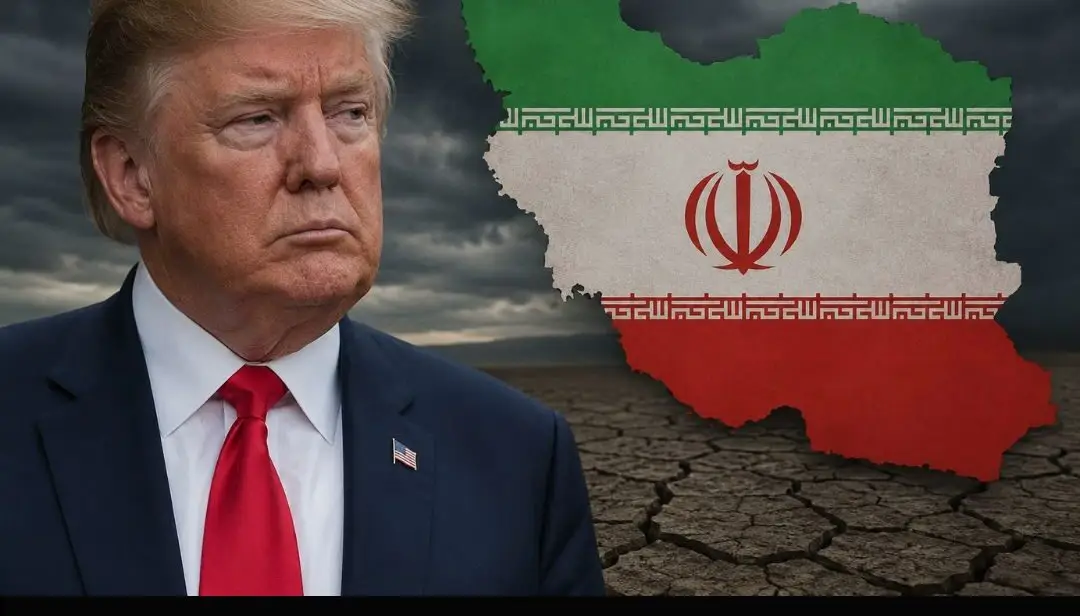
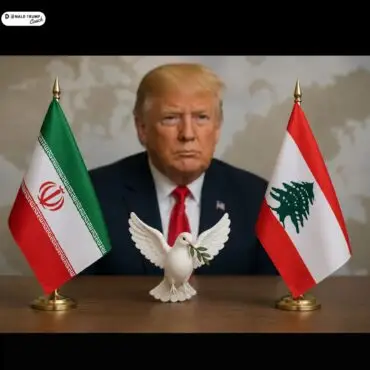
Gulf allies capitals that once stood firmly behind President Donald Trump are now openly questioning whether his new agreement with Iran has left them more exposed, not less. Just weeks after Washington and Tehran signed a memorandum of understanding meant to end months of war, several Gulf officials and regional analysts are describing the outcome in starkly negative terms, a sharp reversal from the optimism that followed the announcement of a ceasefire.
Hasan Alhasan, a senior fellow at the International Institute for Strategic Studies, summarized the mood bluntly. “From the Arab Gulf states’ perspective, the Iran war is a disastrous turning point for the regional security order,” he told CNN, framing the agreement as part of a broader pattern of American retrenchment from the region.
A Deal That Raises More Questions Than It Answers
The roots of Gulf unease trace back to the structure of the deal itself. The fourteen point framework, announced by Trump on Truth Social in mid June, ended direct hostilities and set in motion the reopening of the Strait of Hormuz, the narrow waterway through which roughly a fifth of the world’s oil supply moves daily. Iran committed to allowing toll free commercial shipping through the strait for sixty days while removing mines and other obstacles left over from the conflict.
But the same agreement also grants Tehran a formal role, alongside Oman, in overseeing future commercial Strait of Hormuz traffic. For Gulf states whose economies depend almost entirely on uninterrupted maritime trade, that arrangement means their energy exports could effectively run through Iranian oversight, a prospect many officials see as a long term vulnerability rather than a resolution.
Just as troubling to Gulf governments is what the deal leaves out. The memorandum does not address Iran’s ballistic missile program or its network of regional proxy forces, the two issues many Arab officials consider a more immediate threat than Tehran’s nuclear ambitions. A senior Gulf diplomat told CNN the war demonstrated that Iran “had a well developed plan to target” Gulf states directly, a realization that has not been softened by the ceasefire.
Confidence in Washington Erodes
Gulf states had little appetite for this war from the start. They had also opposed the original 2015 nuclear agreement under President Obama and welcomed Trump’s decision to abandon it in 2018, precisely because it failed to address their security concerns. The fact that the new pact arrives amid what Alhasan called “a major loss of confidence in the US” makes the unease even more pronounced this time around.
That erosion of trust is not new. Trump’s own comments to Gulf leaders during his first term, telling Saudi Arabia’s monarch that the kingdom “might not be there for two weeks without us,” underscored a transactional view of the alliance that has only deepened since. The 2019 attacks on Saudi oil facilities, widely blamed on Iran, further exposed the limits of American willingness to respond militarily on the Gulf’s behalf.
Secretary of State Marco Rubio traveled to the region this week attempting to reassure allies that Washington’s security commitments remain firm. Yet for many Gulf officials, the real question is no longer whether the United States is committed, but whether the agreement leaves them safer than they were before the war began.
Domestic Pressure Adds to the Uncertainty
The deal is also under fire at home. The US Senate voted fifty to forty eight on Tuesday to pass an Iran War Powers resolution, directing the president to withdraw American forces from hostilities with Iran unless explicitly authorized by Congress. The House had approved a similar measure earlier in June by a vote of two hundred fifteen to two hundred eight. Although the resolution carries no binding legal force and will not reach Trump’s desk, it marks the first time both chambers have passed such a measure during this conflict, reflecting bipartisan frustration that has grown alongside rising fuel costs and an unpopular war.
Trump dismissed the vote as “meaningless,” while critics including several Republican senators have pushed back on different aspects of the fourteen point memorandum itself. The combination of congressional resistance and Gulf skepticism leaves the agreement on uncertain footing even as markets have responded positively, with oil prices falling on news that shipping through the strait may resume more normally.
What Comes Next
Analysts expect Gulf states to avoid forging closer ties with Tehran despite the ceasefire, choosing instead to increase diplomatic engagement as a hedge against renewed conflict. Saudi commentary has even begun shifting tone, with some voices in state linked media questioning whether a weakened Iran truly serves Gulf interests, suggesting the region may be quietly rethinking decades of confrontational policy.
For now, the ceasefire holds, the strait is reopening, and the diplomatic groundwork for a more permanent settlement continues in Switzerland. But the sense among Gulf allies that they have been left to manage the fallout largely on their own, described by one expert as a structural retrenchment dressed up as a diplomatic win, is likely to shape the region’s relationship with Washington for years to come.
For continuing coverage of the negotiations and their economic ripple effects across the region, follow our ongoing Strait of Hormuz crisis coverage.
References & Sources
- CNN, “Trump’s Gulf allies fear his Iran agreement is a ‘disastrous turning point‘”
- Al Jazeera, “US Senate approves Iran war powers resolution: What that means for Trump“
- NPR, “In symbolic vote, Congress directs Trump to remove forces from Iran war“
- Council on Foreign Relations, “The Iran Deal Reopens the Strait. Much Remains to Be Done.“
- Atlantic Council, “What the US Iran deal means for the rest of the Middle East (and beyond)“
- NPR, “Read the full text of Trump’s preliminary US Iran agreement to end the war“