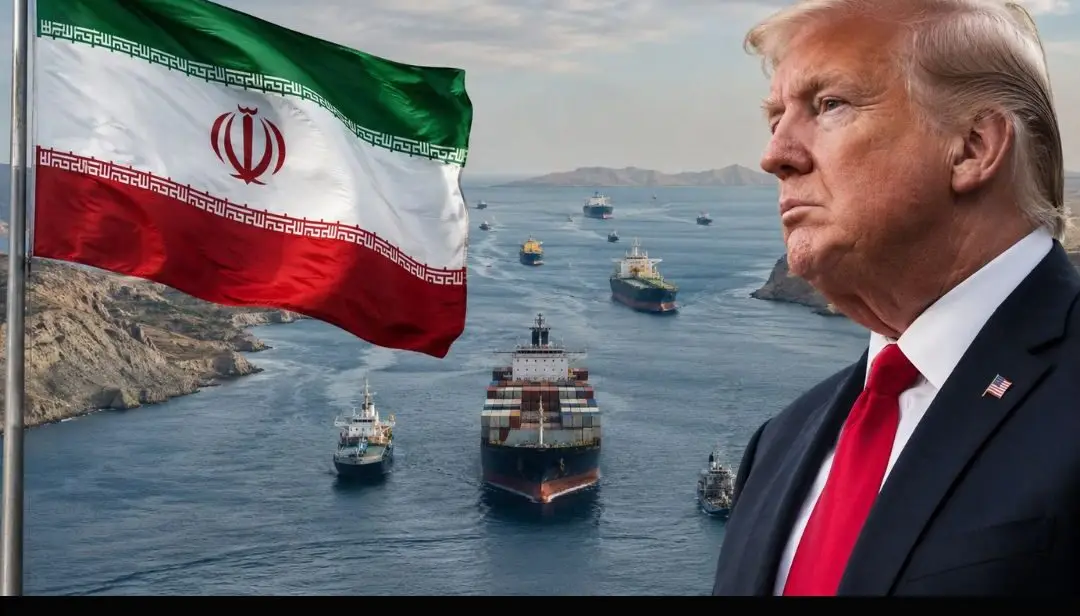
Iran is pushing a controversial plan to charge international shipping companies as much as $40 billion a year for passage through the Strait of Hormuz, one of the world’s most critical oil corridors. The proposal, first reported by the Wall Street Journal and confirmed by multiple officials familiar with the talks, has triggered fresh trade concerns among global shippers and reignited tensions between Tehran and Washington just as a fragile ceasefire attempts to hold.
What Iran Is Proposing
According to officials cited in the reporting, Tehran wants to charge vessels for what it calls “security, safety and environmental services” as they pass through the strait, a waterway through which roughly a fifth of the world’s oil normally flows. Tehran estimates that charging ships for these services could generate about $40 billion a year for the countries involved in the arrangement. If the plan moves forward, it would mark an unprecedented shift in how a major global shipping lane is managed.
Iran is pitching the revenue sharing model to Persian Gulf neighbors and other countries, including China and Egypt, as it positions itself to control the oil artery it blockaded during its recent war with the United States. Iranian Parliament Speaker Mohammad Bagher Ghalibaf, who is leading Tehran’s negotiating team, traveled to Oman this week to discuss the arrangement directly with officials across the strait. “Everyone should know that management of the strait will never return to what it was before,” Ghalibaf said during the visit.
Iran appears to be modeling its approach on existing international precedents. Tehran is examining models such as the Dardanelles, where Turkey collects a “gold franc” tax from ships traveling between the Aegean Sea and the international waterway. Iranian officials have also reportedly looked at the Malacca Straits Patrol as a reference point for how a multinational fee structure might work.
Washington Pushes Back
The plan has drawn an immediate and sharp rebuke from US officials. Secretary of State Marco Rubio rejected the idea during his visit to the Middle East, warning that imposing fees or transit charges would create a dangerous precedent that could spread like a plague and cause chaos. “No country in the world has the right to charge for the use of international waterways, and that will never be an acceptable condition in any agreement,” Rubio said while in Bahrain, adding that Gulf states had also rejected the idea.
President Trump has publicly contradicted the reporting altogether. Trump insisted Iran had committed to toll free passage, posting that there are no tolls, insurance costs, or other charges of any kind being sought or received by Iran on ships traveling the strait, and warning that negotiations would end immediately if that turned out to be false.
The dispute traces back to the memorandum of understanding both sides signed earlier this month. That agreement guarantees safe passage of commercial vessels with no charge for 60 days only, from the Persian Gulf to the Sea of Oman. Iran’s government has maintained that once that window closes, fees are on the table. A spokesperson for Iran’s Foreign Ministry said the country could charge fees in exchange for the services it provides to transiting ships.
Why Trade Concerns Are Mounting
The Strait of Hormuz has effectively functioned as a no cost international passage for decades, and any departure from that norm worries shipping firms, insurers, and energy importers across Asia and Europe. Analysts note the proposal could reshape regional alliances depending on who agrees to participate. According to one Council on Foreign Relations analysis, smaller Gulf states without alternative routes may have little choice but to accept Iran’s terms, while larger producers with pipeline options could resist.
Shipping traffic through the strait has been recovering after months of disruption. Traffic through the strait reached its highest volume since the war began earlier this week, with roughly 70 crossings recorded in a single day. A sustained fee regime, however, could slow that recovery and add costs that eventually filter down to global oil prices and consumer fuel bills.
The Iran War Powers Backdrop
The fee dispute is unfolding against the backdrop of an intensifying domestic political fight in Washington over the broader Iran War. The US Senate passed an Iran War Powers resolution by a vote of 50 to 48 this week, directing the president to remove US armed forces from hostilities against Iran unless explicitly authorized by Congress. It marked the first time both chambers of Congress had passed such a resolution directing a president to withdraw from a war zone under the War Powers Act, though it does not carry the force of law.
That victory for war powers advocates proved short-lived. A second vote held the following night produced a different outcome after two Republicans who had backed the original resolution switched their positions, effectively blocking the measure from advancing further. The about face came after the senators received a briefing from Vice President JD Vance and Special Envoy Steve Witkoff, underscoring how closely the Hormuz negotiations and the broader Iran War debate are now intertwined on Capitol Hill.
What Comes Next
Whether Iran’s $40 billion fee plan survives contact with Gulf diplomacy and US objections remains uncertain. For now, the strait remains a flashpoint where questions of sovereignty, trade economics, and the unresolved Iran War continue to collide, with global shipping companies watching closely for any signal of how long the current toll free window will actually last.
Read our full coverage of the US Senate Iran War Powers vote and what it means for the conflict
Wall Street Journal reporting via i24NEWS — Iran pushes plan to charge billions for Strait of Hormuz management
References:
- i24NEWS — Iran pushes plan to charge billions for Strait of Hormuz management as Trump denies fee scheme
- Ynetnews — Iran pitches Gulf states on $40B fee plan for reopening Strait of Hormuz
- Yahoo Finance / Investing.com — Iran plans to charge billions for Hormuz Strait passage
- Al Jazeera — US Senate approves Iran war powers resolution: What that means for Trump
- ABC News — In reversal, Senate votes to block war powers resolution, delivering Trump a win
- NPR — In symbolic vote, Congress directs Trump to remove forces from Iran war