May 4, 2026 | Defense & Global Trade With roughly 20,000 seafarers stranded in the waters of the Strait of Hormuz and oil prices sitting 50 percent above pre-conflict levels, the pressure on the Trump administration to act was becoming impossible to ignore. On Sunday, President Donald Trump delivered his answer — a mission he
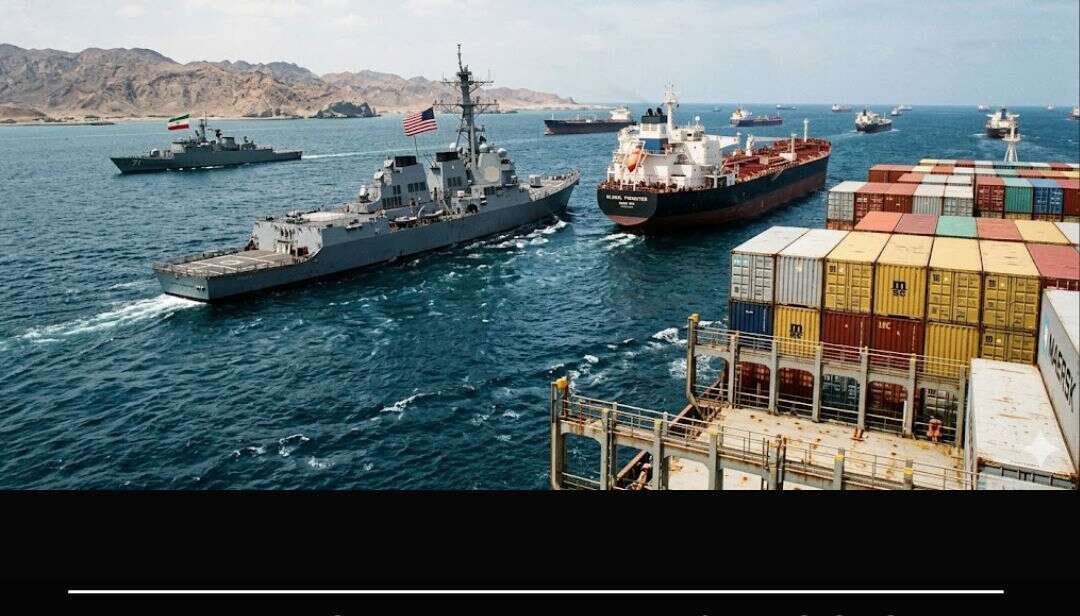
With roughly 20,000 seafarers stranded in the waters of the Strait of Hormuz and oil prices sitting 50 percent above pre-conflict levels, the pressure on the Trump administration to act was becoming impossible to ignore. On Sunday, President Donald Trump delivered his answer — a mission he branded “Project Freedom,” promising US military assets would begin guiding civilian trade ships out of the contested waterway starting Monday morning, Middle East time.
What he did not deliver was a coherent operational plan. And Iran was quick to remind the world why that gap matters.
What Trump Announced — and What He Didn’t
Trump’s announcement, posted to Truth Social with characteristic confidence, described the effort as humanitarian: getting civilian ships flagged in countries not affiliated with the US-Iran conflict “freely and ably” back to open waters. US Central Command followed with a statement confirming military assets for the operation would include guided-missile destroyers, over 100 land and sea-based aircraft, multi-domain unmanned platforms, and approximately 15,000 service members.
That is a formidable force on paper. What remains almost entirely undefined is how those assets will be used in practice.
CNN reported within hours of the announcement that US warships would not, in fact, be physically escorting merchant ship convoys through the strait — a direct contradiction of what most observers understood “Project Freedom” to mean. The distinction between “guiding” ships and “escorting” them is not semantic. It is the operational heart of the entire plan. Will destroyers position alongside commercial vessels? Will they engage Iranian fast-attack boats that approach? What triggers defensive action? None of these questions have been answered publicly, and analysts say CENTCOM has been notably tight-lipped about specifics.
The only confirmed destroyer transit of the strait on record was April 11, when two US destroyers moved through as part of a mine-clearance mission — not a commercial escort. Sea mines remain a live threat; the Iranian Revolutionary Guard has laid them throughout the waterway since the blockade began in early March.
Iran’s Response: A Direct Threat
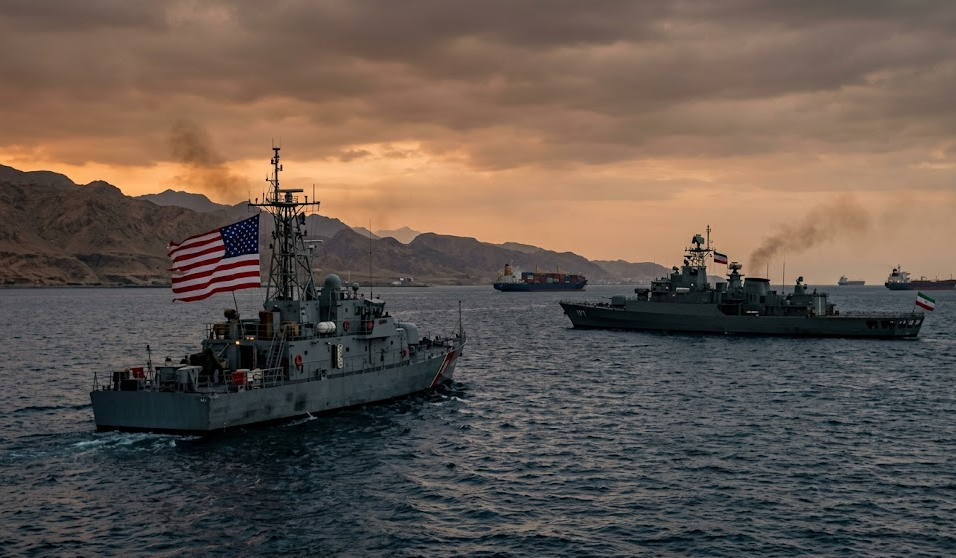
The Islamic Republic did not parse its language. The commander of Iran’s Khatam al-Anbiya Central Headquarters stated plainly that any foreign military force attempting to approach or enter the Strait of Hormuz will be attacked. Iran’s parliament security chief went further, declaring the operation a violation of the fragile US-Iran ceasefire.
Iran also claimed, hours into Monday’s operation, that it had struck an American vessel in the strait. The US denied it. The claim alone — disputed or not — illustrates exactly how volatile the operational environment has become. Misinformation, miscalculation, and the sheer density of military assets now operating in a narrow waterway create conditions in which a single incident can metastasize rapidly.
Iran has controlled passage through the strait since February 28, when the US and Israel launched coordinated strikes on Iranian military and nuclear facilities. Tehran responded by closing the waterway to unauthorized shipping and imposing tolls of over one million dollars per vessel for those seeking passage. The International Chamber of Shipping estimates tens of thousands of seafarers are currently caught in this stranglehold.
The Economic Pressure Driving the Decision
The market reacted to Trump’s announcement with immediate volatility. Brent crude climbed 3.6 percent to $112 per barrel. West Texas Intermediate rose to $105. Prices at these levels, sustained since the blockade began, are feeding inflation across global supply chains and squeezing allies who depend on Gulf energy flows.
Insurance and shipping industry sources say elevated risk premiums will persist for years regardless of how the Hormuz situation resolves. The Chatham House think tank, in a briefing published this week, warned that any naval coalition operating in the strait must have clear rules of engagement, burden-sharing frameworks, and escalation-management protocols — none of which appear to be publicly established under Project Freedom.
A Bold Name for an Incomplete Plan
Trump has a history of announcing muscular foreign policy postures and allowing the details to be worked out — or not — in real time. In Gaza, that approach produced the CMCC, now being quietly shuttered. In the Strait of Hormuz, the stakes for ambiguity are higher. The waterway handles roughly 20 percent of global oil trade. Miscalculation here is not a regional problem — it is a global one.
Project Freedom may yet prove a genuine turning point that breaks Iran’s grip on the world’s most critical chokepoint. But a bold name is not a strategy. And right now, the questions it leaves unanswered outnumber the answers it provides.
Market Analysis
A quick snapshot of market trends, customer behavior, and competitor movements.