Share This Article
JERUSALEM / WASHINGTON / BEIRUT– Benjamin Netanyahu has been here before.
In January 2025, Trump pushed him into a Gaza ceasefire that his far-right coalition partners Finance Minister Bezalel Smotrich and National Security Minister Itamar Ben-Gvir had sworn they would never accept. Netanyahu accepted it. Ben-Gvir quit the coalition. The government survived. And Netanyahu emerged, paradoxically, with his political position marginally strengthened by the appearance of delivering a hostage deal.
Now, in April 2026, the geometry is repeating with Lebanon as the pressure point, the Iran ceasefire as the forcing mechanism, and Trump once again in the position of the senior partner whose strategic interests require Netanyahu to do something his domestic politics make nearly impossible.
This time, the stakes are higher. And Netanyahu’s coalition has less room to maneuver.
How Lebanon Became the Problem
When Trump posted the Iran ceasefire on Truth Social at 6:30 p.m. EDT on April 7, the announcement said nothing about Lebanon. That omission was not an oversight. It was a deliberate gap one that Israel immediately exploited.
Within hours of the ceasefire announcement, Israeli forces launched “Operation Eternal Darkness” 100 airstrikes in ten minutes across southern Lebanon and the Beirut suburbs. The stated objective: degrade Hezbollah’s reconstituted rocket and drone arsenal before any broader regional ceasefire framework could constrain Israel’s freedom of action.
Iran immediately accused the United States of ceasefire breach. The IRGC halted Hormuz shipping again. The Islamabad talks nearly collapsed before they began. And Trump who had just engineered the most significant diplomatic achievement of his second term found his ceasefire architecture destabilized by his closest Middle Eastern ally within its first twelve hours.
The message from Washington arrived quickly and privately: Lebanon had to stop.
Trump’s Strategic Interest Is Clear
Trump’s need for a Lebanon ceasefire is not ideological. It is transactional and urgent.
The Iran ceasefire framework depends on a regional stability that Israeli operations in Lebanon are directly undermining. Every Lebanese airstrike gives Iran’s hardliners ammunition to accuse Washington of bad faith, complicates the Islamabad negotiating environment, and raises the probability that the April 21 ceasefire deadline arrives without a framework agreement triggering Phase 2 of the war that nobody in Washington, and very few in Jerusalem, actually wants.
Beyond the Iran diplomacy, Trump faces a domestic economic calculation. The Strait of Hormuz closure pushed oil to $144 a barrel and American gas prices above $5.50 a gallon. The ceasefire brought partial relief. Resumed regional escalation driven by Lebanese operations risks reactivating the oil shock that damaged American consumer confidence and complicated Federal Reserve policy. Trump cannot afford another energy spike heading into the 2026 midterms.
Special Envoy Steve Witkoff simultaneously managing the Iran talks in Islamabad has made the connection explicit in private briefings: a Lebanon ceasefire is not separate from the Iran deal. It is a precondition for the Iran deal holding past April 21.
Netanyahu’s Impossible Coalition Arithmetic
Benjamin Netanyahu’s political survival has always depended on managing a coalition whose internal contradictions he cannot resolve only defer.
Smotrich and Ben-Gvir the far-right partners whose support keeps his government alive have constructed their entire political identity around maximalist military objectives: permanent Israeli security control over Gaza, no Palestinian state, no recognition of Hamas governance, and unrestrained military freedom of action against Hezbollah in Lebanon. A Lebanon ceasefire imposed by American diplomatic pressure is, in their framework, a capitulation to exactly the kind of internationalist constraint they exist politically to prevent.
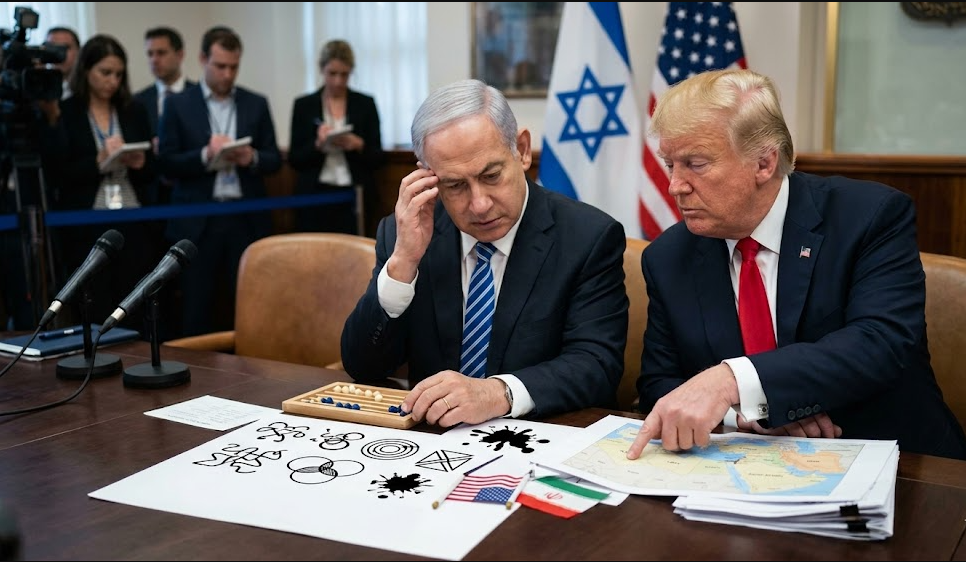
Ben-Gvir resigned over the Gaza ceasefire in January 2025. He returned to the coalition weeks later when the political mathematics forced Netanyahu to reconstruct his majority. The same cycle is now activating over Lebanon with the added complexity that the Iran war has elevated the strategic stakes and shortened the diplomatic timeline simultaneously.
Netanyahu’s calculation, as reconstructed by Israeli political analysts and reported by Haaretz and Times of Israel, runs roughly as follows: Trump’s pressure is real, immediate, and backed by the implicit threat of reduced US military and diplomatic support for Israel at a moment when that support is operationally critical. The Lebanon operations have achieved their primary tactical objectives. Hezbollah’s short-range rocket infrastructure has been significantly degraded. A ceasefire now locks in those gains without requiring the full ground campaign that Smotrich demands.
The argument is militarily defensible. It is politically brutal. And it is, recognizably, the same argument Netanyahu made about Gaza in January 2025.
Hezbollah’s Diminished Position
The Lebanon dynamic has one variable in 2026 that did not exist in the same form during prior ceasefire negotiations: Hezbollah is significantly weaker than it has been at any point since its founding.
Hassan Nasrallah was killed by Israel in September 2024. His successor has not established equivalent command authority or political legitimacy. The 2025 Lebanon conflict the predecessor to the current “Operation Eternal Darkness” campaign degraded Hezbollah’s precision missile arsenal, disrupted its command infrastructure, and killed several senior military commanders. The reconstitution that Israeli strikes in April 2026 are targeting represents a smaller, slower, more vulnerable organization than the one that fought the 2006 war or the 2024 campaign.
For Trump’s Lebanon ceasefire push, this matters: a weakened Hezbollah has less incentive to reject a ceasefire framework and more incentive to accept a pause that allows reconstitution time. For Netanyahu, it creates the political argument that the ceasefire is being accepted from strength Israeli military objectives achieved rather than from American pressure.
Whether the Israeli public, the coalition partners, and ultimately the Knesset accept that framing is the central political question of the next seven days.
The January 2025 Template
The precedent is instructive. In January 2025, Trump pushed Netanyahu into the Gaza ceasefire through a combination of direct personal pressure, Witkoff’s back-channel negotiations, and the implicit message that US support was not unconditional. Netanyahu complied. The deal held imperfectly, with violations on both sides long enough to release Phase 1 hostages and create the space for subsequent negotiations.
The Lebanon pressure campaign is running the same playbook. Witkoff is in the room. Trump is posting about regional stability. The message to Jerusalem is unmistakable. And Netanyahu who has survived longer in Israeli politics than almost any other figure in its history precisely because he knows when American pressure has reached the threshold he cannot absorb is reading the signals.
The question is not whether Netanyahu will accept a Lebanon ceasefire. The question is whether he can sell it to Smotrich without losing his majority and whether, this time, the coalition reconstruction mathematics will work in his favor again.
Trump has pushed Netanyahu’s hand before. He is pushing it again. History suggests Netanyahu will fold and then survive the folding.

Oil & Energy Markets
A look at crude price swings, OPEC supply moves, and how energy markets react to geopolitical shocks.

Geopolitics & Conflict
Breaking down how wars, ceasefires, and diplomatic deals ripple through global trade and security.
US Foreign Policy
Coverage of Trump administration negotiations, sanctions, and strategic decisions shaping world events.
Economy & Inflation
Tracking how commodity prices, gas costs, and supply chains affect everyday consumers.