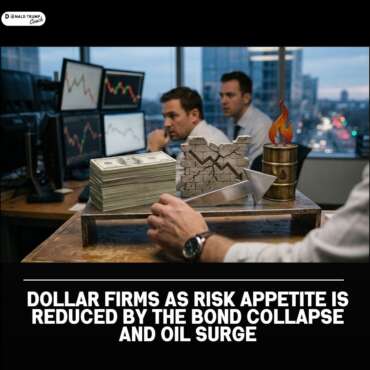
The adviser did not mince words. “We need a message,” he told colleagues inside the West Wing. “Right now, everything’s on hold until the war’s over.” It was a rare moment of candor from an administration that has spent seven weeks trying — and repeatedly failing — to get ahead of the most consequential economic
The adviser did not mince words. “We need a message,” he told colleagues inside the West Wing. “Right now, everything’s on hold until the war’s over.” It was a rare moment of candor from an administration that has spent seven weeks trying — and repeatedly failing — to get ahead of the most consequential economic crisis of Donald Trump’s presidency.
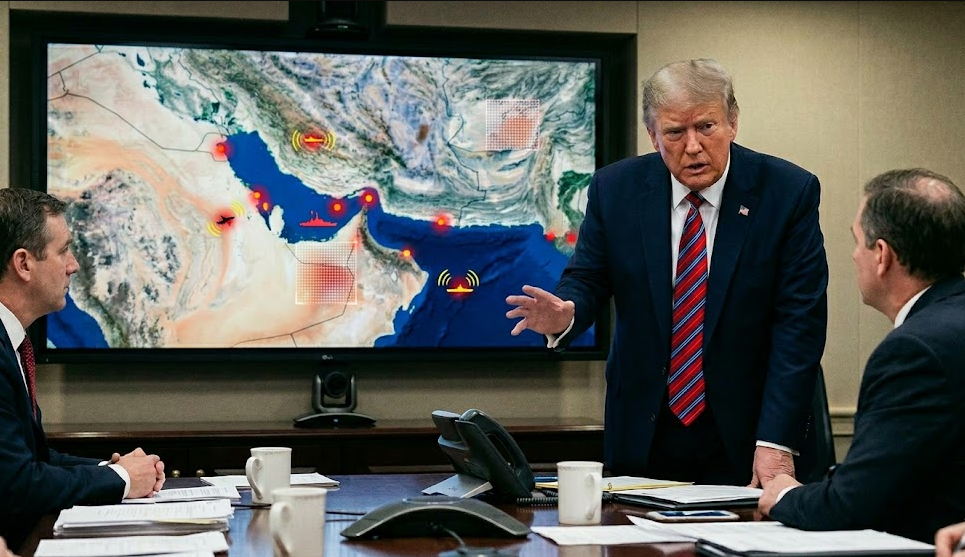
From the moment Operation Epic Fury launched at 1:15 a.m. EST on February 28, the White House has been managing two wars simultaneously: one in the Persian Gulf, and one against the economic fallout at home. The second war has not gone better than the first.
From Denial to Damage Control
The administration’s early posture was confident, almost dismissive. Energy Secretary Chris Wright assured the public on March 4 that “energy will flow soon,” and on March 8 declared that price spikes were driven by “fear and perception” and would last “weeks not months.” On March 11, he told Americans they must “suffer short-term pain for long-term gain.”
The markets were not listening to messaging. They were watching the Strait of Hormuz.
By March 2, the IRGC had officially declared the strait closed following four ship attacks. Qatar had halted LNG production. The International Energy Agency’s Fatih Birol called it “the largest supply disruption in the history of the global oil market.” From a pre-war Brent price of $72.87 a barrel, crude rocketed toward $120 by March 9. U.S. gas prices, which stood at $2.98 a gallon on February 27, crossed $4 by March 31 — a threshold not breached since 2022 — and hit $4.10 by April 4. A 37% increase in five weeks.
Treasury Secretary Scott Bessent touted a “war risk insurance facility” to encourage tanker operators to resume Hormuz transits. It was later shown to be unworkable. He hinted at “un-sanctioning” Russian oil already at sea. He described the strategy as “jujitsu.” Meanwhile, he acknowledged to Congress that the world was facing a global oil deficit of 10 to 14 million barrels per day.
The CNN interactive Hormuz timeline captures the whiplash in real time: on March 2, the White House rejected releasing the Strategic Petroleum Reserve. By March 11, Trump ordered a release of 172 million barrels. On March 10, Wright tweeted that the Navy was escorting tankers through the strait. The tweet was deleted hours later — it was false. The same day, the administration reversed course again, shifting from opposing to supporting an IEA coordinated reserve release.
The Sanctions U-Turn No One Saw Coming
The single most dramatic policy reversal came quietly on March 20. The Trump administration — the same administration that had campaigned on “maximum pressure” against Iran — temporarily lifted sanctions on Iranian oil at sea, issuing a 30-day waiver allowing the purchase of roughly 140 million barrels of crude that Iran had been selling at a discount exclusively to China.
The explicit reason, confirmed by multiple officials: to prevent oil from reaching a projected $150 a barrel. The implicit concession: the administration’s own war had created a market emergency it could not solve through pressure alone.
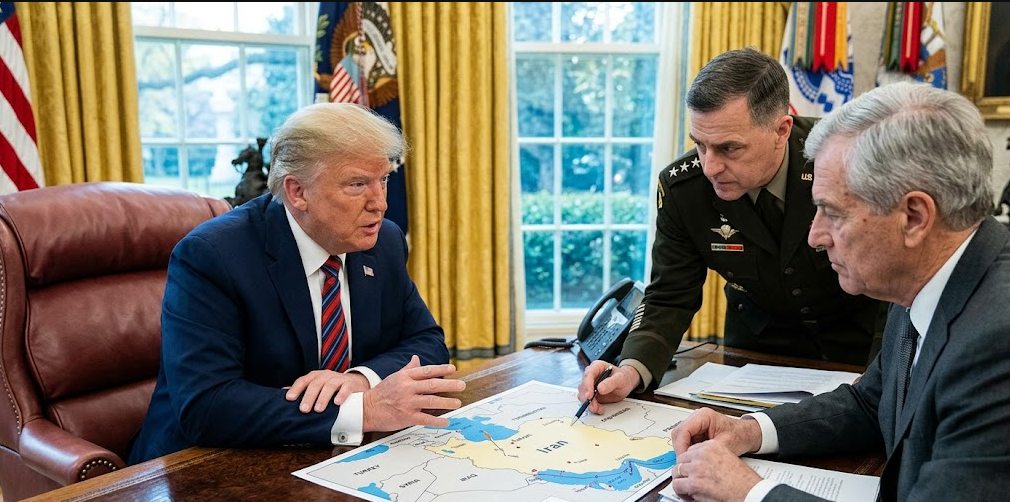
The Council on Foreign Relations framed the gamble plainly — Trump was easing sanctions on an adversary mid-conflict to contain the domestic economic damage his conflict had caused. The Jones Act was also waived, allowing foreign-flagged vessels to carry oil between U.S. ports. Russian oil sanctions were eased further. Every policy instrument pointed in the opposite direction of the stated strategic goal.
The Numbers That Haunted the Briefing Room
The CNN timeline of the crisis tracks not just commodity prices but the political cost of each data point. By March 27, the Dow Jones had entered correction territory — down 10%. The Nasdaq followed. Consumer prices in March 2026 tripled compared to February. Record-low consumer sentiment was reported by April 10. The IMF cut its global growth forecast to 3.1% and warned of an “adverse scenario” in which $100 oil becomes the permanent floor.
A Quinnipiac poll found 65% of registered voters blamed Trump “a lot” or “some” for the gas price spike. His economic approval rating fell to 38% — matching his all-time low across both terms. Gas prices are up 49% since January 1, per AAA. CNN Politics reported the political damage directly: Iran war oil prices were making affordability the dominant issue heading into 2026 midterms, with Republican strategists privately warning their House majority was in jeopardy.
59% of Americans told pollsters they disapproved of the Iran strikes altogether.
The White House began taking subtle steps, reporters noticed, to prepare the public for prolonged high prices — the messaging equivalent of admitting the stopgap measures had stopped nothing.
Managing the Impossible – The grim framing came from CNN Business itself in a March 9 headline: “The Grim Choice Facing the Trump Administration: Economic or Naval Collapse?”
The article captured the structural bind. A naval blockade tightened enough to force Iran to the table also tightened the world’s energy supply enough to accelerate recession. Loosening the blockade to ease prices undermined the coercive leverage the whole strategy depended upon. Neither option was clean. Both had a clock attached.
The Development Finance Corporation unveiled a $20 billion reinsurance program to encourage tanker operators. Analysts at Goldman Sachs issued a crisis assessment. Morgan Stanley published a market impact brief. The Council on Foreign Relations warned the blockade had “a short fuse.” Every institution with a mandate to watch was watching — and none of them were optimistic.
By April 17, when Iran announced the strait was open and the Dow surged 1,000 points in a single session, the relief was real. But the ceasefire expires April 22. No deal is signed. The blockade remains. And inside the West Wing, one adviser is still waiting for a message.
Market Analysis
A quick snapshot of market trends, customer behavior, and competitor movements.