Explained: How Deep Is India’s Russian Oil Addiction And What Happens to Daily Imports After May 16?
Theo Jorden
Share This Article
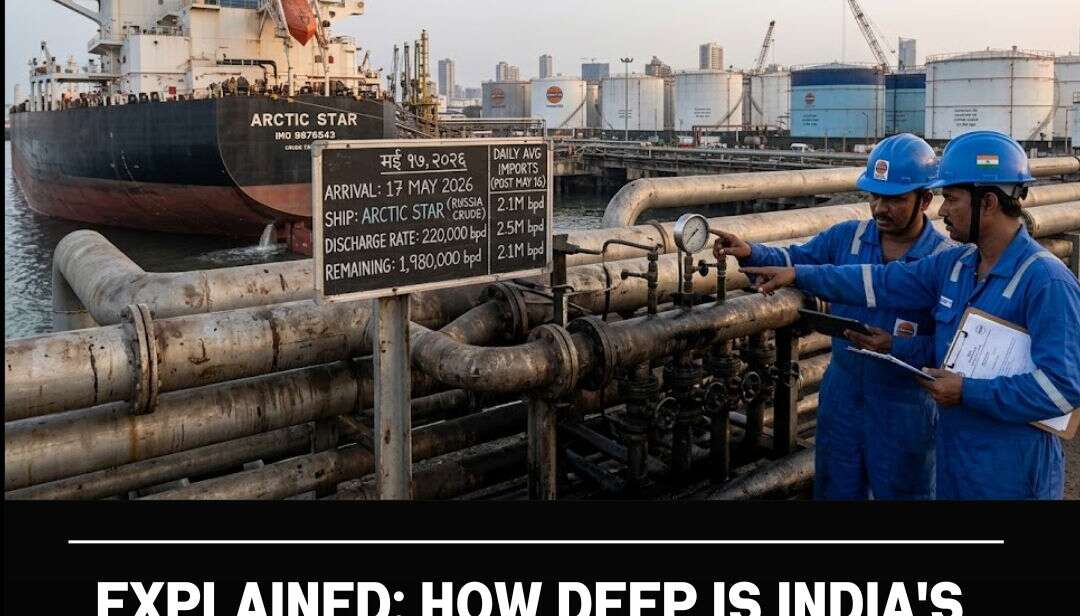
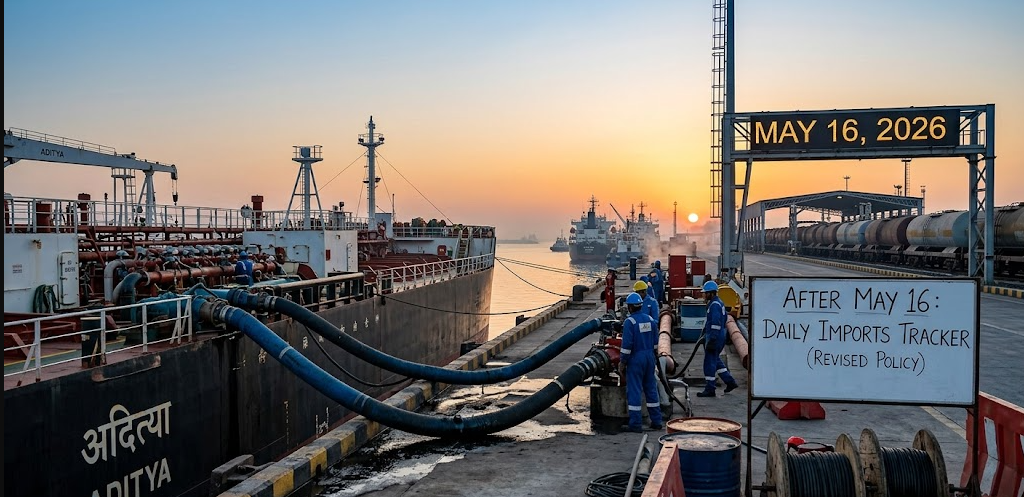
New Delhi / Washington, May 15, 2026 — On April 15, US Treasury Secretary Scott Bessent said publicly and unambiguously that the sanctions waiver allowing India to purchase Russian crude would not be renewed. Forty-eight hours later, he reversed himself. A new deadline was set: May 16, 2026. That deadline is now here. And India’s
New Delhi / Washington, May 15, 2026 — On April 15, US Treasury Secretary Scott Bessent said publicly and unambiguously that the sanctions waiver allowing India to purchase Russian crude would not be renewed. Forty-eight hours later, he reversed himself. A new deadline was set: May 16, 2026.
That deadline is now here. And India’s Russian oil addiction the subject of tariff threats, diplomatic confrontations, and an extraordinary three-act drama with the Trump administration has never been more acute.
In early May, India’s Russian oil imports hit a record 2.3 million barrels per day. That figure is not the product of ideology or defiance. It is the product of the US-Iran War.
How Deep the Addiction Actually Runs
The numbers tell a story that predates the current crisis. Russia has been India’s single largest crude supplier since late 2022, when New Delhi began snapping up discounted Urals crude after Western buyers boycotted Moscow following the Ukraine invasion. By fiscal year 2025-26, Russia accounted for 33 percent of India’s total crude imports approximately 1.7 million barrels per day on average according to data compiled by The Print.
The addiction deepened because the economics were irresistible. Russian Urals crude traded at a $10–13 discount to Brent for Indian buyers through most of 2024 and into 2025. For state refiners Indian Oil Corporation, BPCL, HPCL that discount was the difference between profitability and loss under India’s politically sensitive retail price freeze regime.
Then the US-Iran War began on February 28. And everything changed at once.
The Iran War Broke India’s Diversification Plan
India had, briefly, been complying with Washington’s wishes. After Trump hit India with 50 percent tariffs in late January 2026 explicitly as punishment for Russian oil purchases and threatened to back the Sanctioning Russia Act granting authority for up to 500 percent tariffs on countries doing business with Russia’s energy sector, New Delhi blinked. In early February, Trump slashed India’s tariff burden to 18 percent after, as CNN reported, several Indian oil companies agreed to stop buying Russian oil “unless absolutely necessary or unless related to previously agreed contracts.”
Russian oil imports fell sharply. In January and February 2026, Russia’s share of India’s crude mix dropped to just 20–21 percent — the lowest since October 2022.
Then the Strait of Hormuz closed. India’s Middle Eastern crude supplies which had replaced Russian volumes plummeted 61 percent in March alone, from 2.6 million barrels per day to 1.18 million. By April, Hormuz-routed supplies had fallen to a catastrophic 247,000 barrels per day, from 2.8 million in February. As CNN’s analysis put it directly: “Trump wanted India off Russian oil. His war with Iran is now undermining that goal.”
The US-Iran War did in weeks what years of Russian diplomacy had failed to do: it made India’s Russian oil addiction structurally unavoidable.
The Waiver Rollercoaster and What May 16 Actually Means
Washington, to its credit, understood the bind it had created. On March 5, Bessent issued a 30-day waiver, calling Indian entities “good actors” and acknowledging the need “to ease a temporary gap of oil around the world.” When that waiver expired, another drama unfolded: Bessent publicly declared on April 15 it would not be renewed, then reversed within 48 hours, extending the window to May 16.
As Business Standard reported, this extension covers Russian crude already loaded on tankers on or before April 17 — a specific, technical carve-out that allowed India to honour contracts in transit without formally breaching sanctions. On May 14, Indian government officials warned Washington directly: “Volatility will have consequences,” as BusinessToday reported, pressing for yet another extension.
If May 16 passes without a new waiver, Bloomberg’s analysis is unambiguous: India is set to scale back Russian oil imports sharply. IOC which alone accounts for 42 percent of India’s Russian crude purchases at approximately 670,000 barrels per day faces immediate procurement decisions. BPCL and HPCL face margin compression. And the state refining system, already reeling from retail price freezes during $106-per-barrel Brent, faces the prospect of sourcing costlier alternatives from an already disrupted global market.
The Price Advantage Is Gone But the Supply Necessity Remains
There is a bitter irony at the heart of India’s predicament. The economic rationale for Russian oil has largely collapsed. Urals crude, once $10–13 cheaper than Brent, now trades at a premium of $4–8 per barrel above Brent, as the Sunday Guardian documented. In May 2026, Urals sits at $112.49 a barrel. India and China are competing for the same Russian barrels, each securing roughly 1.6 million barrels per day at market rates the discount has been entirely bid away.
India is no longer buying Russian oil because it is cheap. It is buying it because the alternative a Middle East supply chain severed by the US-Iran War is worse. The rupee, the dirham, the yuan, and the ruble are all being deployed as payment mechanisms to keep the flow alive, routed through Gazprombank’s Dubai correspondent Mashreq Bank and an architecture of bilateral settlement accounts that Bloomberg detailed in March.
Private refiner Reliance Industries drew the line first, ceasing Russian crude purchases for its Jamnagar refinery in November 2025. State-owned refiners subject to government direction and retail price controls had no such luxury.
What Comes Next
A former US Treasury official, speaking to Reuters, captured the dilemma with precision: “Russia and India will call the US government’s bluff and continue to import Russian oil the cost to the US of carrying through on the threat is nontrivial.”
That bluff has been called, extended, and re-called three times since January. The fundamental reality has not changed: India imports 85 percent of its crude, the Strait of Hormuz remains functionally closed, and Russian oil is the only supply source available at volume, on short notice, and via established payment channels.
May 16 is a deadline. What it is not unless Washington chooses to make it one is a crisis. The question is whether the Trump administration will grant a third waiver, quietly acknowledging that the US-Iran War has made its campaign against India’s Russian oil addiction structurally unenforceable for as long as the Strait of Hormuz stays shut.
New Delhi is betting it will. The tankers are already loaded.
Oil & Energy Markets
A look at crude price swings, OPEC supply moves, and how energy markets react to geopolitical shocks.