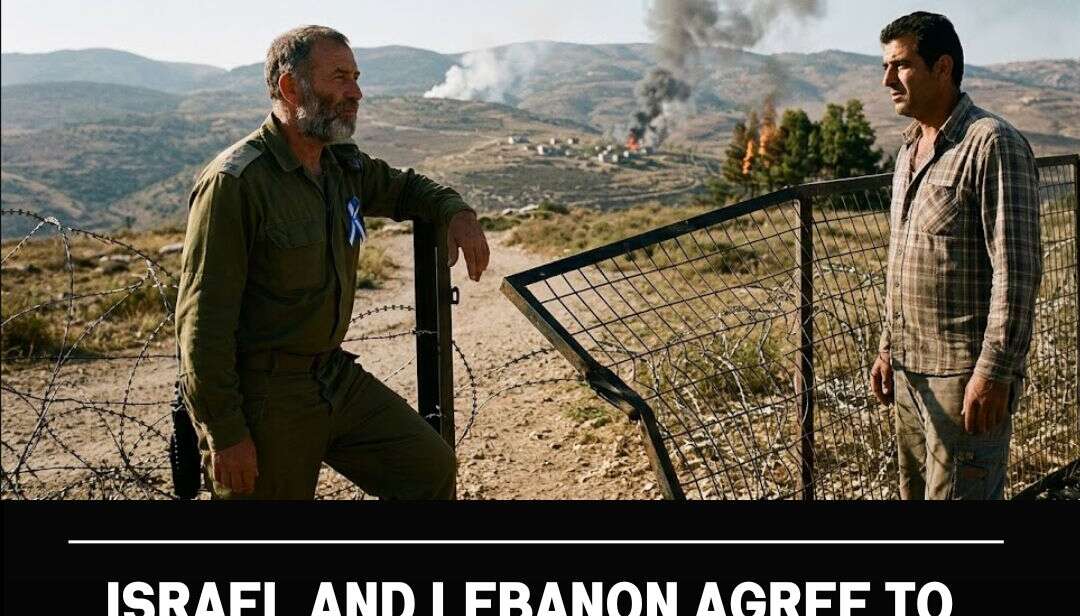
Beirut / Jerusalem / Washington, May 15, 2026 — On paper, it is a ceasefire. In practice, it is a live conflict with a diplomatic label attached. Israel and Lebanon agreed on Thursday to extend their fragile truce by 45 days, following a third round of direct talks in Washington brokered by the United States.
Beirut / Jerusalem / Washington, May 15, 2026 — On paper, it is a ceasefire. In practice, it is a live conflict with a diplomatic label attached.
Israel and Lebanon agreed on Thursday to extend their fragile truce by 45 days, following a third round of direct talks in Washington brokered by the United States. The US State Department confirmed the extension through June, with a new round of negotiations scheduled for June 2–3 and a “US-facilitated security track” set to commence on May 29 under Pentagon oversight. By every formal measure, the framework is holding.
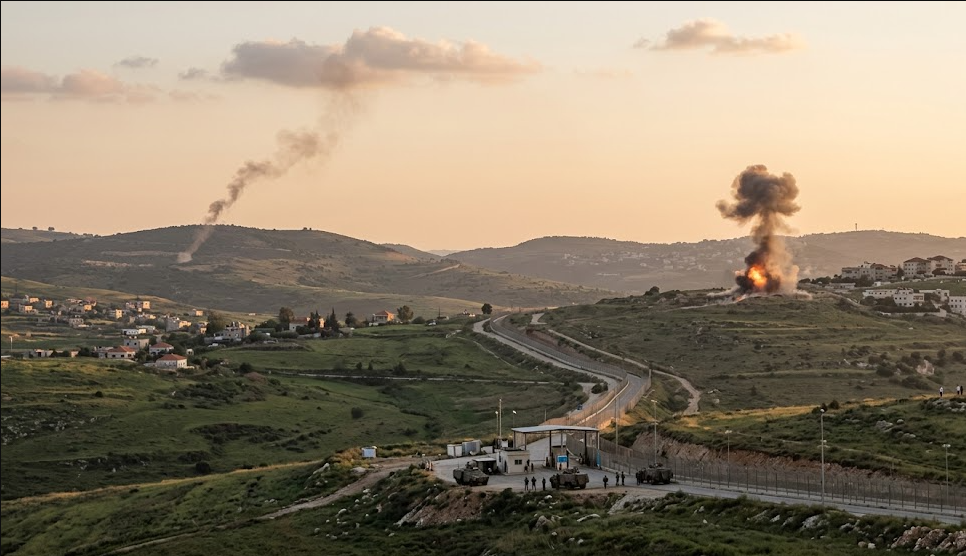
On the ground in southern Lebanon, 657 people have been killed by Israeli strikes since the ceasefire began on April 16. The United Nations has documented more than 10,000 Israeli violations of Lebanese airspace and territory since the agreement took effect. Hezbollah has dismissed the entire arrangement as “meaningless.” And Israeli Prime Minister Benjamin Netanyahu has stated flatly that Israel “has not yet agreed to cease its military operations in Lebanon.”
Welcome to the US ceasefire in the age of the US-Iran War.
How the Ceasefire Was Born — and Why It Is Already Broken
The roots of the current arrangement are inseparable from the broader regional catastrophe triggered on February 28, 2026, when US and Israeli forces launched coordinated strikes against Iran, killing Supreme Leader Ayatollah Ali Khamenei and igniting the US-Iran War that is now in its 77th day. Iran retaliated with hundreds of ballistic missiles and drones aimed at Israel and Lebanon, Gulf Arab states, and US military installations. The Hezbollah-Israel conflict, already simmering, exploded into a full-scale Lebanon war. More than 2,000 civilians and militants were killed. Over one-sixth of Lebanon’s population was displaced.
Pakistan’s April 8 ceasefire announcement — framing an agreement between the US and Iran that it claimed included Lebanon — immediately collapsed when Netanyahu rejected the Lebanon clause and Trump backed him. A separate Lebanon ceasefire was then brokered by Washington, announced on April 16. Israel immediately interpreted it as preserving its right to “take all necessary measures in self-defence against planned, imminent, or ongoing attacks” — language broad enough to drive an armoured division through.
The result, as The National reported, is “a ceasefire in name only, with Israeli strikes hitting even deeper into south Lebanon” with each passing week.
What the 45-Day Extension Actually Delivers
The fresh agreement, confirmed by Bloomberg and CNBC, represents the most substantive diplomatic architecture yet applied to the Israel and Lebanon conflict. For the first time in decades, direct Israeli-Lebanese negotiations are taking place in Washington. The US State Department described the third round of talks as “highly productive.” Military-to-military communication channels, overseen by the Pentagon, are being expanded.
The core issues on the table are significant: full Israeli withdrawal from the 10-kilometre-deep buffer zone Netanyahu calls a permanent security strip in southern Lebanon; the disarmament of Hezbollah — Israel’s non-negotiable demand; the release of Lebanese prisoners held by Israel; the return of Lebanese detainees; and the correction of the Blue Line after Israeli attempts to establish new boundary demarcations.
Lebanese Prime Minister Nawaf Salam arrived in Washington with clear conditions. “We support peace, but this peace has conditions,” he stated, specifying that any final agreement requires full Israeli withdrawal. Salam has also announced a ban on Hezbollah’s military activities inside Lebanon — a politically courageous step that his government needs international support, and €500 million in financial backing, to sustain.
The US-Iran War Shadow Over Every Negotiation
The Lebanon file cannot be read independently of the US-Iran War. The US State Department has been explicit: the purpose of extending the US ceasefire in Lebanon is partly to prevent renewed Lebanese fighting from “undermining the effort to reach a deal with Iran.” The two conflicts are technically separate diplomatic tracks — but they are strategically joined at the hip.
Iran’s proxy network, with Hezbollah as its most powerful instrument, was already weakened by Khamenei’s death and the subsequent decapitation of Iran’s military command structure. Hezbollah’s capacity to coordinate large-scale operations has degraded. Yet degradation is not elimination — and as Al Jazeera documented, Hezbollah has continued launching rockets and drones at Israeli positions even while publicly calling the ceasefire meaningless, creating a self-fulfilling cycle of provocation and Israeli retaliation that the diplomatic track has so far failed to interrupt.
Vice President JD Vance, who has logged more than 21 hours in direct Iran talks and pushed Israel hard to exercise restraint in Lebanon, now has two parallel ceasefire frameworks to keep alive simultaneously — while Iran’s response to the US nuclear proposal remains, in Trump’s words, “totally unacceptable.”
The Clock Is Ticking
One structural deadline adds urgency to everything: UNIFIL’s mandate expires December 31, 2026. The UN Security Council voted last August to renew the peacekeeping force for a final year. After that, withdrawal begins on January 1, 2027 — removing the only systematic international monitoring presence from the southern Lebanese border at the precise moment when the region most needs independent oversight.
If the 45-day extension produces a durable framework by late June, negotiations may reach sufficient maturity before that clock runs out. If it does not — if Israel and Lebanon remain in the current pattern of formal ceasefires and systematic violations — the border will be unwatched, unmediated, and highly flammable when UNIFIL departs.
For Washington, Beirut, and Jerusalem, the geometry is stark: make the ceasefire real, or inherit the consequences of its collapse at the worst possible moment in the worst possible neighbourhood.
Market Analysis
A quick snapshot of market trends, customer behavior, and competitor movements.