What Is Going On With This Ceasefire, Is This Market Manipulation?
Theo Jorden
Share This Article
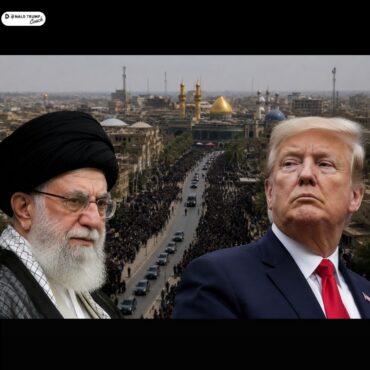
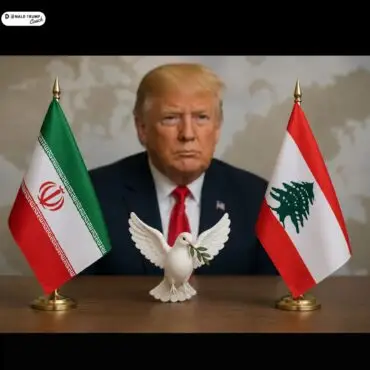
The ceasefire was announced at 6:30 p.m. EDT on April 7. By dawn on April 8, oil had crashed 16% and global stocks had surged trillions. By April 9, Iran was accusing the US of breaching the deal. Israel was bombing Lebanon. The IRGC had halted Hormuz shipping again. So — what exactly happened? And
The ceasefire was announced at 6:30 p.m. EDT on April 7. By dawn on April 8, oil had crashed 16% and global stocks had surged trillions. By April 9, Iran was accusing the US of breaching the deal. Israel was bombing Lebanon. The IRGC had halted Hormuz shipping again. So — what exactly happened? And who benefited?
WASHINGTON Something doesn’t add up.
On the evening of April 7, President Trump posted a two-week US-Iran ceasefire on Truth Social. Markets exploded. Oil collapsed 16% — its biggest single-day drop since 2020. The Dow surged 1,374 points. The Nasdaq gained 2.82%. South Korea’s KOSPI gained 7% so fast it triggered a circuit breaker. Trillions of dollars moved in hours across every major global market. Then, within 24 hours, the ceasefire began visibly unraveling.
Iran publicly accused the United States of breaching the agreement. Israel launched “Operation Eternal Darkness” on Lebanon — 100 airstrikes in ten minutes — a conflict explicitly excluded from ceasefire terms. The IRGC reportedly halted Hormuz shipping again. Iran’s Lavan Island oil refinery was struck. Oil resumed climbing from its lows. Physical Brent crude, which tracks actual supply rather than futures speculation, never fell below $120 to begin with — a signal that professional commodity traders never fully believed the ceasefire would hold. So the question now spreading across financial desks, congressional offices, and newsrooms is straightforward: what exactly was announced — and did someone know the rally was coming before the post went live?
The Manipulation Question Is Not New And That’s the Problem
This is not the first time Trump’s Truth Social has moved markets in a direction that benefited those with advanced knowledge of what was coming. On April 9, 2025, at precisely 9:37 a.m. EDT, Trump posted: “THIS IS A GREAT TIME TO BUY!!! DJT.” Four hours later, a 90-day tariff pause was officially announced. The Nasdaq surged 12% — its single largest gain since 2008. The S&P jumped 9.5%. The Dow added 2,800 points. Congressional Democrats immediately launched investigations. The Washington Post described it as a potential “market manipulation scheme.” NPR’s Planet Money ran a full investigation asking whether it constituted insider trading. The SEC was pressured to respond. No charges were filed. No senior official was held accountable.
Now the pattern has repeated — at a larger scale, in a more volatile asset class, with higher geopolitical stakes. Academic research has spent years documenting this phenomenon. A peer-reviewed PLOS One study confirmed that Trump’s social media posts with strong negative sentiment “were followed by reduced market value of the company mentioned” — with statistical significance. A ScienceDirect study confirmed measurable currency market movements tied directly to Trump’s posts. A Merrill Lynch analysis found days when Trump posted in the top 10% of volume were “associated with statistically significant negative stock returns.” The market-post correlation is not coincidental. It is documented, repeatable, and — critically — exploitable by anyone with advance knowledge of what is about to be posted.
What the Ceasefire Actually Said — and Didn’t Strip away the market reaction and read the ceasefire post itself carefully. Trump agreed to “suspend the bombing and attack of Iran for a period of two weeks” — subject to Iran reopening the Strait of Hormuz. He did not announce a verified Iran acceptance before the post went live. He did not include Lebanon, where Israel continued striking within hours. He did not address the Houthis, Hezbollah, or any of Iran’s regional proxy networks. He did not outline any enforcement mechanism or third-party verification process. VP JD Vance called it a “fragile truce.” Secretary of State Marco Rubio said publicly: “I’m not sure you can reach a deal with these guys.” BCA Research’s chief geopolitical strategist Matt Gertken warned that “fighting will ignite later this year, if not later this month.” Tim Waterer of KCM Trade advised “cautious optimism rather than outright celebration.”
In other words: the people closest to the policy, and the analysts paid to assess it, were privately skeptical of what the markets were euphorically celebrating. Physical oil markets agreed — Dated Brent remained above $120 throughout. Futures traded hope. Reality traded differently. The Structural Problem Nobody Wants to Name -Truth Social has 6.3 million users. It generates $3.7 million in revenue against a $712 million net loss. And yet a single post on this platform moves more market value in hours than most central bank decisions move in days. That is because Truth Social is not functioning as a social network. It is functioning as an unregulated policy announcement wire — with no pre-market disclosure requirements, no mandatory simultaneous public release, and no legal framework governing who may possess advance knowledge of what will be posted and when.
When the Federal Reserve changes policy, strict disclosure rules govern who knows what and when. When a CEO makes a material announcement, securities law requires simultaneous public access. When the President of the United States announces a geopolitical ceasefire that moves global oil markets by 16% on a social media platform — there are no equivalent rules at all.
What Comes Next ?
The ceasefire expires April 23. Formal talks opened April 10 in Islamabad. Iran has already accused the US of breach. The structure is shaky, the violations are real, and the gap between what futures markets priced on April 8 and what physical markets priced tells you everything about the difference between market sentiment and geopolitical reality. The question of whether any of this constitutes manipulation may never be formally answered. The legal architecture simply does not exist yet for social-media-as-sovereign-policy-channel. But the question will keep being asked. Because the next post is already being written — and somewhere, someone will be positioned for it before the rest of us see it.
Oil & Energy Markets
A look at crude price swings, OPEC supply moves, and how energy markets react to geopolitical shocks.